What matters when choosing?
Start with the loads the house actually dries and the space available. Then compare cotton-programme details, energy information and the upkeep everyone will share.
| Concern |
What to check |
Who this matters to |
| Cotton-load turnaround |
Compare rated capacity with typical loads, then check the cotton programme and any rapid programme’s load and fabric limits. |
When laundry queues build up, I need to know whether our usual cotton batch can go through without splitting it unnecessarily. Around 29% of consumers put turnaround first. |
| Safe fit and placement |
Measure the appliance, door openings and required clearance; plan for a direct wall socket and the model’s water-disposal arrangement. |
If the utility area is tight, I need the dryer to fit safely as well as pass through the house on delivery. Safe placement is the main concern for around 29% of consumers. |
| Shared electricity use |
Compare the exact models’ energy labels and product information, allowing for the household’s likely drying frequency. |
With the electricity bill split between housemates, I want a running-cost comparison that reflects how often we will use the dryer. Around 24% of consumers prioritise this need. |
| Cotton drying control |
Check whether the cotton programme offers sensor drying and a selectable dryness level. |
For clothes and bedding, I want the cycle to stop at the dryness we need rather than rely on a guessed time. This is the primary concern for around 18% of consumers. |
Brands to consider
These model examples provide points to compare, not a judgement about every dryer made by each brand.
Beko
A reference point for 8 kg capacity, sensor drying and a rapid small-load programme.
- Beko lists the B5T48231R with an 8 kg capacity and sensor drying.
- Its one-hour RapiDry claim applies to up to 5 kg, not an 8 kg cotton load.
Bosch
A model-specific reference for checking dimensions and stated noise before choosing a shared-space dryer.
- Bosch lists the WTH85222GB at 8.0 kg, 842 × 598 × 613 mm and 65 dB, with AutoDry.
- Check those figures against the exact Bosch model you intend to buy.
Samsung
A 9 kg example for households comparing capacity with the space available.
- Samsung lists the DV90CGC0A0AEEU at 600 × 850 × 600 mm.
- Confirm the exact model suffix, programme details and drainage instructions before purchase.
AEG
A reference for comparing stated fabric programmes and sensor settings alongside capacity.
- AEG lists the TR818P4B at 8 kg and 66 dB, with cotton and mixed-load programmes and humidity sensors.
- Those manufacturer specifications do not establish its cotton drying speed relative to other models.
Joybuy product choices
These 8 kg and 9 kg heat-pump dryers are choices to assess for shared cotton laundry. Confirm each model’s cotton programme, installation requirements and energy information against your household’s loads and available space.
 No image available
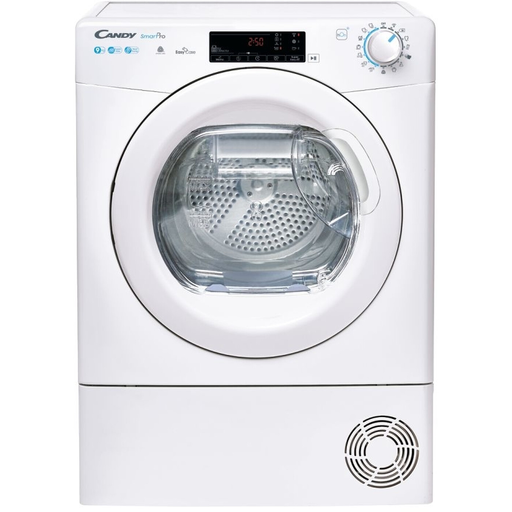
Candy CSOE H9A2TE-80 Smart Pro 9 kg heat-pump dryer, white
For a house considering larger shared batches, check how its cotton-programme load limit compares with your usual laundry. The product name lists 9 kg capacity and an A++ rating; compare the exact model’s energy label before choosing.
View on Joybuy
 No image available
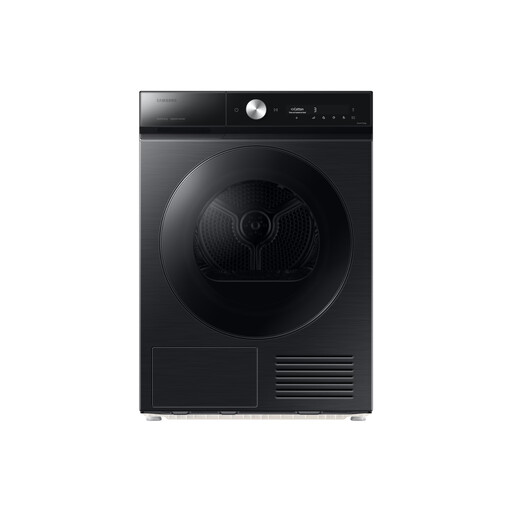
Samsung Series 8 AI Energy DV90BB9545GBS1 9 kg heat-pump dryer, black
For housemates considering larger combined loads, compare the cotton programme with the batches you actually dry. The product name lists 9 kg capacity; check the load and fabric conditions of any faster programme separately.
View on Joybuy
 No image available
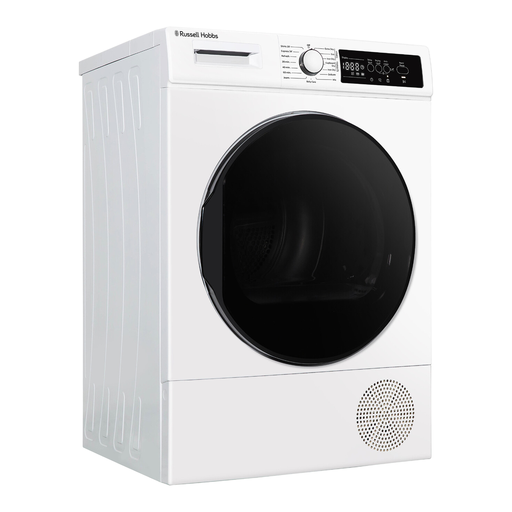
Russell Hobbs RH9HPTD1E12W 9 kg heat-pump dryer, white
For shared loads where drum capacity matters, check whether the cotton programme accommodates the household’s usual batches. The product name lists 9 kg capacity; also check the model’s dimensions and noise figure for the intended room.
View on Joybuy
 No image available
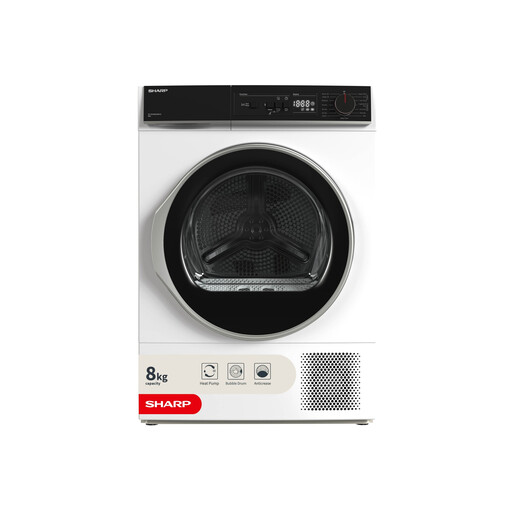
Sharp KD-NHA8S6GW1D-EN 8 kg heat-pump dryer, white
For housemates planning manageable batches rather than combining larger loads, check the cotton programme and measure the installation space. The product name lists 8 kg capacity and an A++ rating; compare the exact model’s energy label.
View on Joybuy
 No image available
Hoover HRE H9N2TE-80 9 kg heat-pump dryer, white
For larger shared batches, check that its cotton programme offers the drying control the house wants. The product name lists 9 kg capacity, Sensor Dry, Wi-Fi connectivity and an A++ rating; confirm the energy information and cleaning instructions for this model.
View on Joybuy
Frequently asked questions
Does a heat-pump dryer need an external-wall vent?
No. Electrical Safety First says a heat-pump dryer does not need a hole in an external wall. Allow the space and room ventilation required by the exact model’s installation instructions.
Can a student house plug a tumble dryer into an extension lead?
Use a direct wall socket instead. Electrical Safety First warns that an overloaded extension lead can create a fire risk; check the dryer’s plug and installation instructions before deciding where it will go.
What upkeep should housemates agree on?
Agree who will clean lint from the filter and door area after each use, and follow the model manual for other routine cleaning. Electrical Safety First also advises registering the appliance for recall information and avoiding overnight operation where possible.
How should housemates compare electricity use?
Compare the energy label and product information for each exact model, then consider your tariff and likely drying frequency. A general claim about heat-pump dryers cannot tell you what your household will use.
What should renters check before installing their own dryer?
Check the tenancy agreement, the proposed electrical connection and the rules applying to your accommodation before arranging installation. For qualifying rented homes in England, Ministry of Housing, Communities & Local Government guidance describes landlord duties concerning electrical installations, including inspection and testing at least every five years; the cited regulations exclude student halls and do not settle responsibility for a dryer bought by tenants.


