For regular winter cotton loads, choose a heat pump dryer by checking its current A–G energy label, cotton dryness settings, drum capacity and installed dimensions together. Moisture sensing and a suitable cotton programme are useful if you want a chosen dryness level, but a larger drum only makes sense if your usual loads justify it; allow for filter cleaning and the space required by the installation instructions.
Who this suits
Frequent winter cotton dryers
If you regularly machine-dry cotton clothes, towels or bedding in colder months, compare energy information alongside a capacity that fits the loads you actually dry. Energy Saving Trust explains what appliance energy labels show.
Cotton-care and dryness-control buyers
If you want to choose when cotton garments are ready to put away or iron, look at the exact model’s cotton programmes and sensor controls. Bosch and AEG list different model-specific options, so check the programme names rather than assuming all dryers offer the same endpoints.
Space- and maintenance-conscious households
If the dryer must fit a limited utility or kitchen space, check its full depth, access to a wall socket and the clearances in its installation instructions. Filter access also matters when the machine will be used regularly.
What to check before buying
Start with the loads you expect to dry and the space available, then compare energy information and the cotton settings on models that fit.
| Concern | What to check | Who this matters to |
|---|
| Electricity use |
Compare current A–G labels and product information sheets alongside drum capacity. Energy Saving Trust notes that larger appliances can use more energy even when their rating is the same; do not equate older A++ or A+++ wording with the current scale. |
If I expect to run the dryer often through winter, electricity use could decide which model I choose. Around 36% of consumers put this concern first. |
| Cotton dryness |
Check for a cotton cupboard-dry setting and explicit moisture-sensing controls on the exact model; follow garment-care labels for individual items. |
I want everyday cotton clothes ready to put away without relying only on a fixed timer. Consumers who prioritise that control account for around 29%. |
| Capacity and fit |
Match the rated capacity to your usual loads, then check full dimensions and required installation clearance. Capacity alone does not tell you the dryer’s depth. |
If towels or bedding are regular loads, I need enough capacity without choosing a machine that obstructs the room. Around 21% of consumers make load size and fit their primary concern. |
| Upkeep and placement |
Check filter access, condenser-cleaning instructions and whether the intended position permits direct wall-socket access and the specified clearance. |
I need routine cleaning to be manageable and the dryer to have a suitable place to stand. For around 14% of consumers, upkeep and safe placement come first. |
Mistakes to avoid
-
Assuming all heat pump dryers use the same amount of electricity
Heat pump technology does not make capacity, energy rating and programme use identical across models. Energy Saving Trust notes that a larger appliance can use more energy despite having the same rating.
Compare the current label and product information sheet for each exact model you are considering, alongside its capacity.
-
Choosing capacity without measuring the space
The stated depth of AEG’s 8 kg TR718AE4B is 663 mm at its maximum, while Bosch lists its 9 kg WQG245R2GB at 613 mm deep. Those model specifications show why the capacity figure alone cannot settle a fit check.
Measure the route into the room and the intended position, then follow the exact model’s instructions for access and clearance.
-
Treating a self-cleaning condenser as maintenance-free
A condenser-cleaning feature does not remove the need to deal with lint. Electrical Safety First advises cleaning lint and fluff from the filter and around the door after every use.
Check the model’s filter access and follow its manual for any additional cleaning.
-
Planning to use an extension lead or an enclosed position
Electrical Safety First warns that an extension lead can overload when other appliances are connected, and advises leaving space around a tumble dryer rather than installing it in an enclosed cupboard.
Check that the intended position has an appropriate nearby wall socket and meets the model’s installation instructions before arranging delivery.
Brands to consider for winter cotton drying
Bosch
Bosch has model-specific options for buyers comparing cotton dryness controls, capacity and condenser maintenance.
- Bosch lists AutoDry on both the 9 kg WQG245R2GB and 8 kg WTH85226GB; the WQG245R2GB also lists a SelfCleaning Condenser.
- The WTH85226GB instead has an easy-clean condenser filter. Check the maintenance instructions and dimensions for the model you choose.
AEG
The 8 kg 7000 SensiDry TR718AE4B is relevant if named cotton dryness settings are central to your choice.
- AEG lists Cotton Cupboard, Cotton Extra Dry and Cotton Iron Dry programmes, alongside its ProSense+ humidity-sensing feature, for this model.
- Its stated maximum depth is 663 mm. Check that figure and the required clearance against your intended space; the listed features do not establish comparative drying results.
LG
LG’s 9 kg RHX5009TWB is relevant to buyers considering automatic condenser cleaning and sensor-led controls.
- LG describes AI Dry and an Auto Clean Condenser on this exact model.
- These are LG’s model-specific feature claims, not independent evidence of cotton-drying quality. Check the programme and maintenance instructions for the load you intend to dry.
Miele
Miele lists heat pump dryers in 8 kg and 9 kg variants for buyers comparing specialist care features.
- The range offers several feature combinations, giving buyers model-specific options to compare.
- Features such as SilenceDrum, SteamCare and app control differ by variant; check the exact model rather than treating them as standard across the range.
Heat pump dryers on Joybuy
These 8 kg and 9 kg heat pump dryers are relevant to winter cotton loads. Check each model’s exact cotton settings, current A–G label and installation instructions before comparing them; older A++ and A+++ wording in product names is not a like-for-like substitute for the current label.
 No image available
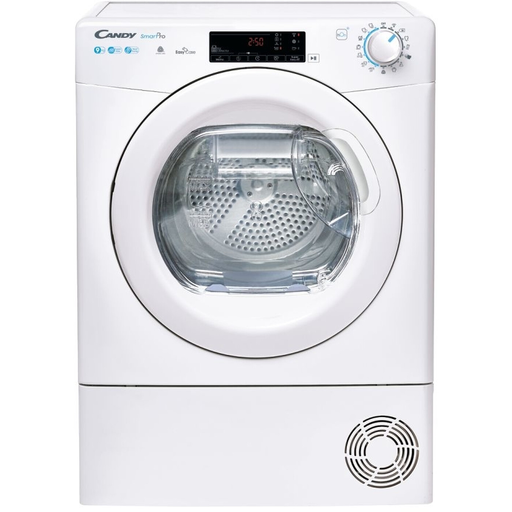
Candy CSOE H9A2TE-80 Smart Pro 9 kg Heat Pump Dryer, White
Consider this 9 kg model if your regular cotton loads warrant the capacity and you want to check selectable dryness settings. Confirm that its exact cotton programme reaches the endpoint you need, and follow its filter and water-container instructions.
View on Joybuy
 No image available
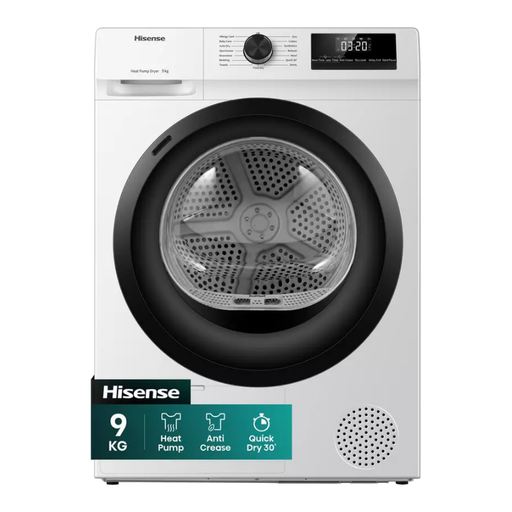
Hisense DH1Q902BW2 1 Series 9 kg Heat Pump Dryer, White
This 9 kg option is worth checking if load capacity and room fit lead your decision. Confirm the cotton programme, whether its dryness controls use moisture sensing, and the clearance required behind the machine.
View on Joybuy
 No image available
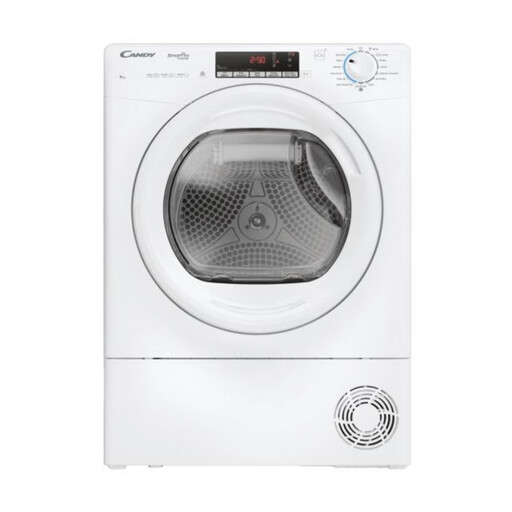
Candy CROE H9A3TE-80/N 9 kg Heat Pump Dryer with Sensor Dry and Wi-Fi, White
Its stated 9 kg capacity and Sensor Dry feature make it relevant when loads vary and a chosen dryness level matters. Check for the cotton setting you want and consult the manual for filter and water-container care.
View on Joybuy
 No image available
Hoover HRE H9N2TE-80 9 kg Heat Pump Dryer with Sensor Dry and Wi-Fi, White
This 9 kg model lists Sensor Dry, which may suit varying loads when you want to select a dryness level. Check its exact cotton programmes, installed dimensions and routine filter-care instructions.
View on Joybuy
 No image available
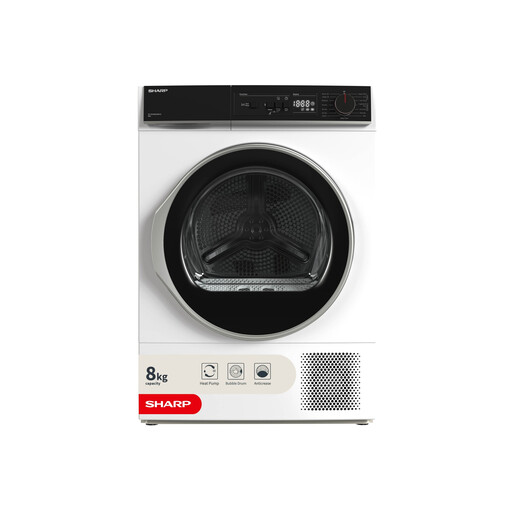
Sharp KD-NHA8S6GW1D-EN 8 kg Heat Pump Dryer, White
Consider the stated 8 kg capacity against the cotton loads you normally dry and the space available. Check the exact cotton dryness options and the manual’s filter and water-container instructions before choosing it.
View on Joybuy
Frequently asked questions
Does a heat pump tumble dryer need an external wall vent?
No external wall hole is needed for a heat pump dryer, according to Electrical Safety First. You still need to follow the exact model’s installation instructions and leave the specified space around it.
What should I clean after each drying cycle?
Clean lint and fluff from the filter and around the door after every use, as Electrical Safety First advises. Follow the model manual for additional tasks; a self-cleaning condenser does not replace lint-filter cleaning.
Can I use an extension lead for a tumble dryer?
Plan for an appropriate nearby wall socket instead. Electrical Safety First warns that an extension lead can overload when used with other appliances; check the dryer’s plug and installation instructions before placing it.
Which energy information should I compare?
Compare the current label and product information sheet for the exact dryer, alongside its capacity and intended programme use. Energy Saving Trust explains the A–G appliance scale and the energy-use, noise and performance information shown on labels; older A++ or A+++ wording should not be compared as though it used the same scale.


