
24/7 Customer Support

Free returns

Same-day & Next-day Delivery

Quality Guaranteed

Unlock Your Welcome Offers: FREE Delivery | Up to 80% OFF | Free 30-day JoyPlus trial
Download the APP
A reliable baking sheet is the unsung hero of a British kitchen. It is the foundation for perfectly golden biscuits, evenly roasted vegetables and weeknight traybakes. Yet, many of us are familiar with the disappointment of a new tray that buckles dramatically in the heat of the oven, or a "non-stick" surface that begins to peel after only a few uses.
Finding a truly heavy duty baking sheet that withstands the rigours of a busy kitchen can feel like a challenge. Marketing claims often obscure the very features that determine a product's longevity and performance. Before you invest in another piece of bakeware, let's look at the common pitfalls to avoid.
To choose a tray that will serve you well for years, focus on a few key technical parameters rather than just the price tag. These are the non-negotiable features that separate a dependable workhorse from a disposable one.
The metal used is the most critical factor in a baking sheet's performance.
A tray's ability to resist warping is directly related to its thickness (or gauge) and construction. A thicker pan, typically 0.8mm or more, has the structural integrity to stay flat at high temperatures. Look for trays with rolled rims or edges, which add significant rigidity and prevent the pan from flexing. This is essential whether you're baking a delicate oven tray for biscuits or using it as a large roasting tin for root vegetables.
The surface determines how easily your food releases and how simple the tray is to clean.
We have identified a few products that align with these quality principles, matching them to specific types of home cooks.
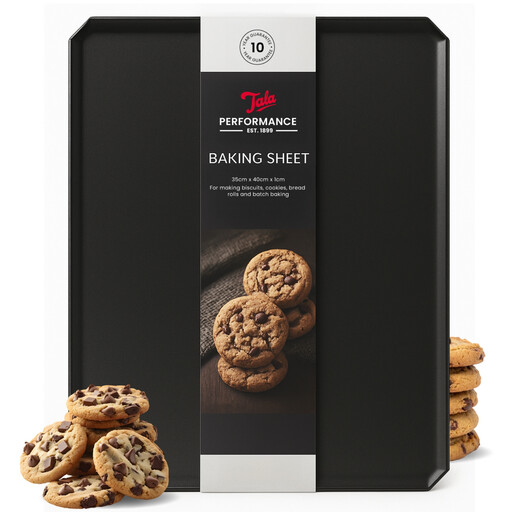
Why This Fits Their Persona: This is for the serious home cook who bakes or roasts several times a week. They need a tray that delivers consistent, professional-level results and can withstand constant use without failing.
Its heavy-weight carbon steel construction directly counters the warping issue. The premium, double-layered Eclipse non-stick coating is designed for durability, addressing the pitfall of cheap, peeling surfaces.
Exceptional heat distribution for even baking and browning. The robust coating is noted as being safe for use with metal utensils, a sign of its superior durability.
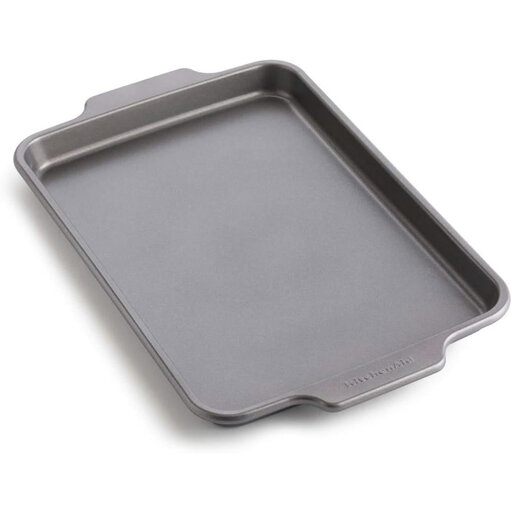
Why This Fits Their Persona: Ideal for the family that enjoys regular baking and traybake dinners. They value reliability and convenience from a brand they recognise, wanting a product that performs well without requiring special care.
This sheet provides a specific 0.8mm thickness, a verifiable fact that counters vague "heavy gauge" marketing. This construction is explicitly designed to resist warping, addressing a primary pain point.
It combines warp-resistant aluminised steel with the convenience of being dishwasher-safe, making it a practical choice for busy households.
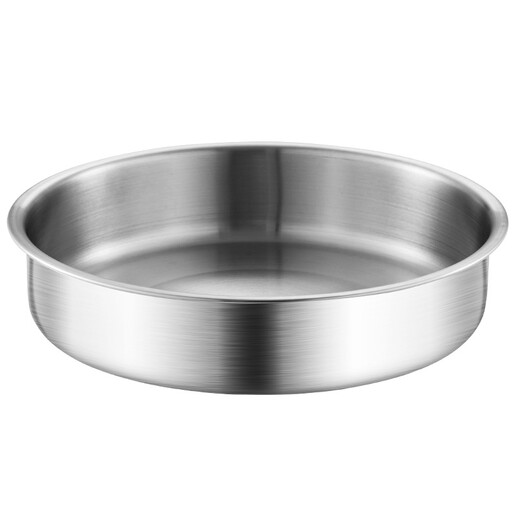
Why This Fits Their Persona: Perfect for those with smaller ovens, cooking for one or two or who need a multi-purpose oven-safe dish for small roasts, gratins and reheating. Durability is more important than a large, flat surface.
By using uncoated 304 stainless steel, it completely eliminates the problem of peeling non-stick surfaces. Its "unbreakable" metal construction is the antithesis of flimsy, warping trays.
Extremely versatile: it is compatible with ovens, steam ovens and even induction cookers. Its durability is its main asset, offering a long-term solution for various cooking tasks.
We have compiled a complete, real-time list of products that fully satisfy these strict selection criteria and UK safety regulations.
A baking sheet is typically a flat or very low-sided pan, ideal for promoting air circulation for crisping and even browning on items like biscuits and chips. A large roasting tin has higher sides, designed to contain juices and splatters from roasts like chicken or joints of meat. However, a heavy duty baking sheet can often be used for roasting vegetables and other drier items.
To prolong the life of a non-stick baking tray, it is advisable to hand wash it with a soft sponge and avoid abrasive scourers. While some are dishwasher-safe, hand washing is gentler on the coating. For uncoated carbon steel or stainless steel, you can clean more vigorously. Always allow the tray to cool completely before washing to prevent thermal shock, which can cause warping over time.
This depends entirely on the quality of the coating. For most standard non-stick trays, using metal utensils is not recommended as it will scratch and damage the surface. However, some premium, reinforced coatings, like the one on the Tala baking sheet mentioned, are specifically designed to be durable enough to withstand metal tools. Always check the manufacturer's guidance for your specific product.