
24/7 Customer Support

Free returns

Same-day & Next-day Delivery

Quality Guaranteed

Unlock Your Welcome Offers: FREE Delivery | Up to 80% OFF | Free 30-day JoyPlus trial
Download the APP
A reliable heavy duty folding wagon can be a game-changer, whether you are hauling gear across a festival field, taking supplies to the beach or simply managing a large grocery shop. However, the market is filled with options that look sturdy online but fail to perform in the real world. Many buyers find themselves with a cart that buckles, has wheels that get stuck or a folding mechanism that gives up after only a few uses.
Before you make a purchase, it is crucial to look past the marketing claims. Here are a few common pitfalls that can lead to a disappointing and wasteful purchase:
collapsible cart with wheels is its portability. Unfortunately, some models use weak plastic joints or poorly designed locks that can wear out or snap, rendering the wagon difficult to store or, worse, unsafe to use.To find a durable and practical folding wagon, focus on the core components rather than just the headline features. Analysing these three areas will help you select a model that is built for purpose.
The foundation of any heavy duty folding wagon is its frame. Look for models constructed from heavy-duty steel tubes. This material provides the necessary strength to support significant weight without bending or warping. A powder-coated or spray-painted finish is also important, as it offers a layer of protection against rust and corrosion, extending the life of your foldable garden trolley in the damp UK climate. A robust steel frame is a non-negotiable feature for long-term durability.
The wheels determine where your wagon can and cannot go. For true versatility, especially for use as a heavy duty beach wagon or festival trolley, seek out wide, off-road style wheels. These distribute weight over a larger surface area, preventing them from sinking into soft ground. For general use, such as on pavements or firm paths, standard wheels are sufficient, but look for those made from durable materials with good tread. In either case, front wheels that offer 360-degree swivel capability are essential for easy steering and manoeuvrability in tight spaces.
Pay attention to two key figures: load capacity (in kg) and volume (in litres). The load capacity tells you the maximum weight the wagon is designed to carry. For a true folding utility wagon, a capacity of 100 kg or more is a good benchmark. The volume, measured in litres, indicates how much space is inside the fabric liner. A large volume is crucial for bulky but lightweight items like tents and sleeping bags for your camping cart. The fabric itself should be a high-strength material, such as 600D Oxford fabric, which is resistant to tearing and easy to clean.
Based on these practical criteria, here are some recommendations matched to different user needs.
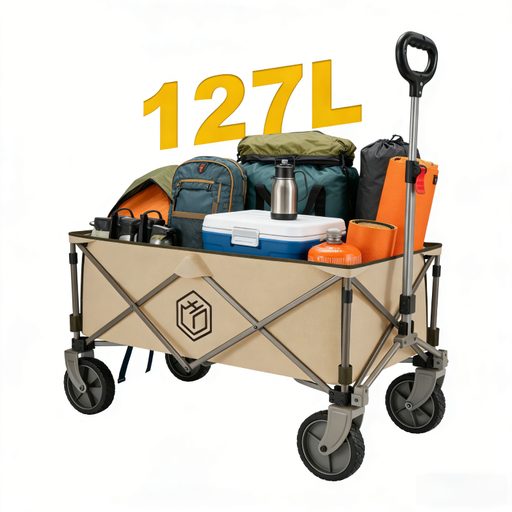
Why This Fits Their Persona: This user needs a reliable, all-round solution for family days out, camping trips and transporting sports equipment. It needs to be easy to store in the car boot and simple to handle on park paths or campsite grass.
Its heavy-duty spray-painted steel tube frame and stated 200 kg load capacity address concerns about buckling. The 360° swivel wheels offer good manoeuvrability, avoiding the frustration of fixed-wheel designs.
A balanced combination of a high 200 kg load capacity and a compact, foldable design. The 127L volume is ample for typical family or camping gear without being overly bulky.
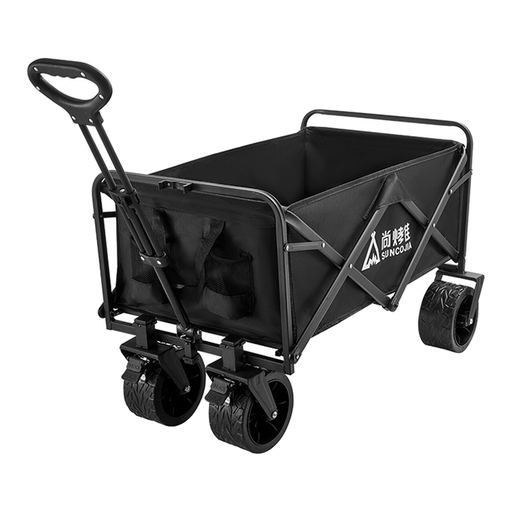
Why This Fits Their Persona: This user faces challenging terrain like muddy fields or soft sand. They need maximum volume for tents, coolers and chairs, and wheels that will not sink or get stuck.
It directly counters the "all-terrain" myth with its specified widening cross-country damping wheels, which are designed for performance on soft and uneven surfaces. The carbon steel frame provides a solid structure.
The combination of genuine off-road wheels and a very large 350L volume makes it highly suitable for heavy-duty hauling. The detachable Oxford fabric bin is also practical for cleaning after a muddy trip.
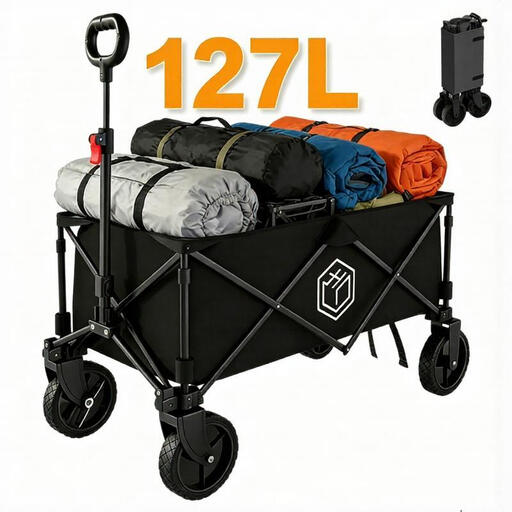
Why This Fits Their Persona: This user needs a workhorse for tasks around the home: carrying heavy bags of compost, moving tools or bringing a large grocery shop in from the car in one trip. Durability and a high weight limit are priorities.
It avoids the trap of a weak frame by using robust steel tubes, providing confidence for carrying dense materials like soil or shopping. The simple, effective folding mechanism ensures it can be stored away easily without fuss.
The high 200 kg load capacity is its main strength for home and garden tasks. Its compact folded size means it will not take up excessive space in a garage or shed.
We have compiled a complete, real-time list of products that fully satisfy these strict selection criteria and UK safety regulations.
Given the UK's damp weather, maintenance is key. After use, especially if it gets wet or muddy, wipe the steel frame down with a dry cloth. Ensure the fabric liner is completely dry before folding the wagon for storage. Storing it in a dry place like a garage or shed, rather than outdoors, will significantly prolong its life and prevent rust on the frame and wheel axles.
This is a critical distinction. Static load capacity is the maximum weight the wagon can support when it is stationary. Dynamic load capacity is the weight it can handle while being pulled over various surfaces, which puts much more stress on the frame, wheels and axles. If a manufacturer only lists one figure, it is often the higher static capacity. For real-world use, a strong frame and well-built wheels are better indicators of performance than a single, high number.
This depends on the specific transport operator and how busy the service is. While a folded wagon is relatively compact, it can still be cumbersome. On trains, it may be possible during off-peak hours if stored in the designated luggage areas. On buses, it is often at the driver's discretion and may not be permitted if it obstructs the aisle or wheelchair spaces. Always check with the transport provider's policy beforehand.