
24/7 全天候客户支持

免费退货

当日/次日达

品质保障

开启新人专享福利: 全场免邮 | 低至 2 折 | 免费试用 30 天 JoyPlus 会员
下载 Joybuy
There is little more disheartening for the organised home cook than pulling a carefully prepared meal from the freezer, only to find it covered in ice crystals and tasting of, well, freezer. That is the unfortunate result of freezer burn, a common problem that wastes food, money and the effort you put into batch cooking or stocking up on bargains.
The market for freezer storage bags is crowded, and it is easy to fall into a few common traps that lead directly to this disappointing outcome. Before you buy another roll of flimsy bags, let's look at the pitfalls that many UK shoppers encounter.
To ensure your food stays as fresh as the day you froze it, focus on these two non-negotiable features. Getting these right is the key to effective long-term freezer storage.
The single most important factor in a good freezer bag is its thickness, often referred to as its gauge. Thick freezer bags, or those described as "heavyweight" or "heavy-duty," are essential. This is not a marketing gimmick; the thicker plastic creates a much more effective barrier, significantly slowing down the process of sublimation, where moisture escapes from the food and forms ice crystals. A thin bag is permeable, allowing air in and moisture out. A heavy-duty bag locks freshness in.
Having a range of sizes is crucial for an organised freezer. Using large freezer bags for a whole chicken or a bulk batch of soup makes sense, but using that same bag for a single portion of chopped vegetables is inefficient. For daily use, consider specific bags for meal prep or portion control bags. These smaller sizes allow you to store food in ready-to-use quantities, minimising air in the bag and making your freezer a model of efficiency. Always leave a small amount of headspace (about an inch) for liquids to expand as they freeze, but aim to squeeze out as much air as possible before sealing.
We have analysed the specifications of various freezer bags to match them with common household needs in the UK. Instead of a one-size-fits-all approach, here are our recommendations based on specific user profiles.
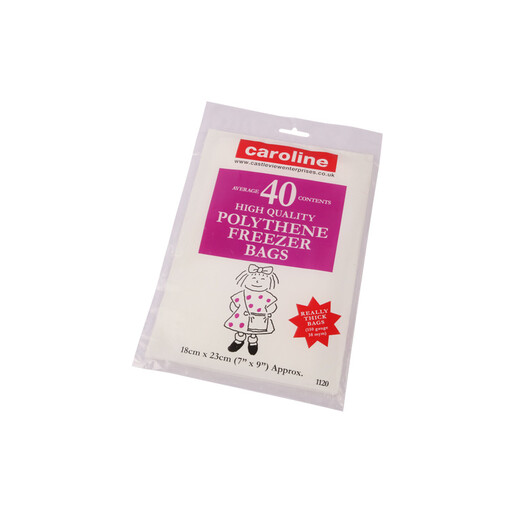
Why This Fits Their Persona: This size is ideal for portioning individual meals. It fits a single chicken breast, a serving of chilli or a portion of chopped vegetables perfectly. The 40-pack provides excellent value for anyone who dedicates their Sunday to prepping meals for the week ahead.
These are made from heavy-gauge polythene, directly addressing the pitfall of using thin, ineffective bags. The material is robust enough to protect single portions from freezer burn.
Excellent for portion control bags, helping to reduce food waste and streamline weekday cooking. The pack quantity supports a consistent meal prep routine.
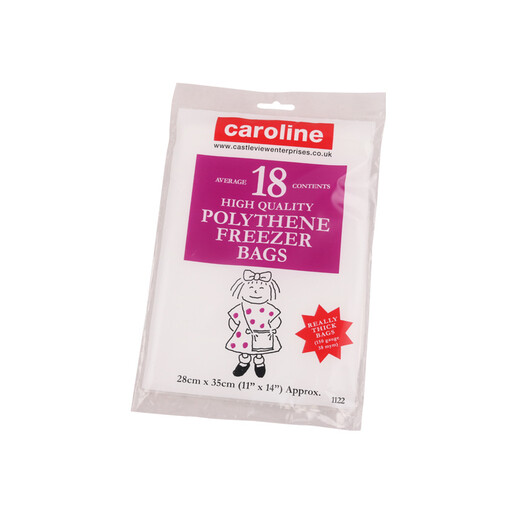
Why This Fits Their Persona: This versatile size is a kitchen workhorse. It is large enough for a family-sized portion of bolognese, a batch of soup or storing a half-loaf of homemade bread. It strikes a great balance for those who cook in larger quantities.
The "heavyweight construction" is specifically designed to handle larger volumes of food without stretching or splitting, ensuring the seal remains intact and air stays out.
A great all-rounder size for a wide range of family freezing needs, from leftovers to storing seasonal fruit and vegetables from the garden.
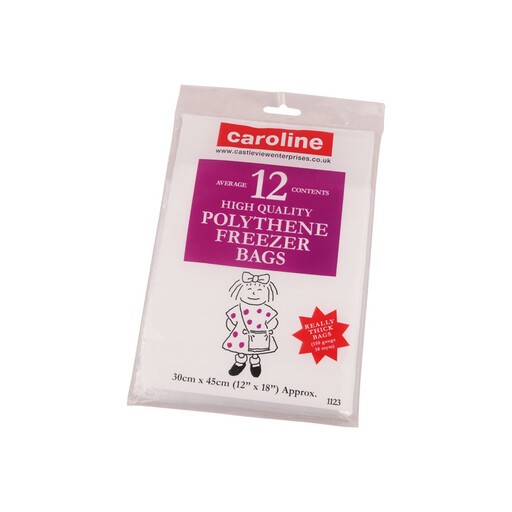
Why This Fits Their Persona: For those who buy meat in bulk from the butcher, freeze large joints or need to store a whole chicken, these large freezer bags are indispensable. The generous dimensions accommodate bulky and awkwardly shaped items with ease.
The durable, heavyweight plastic resists punctures from bones and prevents the bag from splitting when filled with heavy items, avoiding the common failure point of lesser bags.
Its ample size is perfect for large cuts of meat, whole loaves of bread or big batches of produce, reducing the need to use multiple smaller bags.
We have compiled a complete, real-time list of products that fully satisfy these strict selection criteria and UK safety regulations.
The key is to minimise air contact with the food. First, ensure any cooked food is completely cool before bagging it. Fill the bag, leaving about an inch of space at the top for expansion. Then, carefully press as much air out as possible before you seal it. For liquids like soup, you can submerge the sealed bag partially in water to use the pressure to force air out. Finally, always label your bags with the contents and the date.
The primary difference is the thickness and durability of the plastic. Heavy duty freezer bags are made from a thicker, less porous plastic (a higher gauge of polythene). This robust construction acts as a superior barrier against the cold, dry air in a freezer, which is what draws moisture out of food and causes freezer burn. Standard food or sandwich bags are much thinner and more permeable, offering minimal protection for long-term freezing.
For items like bread, fruit or vegetables, you can often reuse a freezer bag if you wash it thoroughly with hot, soapy water and allow it to dry completely. However, for hygiene and food safety, it is strongly advised not to reuse bags that have held raw meat, poultry or fish. Repeated washing can also weaken the plastic over time, reducing its effectiveness.