
24/7 Customer Support

Free returns

Same-day & Next-day Delivery

Quality Guaranteed

Unlock Your Welcome Offers: FREE Delivery | Up to 80% OFF | Free 30-day JoyPlus trial
Download the APP
Hanging a heavy mirror, a set of shelves or a large piece of art can transform a room. But when faced with plasterboard walls, that simple task can feel daunting. The fear of a crash in the middle of the night is a real concern for many UK homeowners and DIY enthusiasts. Standard wall plugs simply aren't designed for the hollow nature of plasterboard, leading to weak points and potential damage.
This is where heavy-duty plasterboard fixings come in. These specialised anchors are engineered to grip the inside of a hollow wall, distributing weight securely and providing a reliable hold. As a Joybuy Product Recommendation Officer, my role is to help you navigate the options. This guide will walk you through what to look for in a quality fixing and highlight some dependable choices to ensure your next project is a success.
Before you buy, considering a few key factors will ensure you select the correct product for your specific needs. Getting this right from the start saves time, prevents wall damage and gives you peace of mind.
Assess the Load Weight: The single most important factor is the weight of the item you intend to hang. A small picture frame has very different requirements from a floating bookshelf or a large television bracket. Check the packaging of any heavy duty wall plugs for information on their maximum recommended load. Always choose a fixing rated well above the weight of your item for a safe margin.
Understand the Fixing Mechanism: Unlike standard plugs that expand in a solid material, hollow wall anchors work differently. Common types include expanding anchors, which open up like an umbrella behind the plasterboard and self-drilling fixings that screw directly into the wall. For heavier items, expanding plasterboard plugs that create a large contact area behind the board generally offer a more secure hold.
Match the Tools and Screws: Pay close attention to the manufacturer's specifications. Using the wrong size drill bit can result in a hole that is too large, preventing the fixing from gripping, or too small, making installation difficult. Likewise, the screw size (diameter and length) is critical. A screw that is too thin won't engage the fixing's thread properly, while one that is too thick can damage the anchor.
After reviewing market options based on their features, user-friendliness and suitability for common household tasks, here are our recommendations. These selections from Plasplugs, a well-regarded name in the UK for fixings, are known for their practical design and reliable performance.
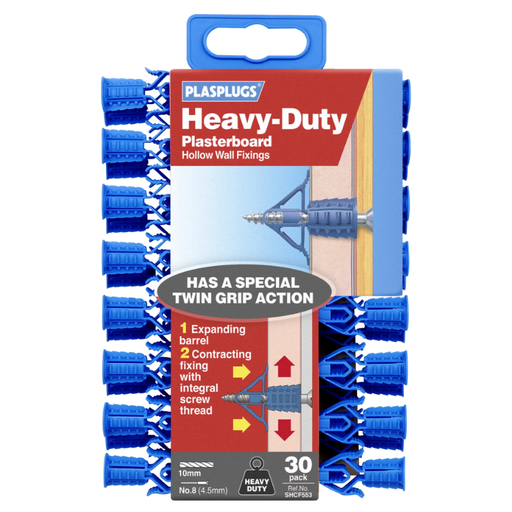
Why It Stands Out: This pack is a great all-rounder for anyone with several projects on the go. The design features an expanding barrel and multi-thread technology, which work together to create a very strong anchor point behind the plasterboard. As you tighten the screw, the fixing contracts and expands in the cavity, locking it firmly in place.
Pros:
Who is it for? This is an excellent choice for dedicated DIYers undertaking renovations or tradespeople who frequently need reliable fixings for plasterboard walls.
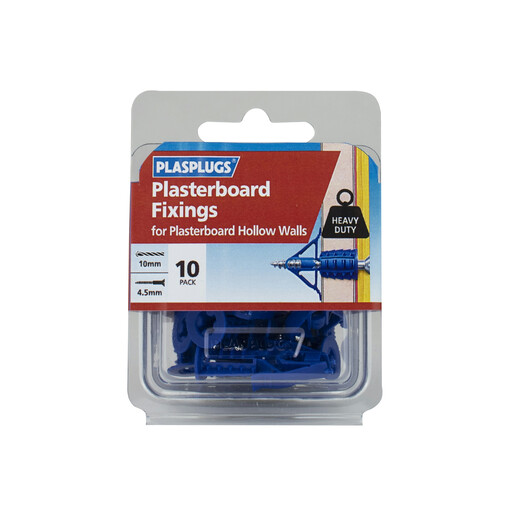
Why It Stands Out: Offering the same reliable technology as the larger pack, the HCF110 is perfect for smaller, one-off tasks. It uses the same multi-thread engineering and expanding barrel to prevent pull-out under load. The anti-rotate ribs are a thoughtful feature that stops the fixing from spinning in the hole during installation—a common frustration with lesser-quality plasterboard fixings.
Pros:
Who is it for? Perfect for homeowners or tenants needing to hang a single heavy item, like a large mirror or a small cabinet, without committing to a bulk purchase.
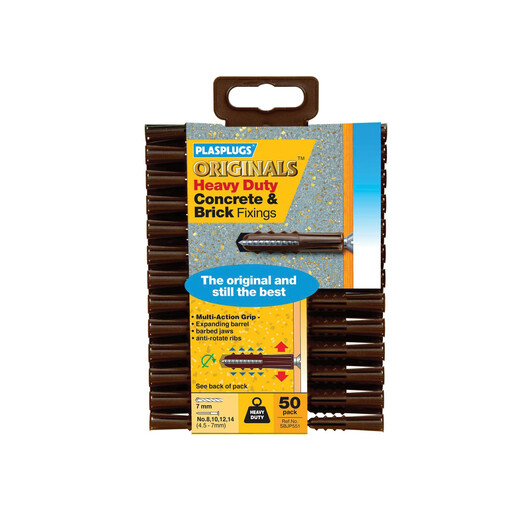
Why It Stands Out: It is important to note that this product is designed for a different purpose. The SBJP551 Originals are heavy-duty fixings for solid walls like brick, concrete and blockwork, not for hollow plasterboard. However, they are an invaluable addition to any comprehensive toolkit. Many UK homes have a mix of wall types, and these plugs provide a robust solution for mounting heavy items onto masonry. They feature multi-action grips and barbed jaws for an exceptionally firm hold in solid materials.
Pros:
Who is it for? This is for the tradesperson or serious DIYer who needs a reliable stock of heavy-duty plugs for solid walls. They are perfect for outdoor projects or for fixing into internal brickwork.
If the products above don't quite match your project's requirements, or if you're looking for fixings with different load capacities or for other wall types, there are many other solutions available.
? Explore our full range of heavy duty plug options at Joybuy
1. How much weight can heavy-duty plasterboard fixings hold? This varies significantly between products. A high-quality heavy-duty fixing can typically hold between 10kg and 25kg, but some specialist anchors can support more. Always check the manufacturer's stated load capacity on the packaging and remember that this weight is for static, vertical loads.
2. Do I need a special tool to install these fixings? Most modern heavy-duty plasterboard fixings, including the Plasplugs models mentioned, do not require a special setting tool. They are designed for installation with just a drill, a hammer to gently tap them flush and a screwdriver to tighten the screw. This makes them accessible for both professionals and first-time DIYers.
3. What is the main difference between a standard wall plug and a plasterboard fixing? A standard wall plug (like the brown plugs used for solid walls) works by expanding to create friction inside a solid drill hole. This method is ineffective in a hollow plasterboard wall. A plasterboard fixing is a type of hollow wall anchor; it is designed to pass through the board and expand in the cavity behind it, creating a secure anchor that distributes the load over a wider surface area.