
24/7 Customer Support

Free returns

Same-day & Next-day Delivery

Quality Guaranteed

Unlock Your Welcome Offers: FREE Delivery | Up to 80% OFF | Free 30-day JoyPlus trial
Download the APP
Keeping a hedge tidy can be straightforward with the right equipment, but choosing between cordless, corded and manual hedge trimmers is less simple. A compact garden may need only occasional shaping, while a mature boundary hedge could require longer blades, greater cutting capacity and a tool that remains comfortable after several minutes of use.
The main risk is buying based on a headline feature without checking how it affects real garden work. Here are three common pitfalls to avoid.
A longer blade can cover more hedge in each pass, but it may also add weight and feel awkward when shaping small shrubs. Blade length should be considered alongside cutting capacity, balance and the size of your hedge. A 45cm blade with an 18–19mm gap may suit smaller hedges, whereas thicker branches call for a wider tooth opening.
Runtime depends on foliage density, cutting resistance, temperature, battery condition and how continuously the tool is used. A cordless hedge trimmer described as running for up to a stated number of minutes may deliver less during demanding cutting. Check whether the product includes a battery and charger, and consider whether replacement batteries are available within the same tool range.
A lightweight hedge trimmer can be easier to control, particularly for side trimming and detailed shaping. However, a pole or telescopic design may shift the centre of gravity away from your body. For high hedges, extended reach can reduce the need for a ladder, but it still requires careful handling and a stable stance.
Blade length affects coverage, while tooth gap indicates the approximate branch thickness the trimmer is designed to handle. For example:
A dual-action hedge trimmer uses blades moving in opposite directions. This can help produce a smoother cutting action and may reduce vibration compared with simpler blade arrangements, although the overall design, weight and grip remain important.
An electric hedge trimmer with a mains cable provides continuous power but requires safe cable management and access to an outdoor socket or suitable extension lead. A cordless hedge trimmer or battery hedge trimmer allows freer movement around the garden and avoids cutting through a power cable, but charging and runtime must be planned.
Look for a hedge trimmer with battery and charger if you do not already own compatible tools. Battery platforms can be useful for households that also use cordless garden or DIY equipment. For occasional use, a supplied 2.0Ah battery may be adequate; larger hedges may benefit from an additional compatible battery.
A wrap-around or multi-position handle can improve control when switching between the top and sides of a hedge. Pole models and telescopic hedge shears can help reach awkward areas, but extended tools may feel heavier in use than their listed weight suggests.
Always check the manufacturer’s instructions before operation. Wear eye protection and sturdy gloves, keep children and pets away, avoid wet conditions and remove a battery before cleaning, adjusting or storing a cordless model.
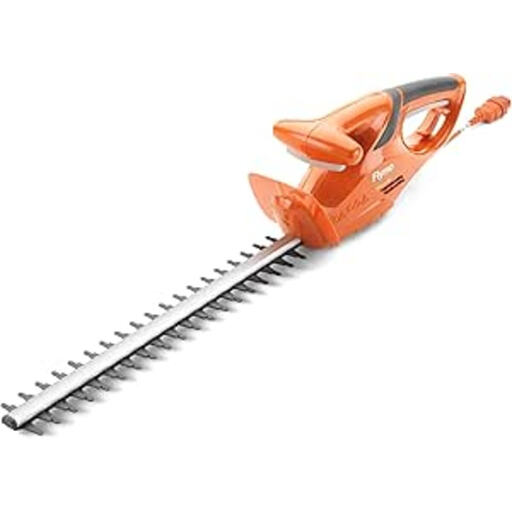
Why This Fits Their Persona: A practical choice for UK homeowners with a small garden and regular access to a suitable power source.
Its 45cm blade and 19mm gap give clear expectations for smaller hedge work instead of implying suitability for every branch size.
450W motor, dual reciprocating blades and a centralised handle designed for comfort.
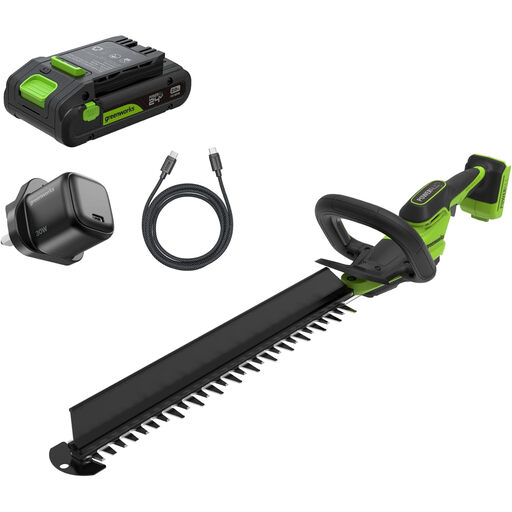
Why This Fits Their Persona: Suits gardeners who want cordless movement, a wider cutting capacity and a supplied charging setup.
The listed 28mm cutting capacity and 51cm blade make its intended workload easier to compare with smaller models.
Brushless motor, dual-action steel blade, 4,000 strokes per minute and included 2.0Ah battery with USB-C charger.
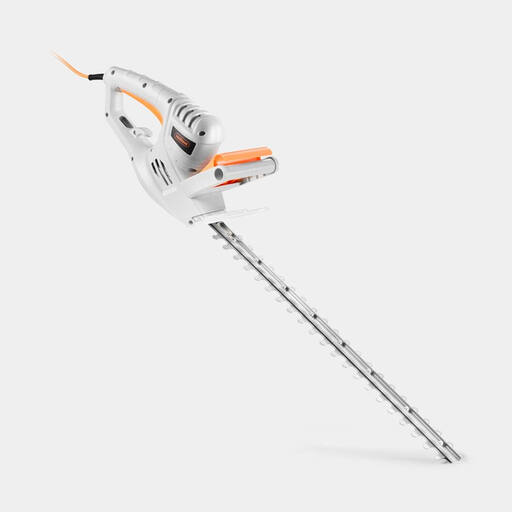
Why This Fits Their Persona: Appropriate for users maintaining small to medium hedges who prefer continuous mains power and a longer reach from the cable.
The 16mm cutting specification clarifies that it is intended for lighter branches rather than unspecified heavy growth.
550W motor, 60cm dual-action steel blades, 10m power cable and 3.2kg listed weight.
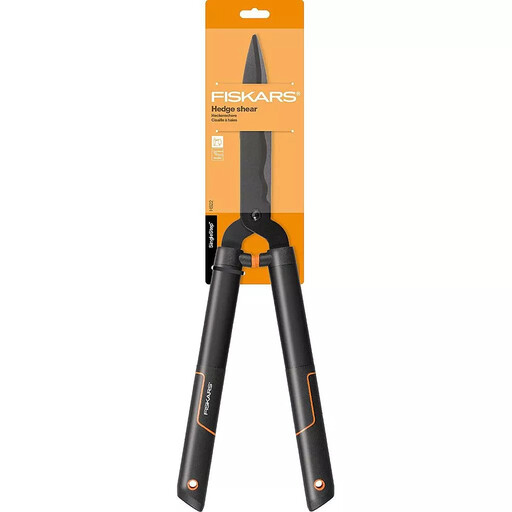
Why This Fits Their Persona: A manual option for allotment holders and gardeners who need quiet, controlled shaping without charging or cables.
Its 580mm length and 0.71kg weight make the intended balance clear, while wavy blades help grip foliage during shaping.
Hardened steel blades, friction-reducing coating and glass-fibre-reinforced handles.
We have compiled a complete, real-time list of products that fully satisfy these strict selection criteria and UK safety regulations.
They can be suitable if the battery capacity, runtime and cutting capacity match the hedge. For larger areas, allow time for charging or consider a second compatible battery. A corded model may be more practical where continuous power is available.
Remove the battery or disconnect the power source before cleaning. Wipe foliage and moisture from the blades, apply light oil where the instructions permit and store the tool indoors in a dry place. Use a blade cover when supplied.
Manual hedge shears remain useful for quiet maintenance, shaping and finishing work. They are also ready to use without charging. For thick or extensive growth, an electric hedge trimmer or cordless model will generally reduce the number of manual cutting strokes required.