
24/7 Customer Support

Free returns

Same-day & Next-day Delivery

Quality Guaranteed

Unlock Your Welcome Offers: FREE Delivery | Up to 80% OFF | Free 30-day JoyPlus trial
Download the APP
From seasonal pollen and urban pollution to the dust and dander that comes with a beloved family pet, maintaining clean indoor air can feel like a constant challenge. If you're dealing with allergies or simply want to create a healthier living environment, a HEPA air purifier for home use can make a significant difference.
Navigating the market, however, can be confusing. With so many features and technical terms, it’s hard to know what truly matters. As the Joybuy Product Recommendation Officer, my role is to help you understand the key considerations so you can find a model that fits your needs without the marketing hype. This guide will walk you through what to look for and present a few carefully selected options.
Before looking at specific models, it helps to understand a few core features. Focusing on these will ensure you select a device that is effective for your space and lifestyle.
The heart of any air purifier is its filter. A True HEPA filter is the standard for high-efficiency air cleaning. These filters are designed to capture at least 99.97% of airborne particles as small as 0.3 microns. This includes common irritants like pollen, dust mites, pet dander and mould spores, making it an essential feature for an effective dust and pollen air filter. Some models may specify H12 or H13 HEPA filters, with H13 offering a slightly higher level of filtration. For tackling household smells from cooking or pets, look for purifiers that also include an activated carbon layer.
An air purifier is only effective if it can handle the size of your room. This is measured by the Clean Air Delivery Rate (CADR), which indicates how much clean air the unit produces on its highest setting. The CADR is typically measured in cubic metres per hour (m?/h). As a general rule, you should choose a purifier with a CADR that is suitable for your room's dimensions. For example, a model designed for an air purifier for 50m? room will have a higher CADR than one intended for a small study.
If you plan to use the purifier in a bedroom or office, noise is a critical factor. Look for a quiet air purifier for bedroom use, paying attention to the decibel (dB) rating for its lowest setting or "sleep mode"—anything around 25-35dB is generally considered very quiet.
Modern purifiers also offer convenient features. A smart air quality sensor can automatically detect pollutants and adjust the fan speed accordingly, saving energy and providing hassle-free operation. Some units also function as an air purifier with ioniser, which releases negative ions to help particles settle out of the air, further improving freshness.
Based on their features and suitability for common UK household needs, here are a few air purifiers to consider.
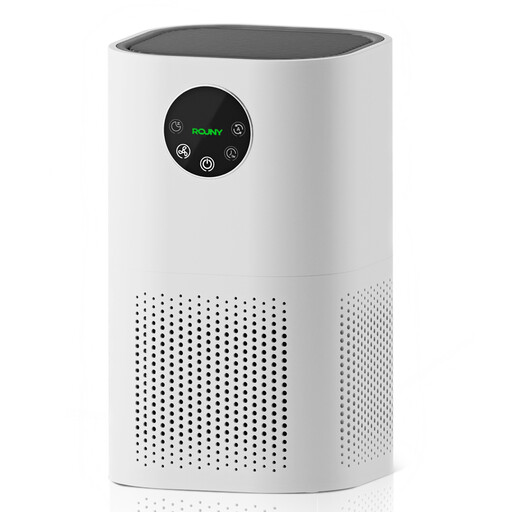
Why It Stands Out: The ROUNY AP-T1 is a well-rounded and practical choice for most homes. It combines an H13 True HEPA filter with a straightforward interface, including a colour-coded air quality display. This feature allows you to see the purifier working in real-time as the light changes from red (poor) to green (good).
Pros:
Who is it for? This model is ideal for those seeking a reliable and easy-to-use purifier for a bedroom, living room or home office. Its quiet operation and clear display make it a user-friendly option for everyday air quality management.
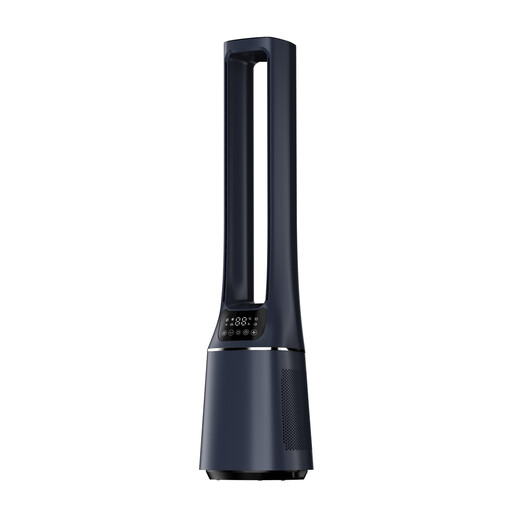
Why It Stands Out: This Midea model is a multi-functional device that serves as both a cooling fan and an air purifier. Its bladeless design is a significant safety feature for homes with children or curious pets. It also packs in smart technology, including app and voice control compatibility.
Pros:
Who is it for? This is an excellent choice for tech-savvy individuals or families who value safety and convenience. If you're looking for a single device to handle both air circulation and purification, especially during warmer months, this is a compelling option.
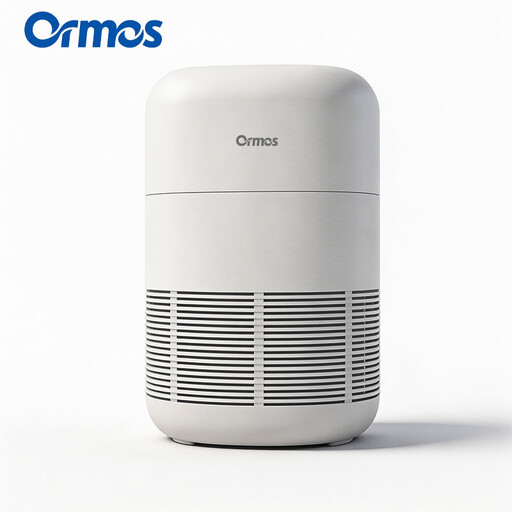
Why It Stands Out: The Ormos air purifier offers a more detailed look at your air quality. Unlike basic sensors, this unit displays real-time levels of both PM2.5 (fine particulate matter) and TVOCs (Total Volatile Organic Compounds), which can be released from cleaning products, paints and furniture.
Pros:
Who is it for? This purifier is suited for health-conscious users who want precise information about their indoor air and the ability to target invisible pollutants like formaldehyde and other VOCs.
While these models cover a range of common needs, your ideal solution might have different specifications or features. If you're looking for a different room size, design or price point, there are many other choices available.
Explore our full collection of Filter fans to find the right model for your home.
Most manufacturers recommend replacing the HEPA and carbon filters every 6 to 12 months. However, this can vary depending on how often you use the purifier and the level of pollution in your home. Many modern units have a filter replacement indicator to remind you.
A HEPA air purifier for home use is very effective at trapping pet dander, which is a common allergen. For odours, it's important to choose a model that also includes an activated carbon filter. The carbon layer is specifically designed to absorb and neutralise smells from pets, cooking and smoke.
Yes, air purifiers are designed for continuous operation to maintain consistent air quality. Most are energy-efficient, especially on lower settings. Using an "Auto Mode," if available, is a great way to let the device run efficiently by only increasing power when pollutants are detected.