What should you check?
Start with the caffeine requirement, then check the ingredients and whether the drink is intended mainly for fluid or also needs to provide nutrition.
| Priority | What to check | Your needs |
|---|
| Caffeine |
Check for a naturally caffeine-free statement and read the ingredients; Twinings identifies mate and guarana as exceptions among herbal and fruit infusions. Decaffeinated black or green tea is not necessarily caffeine-free. |
I want to avoid caffeine rather than simply reduce it, so I need to distinguish a herbal infusion from decaffeinated conventional tea. |
| Ingredients |
Read the complete list, particularly on multi-herb blends. If medicines or relevant health conditions are involved, check the individual product with a pharmacist or clinician; the NHS warns that some herbal products do not mix well with medicines. |
A shorter ingredient list would be easier for me to review, but I would not assume that any herbal drink is suitable for a particular person. |
| Fluid and nutrition |
The NHS includes tea in daily fluid intake. For an older adult with poor appetite, British Nutrition Foundation guidance also suggests considering drinks that provide energy and nutrients; a plain water-brewed infusion serves a different purpose. |
I want a drink they enjoy, while addressing poor appetite separately rather than relying on herbal tea for nourishment. |
| Individual fluid advice |
Check whether the person has a fluid restriction or an existing care plan. NHS Sussex notes that its general hydration plan is unsuitable for some people on a fluid-restricted diet. |
If their fluid intake is medically restricted, I need to follow their own care plan rather than set a tea target from general guidance. |
Brand and product references
Caffeine statements and ingredient lists apply to individual products, not automatically to every tea a brand makes.
Clipper
Clipper’s Organic Chamomile Infusion is an example of a plainly specified herbal tea.
- Clipper lists chamomile (100%) and labels this product naturally caffeine-free.
- Check other Clipper blends individually; their ingredients need not match the chamomile infusion.
Teapigs
Teapigs provides ingredient and brewed-drink information for its peppermint and chamomile teas.
- Its Peppermint Tea lists pure peppermint leaves and is labelled naturally caffeine-free; the brand lists 2 kcal per cup.
- A water-brewed tea should not be chosen in place of a drink intended to provide substantial nourishment.
Pukka
Pukka offers herbal infusions, including its Three Chamomile tea.
- Pukka labels Three Chamomile naturally caffeine-free.
- Read the ingredients of a flavoured blend rather than assuming it has the same composition as a chamomile product.
Twinings
Twinings distinguishes herbal and fruit infusions from decaffeinated conventional tea.
- Twinings says most of its herbal and fruit infusions are naturally caffeine-free, while identifying mate and guarana as exceptions.
- Its English Breakfast Decaffeinated is conventional tea, labelled by Twinings as containing 0.02% caffeine.
Yogi Tea
Yogi Tea Bedtime is a multi-herb infusion labelled naturally caffeine-free.
- The product information identifies ingredients including valerian root, sage and lavender.
- Its fuller ingredient list calls for individual review, especially when the person takes medicines.
Joybuy tea options
These options include herbal infusions and decaffeinated green tea. Choose by the person’s caffeine requirement and flavour preference, then check the individual ingredients and any relevant health advice.
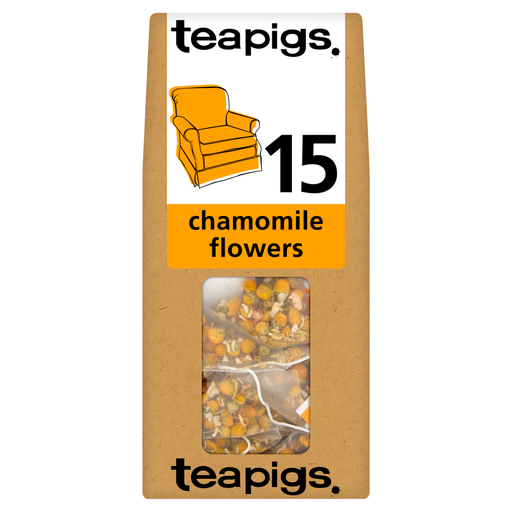 Image unavailable
Teapigs Chamomile Flowers, 15 Tea Bags, 180g
A chamomile tea-bag option if that flavour appeals. Check the pack’s caffeine and ingredient statements if strict caffeine avoidance or individual suitability matters; tea brewed with water does not replace a nourishing drink when appetite is poor.
View on Joybuy
 Image unavailable
Twinings Pure Peppermint, 80 Pack
A peppermint option for someone who prefers that flavour. Check the pack for the caffeine and ingredient details needed for the individual; if precise brewed nutrition matters, use the pack information.
View on Joybuy
 Image unavailable
Twinings Lemon & Ginger Tea Bags, 20 Pack
A lemon-and-ginger option when flavour is part of the choice. Review the complete ingredients and caffeine statement before routine use, particularly if the person takes medicines or has a relevant health condition.
View on Joybuy
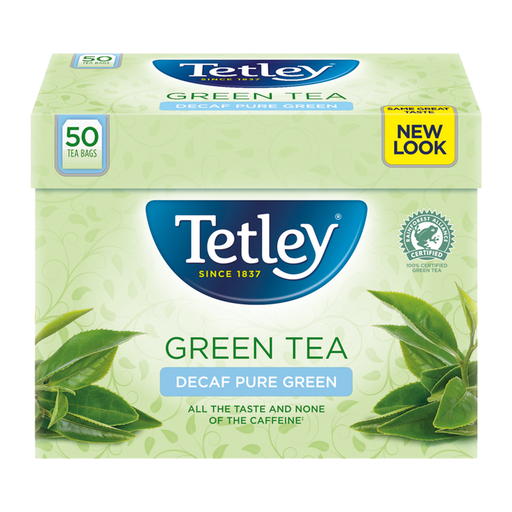 Image unavailable
Tetley Decaffeinated Green Tea, 50 Tea Bags, 100g
Consider decaffeinated green tea if a conventional tea taste matters more than avoiding caffeine entirely. This is not a naturally caffeine-free herbal infusion; check the pack’s caffeine statement if even trace amounts matter.
View on Joybuy
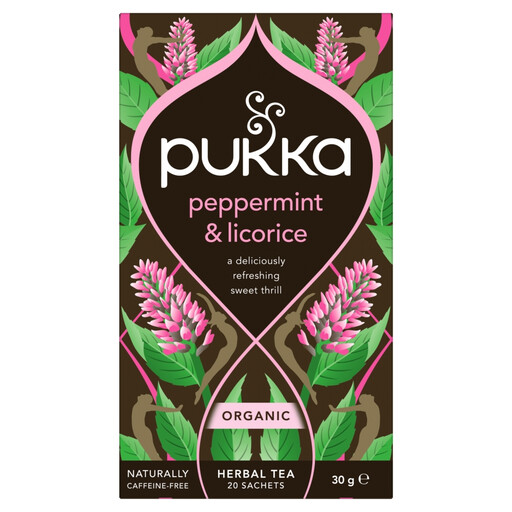 Image unavailable
Pukka Peppermint & Liquorice Organic Herbal Tea, 20 Sachets, 30g
This blend contains liquorice, so review the pack’s warning before choosing it for routine use, particularly if the person has high blood pressure. If medicines or other relevant conditions are involved, ask a pharmacist or clinician about the individual ingredients.
View on Joybuy
Common questions
Is every herbal tea caffeine-free?
No. Twinings says most herbal and fruit infusions are naturally caffeine-free but identifies mate and guarana as exceptions. Check the ingredients and caffeine statement on the particular product.
Is decaffeinated black tea the same as a caffeine-free infusion?
No. Decaffeinated black tea is conventional tea with caffeine removed, and some can remain; Twinings labels its English Breakfast Decaffeinated tea as containing 0.02% caffeine. A herbal infusion labelled naturally caffeine-free is a different choice when avoiding caffeine is the priority.
Can herbal tea provide nourishment as well as fluid?
Tea brewed with water can count towards fluid intake, according to the NHS, but should not replace drinks intended to provide energy and nutrients when appetite is poor. British Nutrition Foundation guidance suggests considering nutrient-containing drinks for older adults with poor appetites.
What if the person takes regular medicines?
Check the full ingredients before using a herbal blend routinely. The NHS cautions that some herbal products do not mix well with medicines; a pharmacist or clinician can advise on the particular product and the person’s medicines.
Can tea be included in a fluid-restricted care plan?
Follow the person’s individual care plan rather than a general tea or hydration target. NHS Sussex notes that its general hydration plan is unsuitable for some people on a fluid-restricted diet without healthcare-professional guidance.


