Which brands offer relevant tea options?
These brand examples illustrate different infusion and decaf choices; a brand name alone does not establish the caffeine status of every product it makes.
Pukka
Pukka has herbal blends for shoppers looking beyond conventional tea flavour.
- Pukka labels its Three Chamomile herbal tea naturally caffeine-free.
- Check the caffeine statement on the particular Pukka blend rather than applying that claim across its range.
Twinings
Twinings is relevant if you are deciding between a herbal or fruit infusion and decaffeinated conventional tea.
- Its All Day Decaf comes in individually wrapped pyramid bags, according to Twinings.
- Decaffeinated tea can retain traces of caffeine; check the product if strict avoidance is your aim.
Clipper
Clipper provides examples of both a herbal infusion and decaffeinated black tea.
- Clipper lists peppermint as the sole ingredient in its Organic Peppermint Infusion and labels that product naturally caffeine-free.
- Its decaffeinated black tea is a separate type of drink; do not assume it has the same caffeine status as the peppermint infusion.
Teapigs
Teapigs offers portioned botanical blends, including Honeybush & Rooibos Tea in 15 tea temples.
- Teapigs labels its Honeybush & Rooibos Tea naturally caffeine-free.
- Check that product’s brewing and factory-handling information if either affects your choice.
Tesco
Tesco is a retailer reference for comparing the exact packs of herbal infusions and decaffeinated tea you might buy.
- Comparing pack labels side by side can make differences in ingredients and bag format clearer.
- Use the individual product’s label for its caffeine status and preparation directions, rather than a search category.
Yogi Tea
YOGI TEA describes botanical and spice-led teas for shoppers interested in those flavour profiles.
- Its category material describes a variety of spices and botanicals.
- Check the ingredients and caffeine statement on the individual blend; the brand name does not establish either.
Joybuy herbal tea options for a journey
These Joybuy options are portioned herbal teas to consider if you want to carry a serving with your train food. They are not a selection of decaffeinated black or green teas; check each pack’s caffeine claim and preparation directions against your needs.
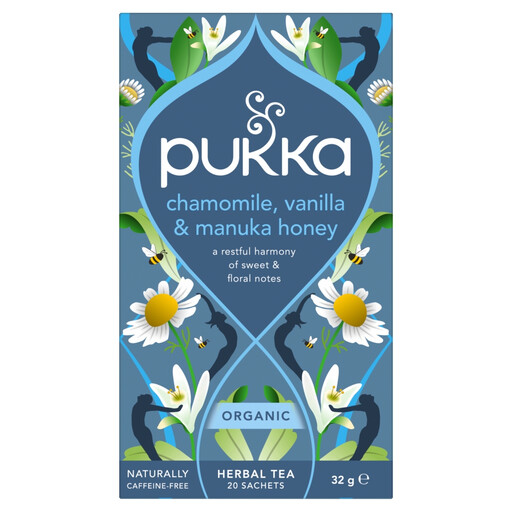 Image unavailable
Pukka Chamomile Vanilla & Manuka Honey 20 Sachets 32g
Consider this chamomile blend if you want a floral option with food rather than conventional tea. The pack name specifies 20 sachets and 32g; check its caffeine statement, full ingredients and brewing directions before travelling.
View on Joybuy
 Image unavailable
Twinings Lemon & Ginger 20 Tea Bags
Lemon and ginger offer a different flavour direction from plain black tea with a train snack. The name specifies 20 tea bags; check the pack’s caffeine claim and whether the bags are separately wrapped if that matters in your travel bag.
View on Joybuy
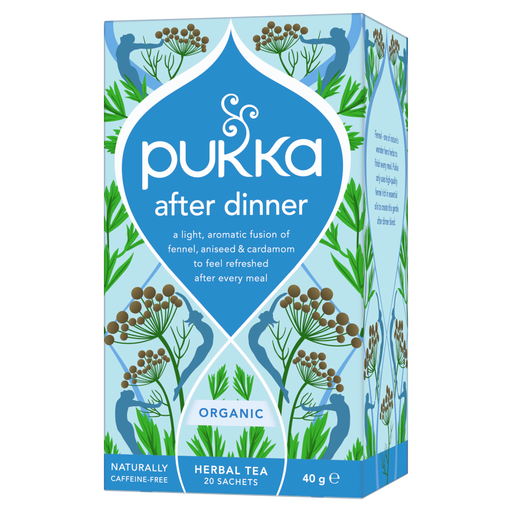 Image unavailable
Pukka Feel New Organic 20 Sachets 40g
For a mixed botanical blend, read the ingredient list rather than relying on the blend name. This variant is named as 20 sachets, 40g; check the exact pack for celery information, brewing directions and individual wrapping if relevant.
View on Joybuy
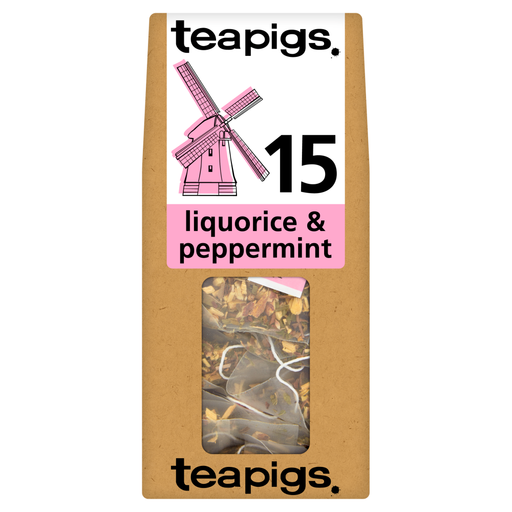 Image unavailable
Teapigs Liquorice & Mint 15 Tea Bags
This liquorice-and-mint option suits a preference for those named flavours rather than a conventional tea profile. The name specifies 15 tea bags; review the ingredients, factory-handling statement and brewing instructions on the pack.
View on Joybuy
 Image unavailable
Tropical Sun Soursop Tea 20 Tea Bags
If access to hot water is uncertain, consult this product’s stated cold-brew directions before choosing that method for the journey. The name specifies 20 tea bags; also check the pack’s caffeine statement and whether individual wrapping matters to you.
View on Joybuy
Questions about tea on a train
Is herbal tea automatically caffeine-free?
No. The UK Tea & Infusions Association says some herbal and fruit infusions contain caffeine-bearing ingredients, including yerba mate, guarana and cola nut. Check the exact product’s caffeine claim and ingredients; decaffeinated black or green tea is a separate choice and can retain traces of caffeine.
What should I choose if I want to avoid caffeine with my train food?
Choose an infusion explicitly labelled caffeine-free and check its ingredients. For concrete examples, Pukka labels Three Chamomile naturally caffeine-free, and Clipper gives the same description for its Organic Peppermint Infusion; apply those claims to the named products, not every blend from either brand.
Can I brew a herbal tea bag in cold water?
Use cold water only if the particular product provides cold-brew directions, and follow its stated method. Otherwise, check its hot-water instructions before setting off; the UK Tea & Infusions Association recommends freshly drawn water when preparing tea or an infusion.
What tea format is practical to carry on a train?
A pre-portioned bag lets you make a cup without measuring loose tea or carrying an infuser. If you want separate envelopes, check that the exact pack is individually wrapped: Twinings describes its All Day Decaf 15-pyramid-bag option that way.
Should I check allergens on a herbal tea pack?
Yes, if an ingredient or possible cross-contact matters to you. Read the ingredient and factory-handling statements on the exact blend you intend to take, rather than assuming that another tea from the same brand has the same information.


