Households with a regular favourite
If the same herbal flavour gets used most weeks, a larger pack may reduce how often it needs replacing. Twinings lists selected loose-pyramid herbal infusions in 40-bag packs.


For a flavour your household drinks regularly, a 40-bag pyramid pack may fit a weekly shop; Twinings lists 40-bag Unwind Spiced Apple & Camomile and Honey & Rooibos options. If you are trying a particular blend, Teapigs Lemon & Ginger comes in a smaller pack of 15 Tea Temples. Check the exact product if pyramid construction matters, rather than assuming every herbal tea bag has that shape.
If the same herbal flavour gets used most weeks, a larger pack may reduce how often it needs replacing. Twinings lists selected loose-pyramid herbal infusions in 40-bag packs.
A smaller pack leaves less of a flavour to get through if it is new to the household. Teapigs lists its Lemon & Ginger blend as 15 Tea Temples and describes Tea Temples as pyramid tea bags.
If disposal instructions matter more than pyramid shape, compare the claims for the exact product. Pukka and Clipper describe different tea-bag materials; their herbal ranges should not be assumed to use pyramid bags.
Start with the number of bags you will use, then check the exact format, ingredients and disposal instructions.
| Priority | What to check | Your needs |
|---|---|---|
| Pack size | Compare bag counts with a typical week's use. Twinings lists selected loose-pyramid options with 40 bags; Teapigs Lemon & Ginger contains 15 Tea Temples. | We drink the same flavour regularly, so a larger pack could suit us. If it is a new flavour, I would rather start with fewer bags. |
| Bag format | Look for the format on the exact pack. Teapigs calls Tea Temples pyramid tea bags; Twinings identifies its loose-pyramid products separately from other tea bags. | I specifically want a pyramid bag, not just a herbal blend with an appealing description. |
| Ingredients | Read the full blend list and product warnings. Teapigs lists ginger, lemongrass, lemon peel and liquorice root in its Lemon & Ginger Tea Temples. | Before choosing by flavour, I want to know exactly what is in the blend. |
| Disposal | Check the brand's instructions for the bag and any tag or envelope, then check local collection rules. Do not apply one brand's material claims to another. | How I dispose of the tea bag matters to me, even if that means considering a bag that is not pyramid-shaped. |
Twinings identifies specific loose-pyramid products, and Teapigs calls its Tea Temples pyramid bags. A herbal tea label alone does not establish the bag's shape.
Check the exact pack title or description for its bag format before adding it to the weekly shop.
A 15-bag pack may need replacing sooner than a 40-bag pack in a household that drinks the blend often. A larger box also leaves more of a flavour to use if it is new to you.
Compare the bag count with the number of cups your household is likely to make in a week.
A flavour name does not list every ingredient. Teapigs Lemon & Ginger Tea Temples, for example, also contain liquorice root.
Read the complete ingredients and product warnings on the exact pack.
Pukka describes home-compostable tea-bag paper and cotton stitching. Clipper describes bags sealed with plant-cellulose PLA and says they are free of polypropylene. Those statements concern different materials.
Follow the instructions for the bag you buy and check which materials your local collection accepts.
Twinings lists loose-pyramid herbal infusions, including 40-bag Unwind Spiced Apple & Camomile and Honey & Rooibos packs.
Teapigs describes its Tea Temples as pyramid tea bags packed with whole leaves. Its Lemon & Ginger blend comes in a 15-Tea-Temples pack.
Pukka lists a 20-bag Herbal Collection and provides information about its tea-bag materials.
Clipper lists herbal infusions including Organic Peppermint and Organic Lemon & Ginger in 20-bag packs.
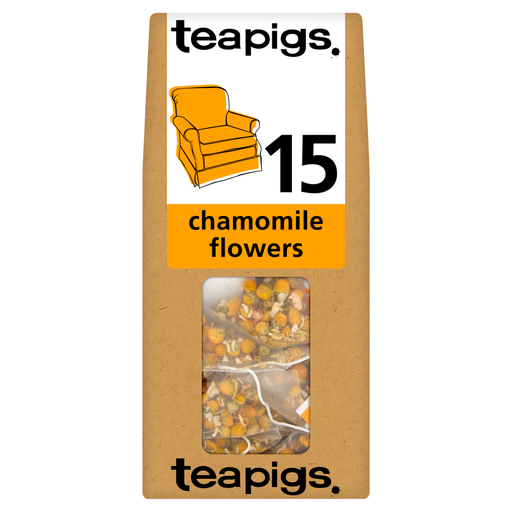
This chamomile option comes in a 15-bag pack. Compare that count with your weekly use, and check the exact pack if pyramid shape is a requirement.
 No image available
For a household choosing chamomile, compare this 15-bag pack with the number of cups you expect to make in a week. The product title states 180g; check the exact pack for its bag format if pyramid construction matters to you.
No. Twinings identifies selected products as loose-pyramid bags, and Teapigs calls its Tea Temples pyramid tea bags. Check the exact product rather than assuming the format from the brand or the word “herbal”.
Choose by how often your household drinks that particular flavour. Twinings lists selected 40-bag loose-pyramid packs, while Teapigs Lemon & Ginger contains 15 Tea Temples; a smaller pack leaves fewer bags to use if you are trying the blend for the first time.
No. Read the full ingredients list and product warnings. Teapigs Lemon & Ginger Tea Temples, for instance, contain liquorice root as well as the ingredients named in the blend.
No. Materials and disposal instructions differ by product: Pukka describes home-compostable tea-bag paper, while Clipper describes bags using plant-cellulose PLA. Follow the instructions on the exact pack and your local collection rules.