Hosts serving several guests
A 40-bag loose-pyramid pouch can provide one shared herbal option without opening several smaller boxes. It works when guests are content with that blend; Twinings says its 40-bag pouches are not individually wrapped.


For a brunch with several tea drinkers who are happy with one blend, a 40-bag loose-pyramid pouch makes serving numbers easier to plan; Twinings specifies that its 40-bag pouches are not individually wrapped. If guests would rather choose flavours, consider individually enveloped pyramids or smaller Tea Temple packs, counting the bags across your selection. Check each blend’s caffeine declaration and ingredients before serving.
The number of guests and the amount of flavour choice you want to offer matter more than the pyramid shape alone.
A 40-bag loose-pyramid pouch can provide one shared herbal option without opening several smaller boxes. It works when guests are content with that blend; Twinings says its 40-bag pouches are not individually wrapped.
Smaller packs or individually enveloped pyramids let guests choose between blends. Count the bags across the selection, particularly if one flavour is likely to be requested more often.
Look for a caffeine declaration on the exact blend. Teapigs labels its Super Fruit Tea Temples naturally caffeine-free, but its Cleanse blend contains green tea and is labelled as containing caffeine.
Start with the likely number of cups, then choose flavours and check the details of each blend you plan to serve.
| Priority | What to check | Your needs |
|---|---|---|
| Serving count | Compare the bag count with likely tea drinkers and possible second cups. Twinings lists 40 loose pyramids; teapigs lists Super Fruit in a 15-temple pack. | I’m serving several people and need enough bags of the main flavour, not just enough flavours on the table. |
| Flavour choice | Check the named ingredients and consider whether to offer contrasting blends, such as camomile, mint and fruit. Do not assume one flavour will suit everyone. | Some friends may prefer mint while others would choose a floral or fruit infusion. |
| Caffeine | Read the declaration for each exact blend and look for tea ingredients. Teapigs labels Super Fruit naturally caffeine-free and Cleanse as containing caffeine. | If someone avoids caffeine, I want a clearly labelled option rather than relying on the word “herbal”. |
| Ingredients and allergens | Read the current pack’s ingredients and allergen information. GOV.UK says any of the 14 specified allergens present as ingredients in prepacked food or drink must be clearly labelled in the ingredients list. | Guests with allergies or other ingredient requirements need to assess the particular blend being served. |
| Wrapping and disposal | Confirm whether bags are loose or individually enveloped. Follow the exact product’s disposal instructions and check what your local collection accepts. | I may want guests to pick up their own envelope, or I may be making cups from a shared pouch. |
Teapigs labels Super Fruit naturally caffeine-free, whereas its Cleanse blend contains green tea and is labelled as containing caffeine.
Check the caffeine declaration and ingredients on each exact blend before offering it to a guest who avoids caffeine.
A 15-bag pack covers fewer cups than a 40-bag pouch, especially if guests ask for another cup or favour the same blend.
Estimate how many bags of each flavour you may use. Make the larger pack your shared option if one flavour suits the group, and use smaller packs for choice.
Twinings says its 40-bag loose-pyramid pouches are not individually wrapped; it also offers a Double Mint pyramid in a single envelope.
Choose the pack format according to whether you will prepare the cups or let guests select individual envelopes. Check disposal directions separately.
Mint, fruit and camomile offer different flavour choices, and an individual blend may carry its own caution. Teapigs, for example, flags a caution for its liquorice-and-peppermint tea.
Keep ingredient information available so guests can choose for themselves; do not treat a broad herbal description as a substitute for the exact pack details.
These brand examples help distinguish pack formats and blends; a brand’s wider herbal range does not necessarily use pyramid bags.
Twinings lists 40-bag loose-pyramid herbal pouches as well as a single-enveloped Double Mint pyramid.
Teapigs calls its pyramid bags Tea Temples; its Super Fruit and Peppermint herbal products are listed in 15-temple packs.
Clipper Tea Shop lists Organic Double Mint in a 20-pyramid pack.
Pukka’s Herbal Tea Selection contains 45 sachets across nine blends.
Yogi Tea lists Classic Chai as a naturally caffeine-free herbal tea in a 17-bag pack.
Tesco lists own-label lemon-and-ginger, camomile and peppermint teas in 40-bag formats.
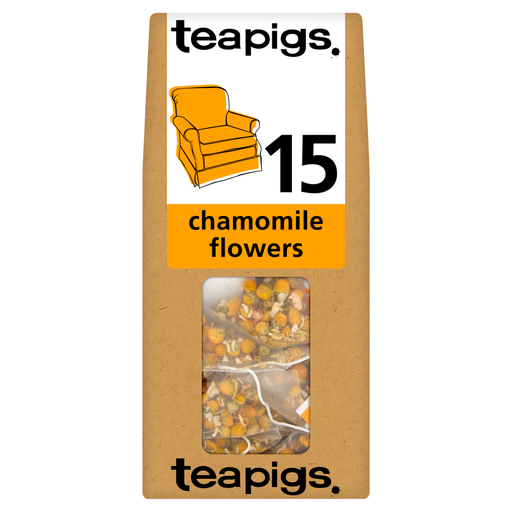
This 15-bag camomile option can serve a smaller brunch or add a floral flavour alongside other teas.
 No image available
For guests choosing a floral infusion, this pack contains 15 temple-shaped bags described as 100% chamomile flowers and caffeine-free. Count it as one flavour in a larger selection if more than 15 cups may be needed, and follow the pack’s brewing directions.
Start with the likely number of tea drinkers and allow a bag for each cup you expect to make, including second cups. A 40-bag loose-pyramid pouch can cover more servings of one flavour than a 15-bag Tea Temple pack; count each flavour separately if you are offering a choice.
No. Teapigs labels Super Fruit naturally caffeine-free, but its Cleanse blend contains green tea and is labelled as containing caffeine. Check the declaration and ingredients on the exact blend rather than relying on its category name.
Check the brewing instructions for each exact pack before guests arrive, and keep them to hand while making cups. Neither the pyramid shape nor the number of bags tells you how long a particular blend should infuse.
Check the current ingredients and allergen information for each blend and ask guests about their requirements. GOV.UK says any of the 14 specified allergens present as ingredients in prepacked food or drink must be clearly labelled within the ingredients list.
Follow the disposal directions for the exact bag and the rules of your local collection service; the pyramid shape alone does not determine the disposal route. Pukka says its tea bags are certified home compostable in the UK, but that statement does not apply to every brand’s bags.