Shoppers choosing tea for a special occasion
If the tea will be given as a gift or served to guests, the visible ingredients and presentation may matter alongside the flavour. Check the actual herb or blend rather than choosing by bag shape alone.


Choose individually wrapped herbal pyramid bags when separate servings and guest-facing presentation matter. Start with the ingredients and the way the tea will be served: Twinings says its pyramid bags give leaves room to unfurl, but the shape alone does not establish better flavour, and wrappers and tea bags may have different disposal instructions.
If the tea will be given as a gift or served to guests, the visible ingredients and presentation may matter alongside the flavour. Check the actual herb or blend rather than choosing by bag shape alone.
Individually wrapped servings can be useful where guests or colleagues select one bag at a time. Twinings describes its individually wrapped Unwind pyramids as suitable for smaller food-service settings; check the serving format of any other product separately.
A pure herb and a multi-ingredient blend offer different choices. Read the ingredient and caffeine information, then check the instructions for the tea bag and its packaging separately if disposal matters to you.
Choose the herb or blend first, then decide whether pyramid shape and individual wrapping add value for the way you plan to serve it.
| Priority | What to check | Your needs |
|---|---|---|
| Ingredients and flavour | Read the full ingredient list for a single herb or a blend. Compare the stated flavour with what you want to serve; teapigs lists pure peppermint leaves for its peppermint tea temples. | I may want a straightforward peppermint infusion rather than a fruit, spice or floral blend. |
| Bag shape | Confirm that the specific product uses a pyramid or tea-temple bag. Twinings says its pyramids allow water to flow around leaves; teapigs describes its tea temples as pyramid bags containing whole leaves. | Visible leaves or herbs matter to my presentation, but I do not want to assume the bag shape guarantees a particular flavour. |
| Individual wrapping | Check whether each bag has its own envelope, rather than relying on the box design. Twinings lists 15 individually wrapped pyramids for its Unwind Spiced Apple & Camomile product. | For a guest room, meeting area or gift, I want servings that can be kept separate until use. |
| Caffeine and brewing | Check the exact product’s caffeine declaration and preparation instructions. Teapigs identifies its pure peppermint tea as naturally caffeine-free and instructs buyers to use boiling water for at least 3 minutes. | I want to choose an infusion whose ingredients and preparation suit when and how I plan to serve it. |
| Packaging disposal | Look for separate instructions for the bag and envelope. Pukka describes its tea bags as home compostable, Clipper says its bags use a plant-cellulose PLA seal, and Twinings describes the envelopes on its Unwind product as recyclable. | I want disposal instructions I can follow using the services available to me, without treating every plant-based or recyclable component as home compostable. |
A pyramid describes the bag, not every ingredient inside it. Teapigs identifies its pure peppermint product as naturally caffeine-free, but that declaration belongs to that product.
Read the full ingredient list and caffeine information on the exact tea you intend to buy.
A claim about a tea bag need not apply to its envelope. Pukka describes its tea bags as home compostable, while Twinings describes the individual envelopes on its Unwind product as recyclable.
Check each component’s disposal instructions and whether your local collection accepts it.
A pyramid bag is not necessarily individually wrapped. That distinction matters when bags will be offered separately to guests or kept in a shared space.
Confirm the number of servings, individual wrapping, ingredients and brew instructions for the specific product.
Its individually wrapped loose-leaf pyramid range is relevant when tea will be presented one serving at a time.
Teapigs describes its tea temples as pyramid bags containing whole leaves.
A herbal-tea reference for shoppers interested in bag disposal, rather than a confirmed pyramid choice here.
An alternative to consider when bag construction matters more than pyramid presentation.
A retail reference for comparing fruit and herbal tea listings, including products from several of the brands discussed here.
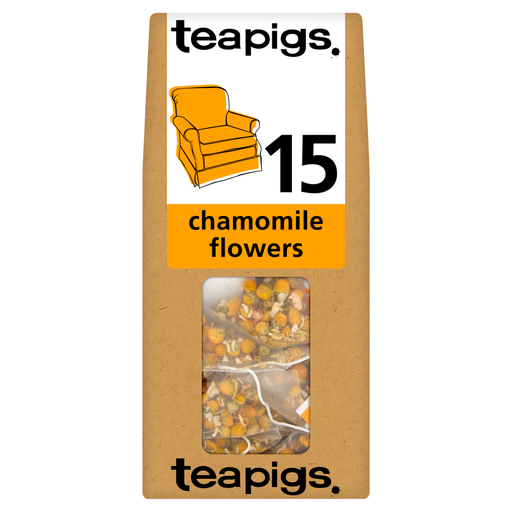
This chamomile tea-bag option may suit a herbal selection; confirm its bag format if pyramid presentation is essential.
 No image available
For a chamomile selection, check the bag shape before choosing it for a pyramid-focused display. Confirm individual wrapping, caffeine information, brewing directions and disposal instructions on the pack if those details matter to your setting.
No. Twinings says its pyramid bags give leaves room to unfurl, and teapigs describes whole leaves in its tea temples, but bag shape alone does not establish better flavour. Check the ingredients and follow the product’s brewing instructions.
Follow the instructions for the particular tea. For its peppermint tea temples, teapigs specifies boiling water and a brew of at least 3 minutes; do not apply that timing to every herbal blend.
No. Disposal instructions differ between the bag and its packaging, and between products. Pukka describes its tea bags as certified home compostable; check the instructions on any other bag and wrapper, along with what your local collection accepts.