For a tea-and-biscuit break, choose by flavour and pack format rather than pyramid shape alone. Teapigs describes its caffeine-free Honeybush & Rooibos Tea Temples as earthy and subtly nutty, and suitable with or without milk; Twinings Unwind Spiced Apple & Camomile offers a caffeine-free, apple-led alternative in a 40-bag pouch that is not individually wrapped. Check the exact blend and packaging if either matters to your choice.
Who is this for?
Drinkers avoiding caffeine
If you want an infusion with an evening biscuit, check the caffeine statement on the exact blend. Teapigs labels its Honeybush & Rooibos Tea Temples caffeine-free, as Twinings does its Unwind Spiced Apple & Camomile pyramids.
Shoppers looking for pyramid bags
If bag shape is part of the appeal, check the named product rather than the brand alone. Teapigs calls its Tea Temples pyramid bags, while Twinings offers both individually wrapped pyramid bags and a non-enveloped Unwind pouch.
Shoppers comparing packaging
If disposal matters to you, read the claim for the exact bag and its outer packaging. Home compostability, industrial compostability and recyclable envelopes describe different things and may require different disposal routes.
What should you check?
Start with the flavour you would enjoy alongside a biscuit, then check the caffeine statement, bag format and packaging of the exact product.
| Priority | What to check | Your needs |
|---|
| Flavour |
Compare the named ingredients and the maker’s flavour description. Teapigs describes Honeybush & Rooibos as earthy and subtly nutty; Twinings describes Unwind Spiced Apple & Camomile as mellow, with apple and light spice. |
I’d prefer a rounded, nutty cup with a plain biscuit, or perhaps an apple-and-camomile flavour instead. Teapigs says its Honeybush & Rooibos can be served with or without milk. |
| Caffeine |
Read the caffeine statement for the exact blend, not just its herbal-tea category. Teapigs Honeybush & Rooibos and Twinings Unwind Spiced Apple & Camomile are both described as caffeine-free. |
For an evening biscuit break, I want to know whether the particular tea I’m buying contains caffeine. |
| Bag format |
Confirm that the product is labelled as a pyramid bag or Tea Temple, then check the bag count and wrapping. Twinings says its 40-bag Unwind pouch is not individually wrapped; its 15-bag Honey & Rooibos box has individually wrapped pyramids. |
A pouch suits me if I regularly make tea at home; separate envelopes are more useful when I carry bags or share a box. |
| Disposal |
Check the bag and envelope claims separately, along with local collection rules. Pukka states that its bags are certified home compostable; Clipper describes its plant-cellulose PLA heat-seal bags as industrially compostable. |
I want to know where the used bag and its packaging can actually go, rather than treating every compostable or plant-based claim as equivalent. |
Common buying mistakes
-
Assuming every herbal tea bag is a pyramid bag
A brand’s herbal range does not establish the shape of every bag it sells. This matters if the pyramid format is the reason you are choosing a product.
Check the exact pack for wording such as “pyramid bags”, “loose leaf pyramids” or Teapigs’ “Tea Temples”.
-
Choosing by bag shape instead of flavour
A pyramid bag can hold quite different blends. Teapigs describes its Honeybush & Rooibos as earthy and subtly nutty, whereas Twinings describes Unwind as an apple-and-camomile infusion with light spice.
Choose the flavour direction you want with your biscuits, then follow the preparation instructions on that product’s pack.
-
Treating packaging claims as interchangeable
An industrial-composting claim does not, by itself, mean a bag belongs in a home compost heap. Bags and outer envelopes can also have different disposal instructions.
Read the exact pack’s wording and check what your local collection service accepts.
-
Overlooking liquorice root in a caffeine-free blend
Caffeine status does not answer every ingredient question. NHS pregnancy guidance advises avoiding teas containing liquorice root; Teapigs advises people with hypertension to limit its Liquorice & Peppermint tea to one cup a day.
Read the ingredient list. If pregnancy, a medical condition or medication affects your choice, follow relevant NHS guidance or seek advice from a healthcare professional.
Brand references for herbal tea bags
These brands illustrate different bag formats and packaging claims; a brand’s inclusion does not mean every product in its range is a pyramid bag.
Teapigs
Teapigs calls its Tea Temples pyramid bags containing whole leaves. Its Honeybush & Rooibos Tea Temples are a specific caffeine-free option for shoppers considering a milk-compatible infusion.
- Teapigs describes Honeybush & Rooibos as earthy and subtly nutty, and suitable with or without milk.
- Check the ingredients and pack details of other Teapigs blends separately; these characteristics apply to the named product.
Twinings
Twinings lists herbal loose-leaf pyramid bags in different pack formats, including a 40-bag Unwind pouch and individually wrapped 15-bag Honey & Rooibos boxes.
- Twinings describes Unwind Spiced Apple & Camomile as caffeine-free and confirms that its 40 pyramid bags are not individually wrapped.
- Choose the exact product for the flavour and wrapping you want; the two named packs are not the same format.
Pukka
Pukka is a reference for shoppers comparing organic herbal teas and tea-bag disposal claims, rather than a confirmed pyramid-bag choice here.
- Pukka states that its products are certified organic and its tea bags are certified home compostable in the UK.
- Check the exact product’s bag shape if a pyramid bag is essential.
Clipper
Clipper offers a point of comparison for tea-bag materials, rather than a confirmed herbal pyramid-bag choice here.
- Clipper says its heat-seal bags use plant-cellulose PLA and are industrially compostable.
- Check both the shape of the exact herbal-tea bag and the disposal instructions before choosing it for those features.
Joybuy herbal tea option
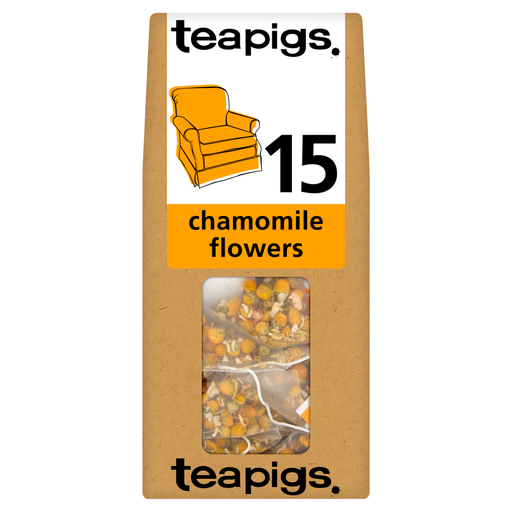
This chamomile tea-bag option may suit a tea-and-biscuit break. If you specifically want a pyramid bag or need to avoid caffeine, confirm those details on the exact pack before buying.
 No image available
Teapigs Chamomile Flowers, 15 Tea Bags, 180g
A chamomile tea-bag option for a tea-and-biscuit break. The listed pack contains 15 tea bags and is labelled 180g; check the bag shape, wrapping and preparation instructions if those details matter to you.
View on Joybuy
Frequently asked questions
Are all herbal tea bags caffeine-free?
Check the exact blend rather than assuming from the word “herbal”. Teapigs describes its Honeybush & Rooibos Tea Temples as caffeine-free, and Twinings describes Unwind Spiced Apple & Camomile as caffeine-free.
Are individually wrapped pyramid bags worth choosing?
They are worth considering if you carry bags or share a box; a non-enveloped pouch may be more convenient for regular use at home. Twinings says its 15-bag Honey & Rooibos pyramids come in recyclable envelopes, while the 40-bag Unwind pouch is not individually wrapped.
Can used herbal tea bags go in compost or food waste?
Follow the claim on the exact bag and check what your local collection service accepts. Pukka states that its tea bags are certified home compostable in the UK, while Clipper describes its heat-seal bags as industrially compostable; those are different claims.
What should I check in herbal tea during pregnancy?
Check the ingredients for liquorice root. NHS pregnancy guidance advises avoiding teas containing it and drinking no more than four cups of herbal tea a day.


