Hosts preparing a welcome tray
Individually wrapped bags keep guest portions separate. Twinings lists 15-bag herbal pyramid formats with individual envelopes; check the chosen blend before adding it to the tray.


For a holiday-cottage welcome tray, individually wrapped herbal pyramid bags give each guest a separate portion. A 40-bag pouch makes more sense on a shared tea shelf if you can keep it closed and dry between bookings; a smaller whole-leaf pack suits a more limited selection. Check the exact blend’s ingredients and caffeine status rather than assuming every herbal tea is alike.
Individually wrapped bags keep guest portions separate. Twinings lists 15-bag herbal pyramid formats with individual envelopes; check the chosen blend before adding it to the tray.
Twinings Refresh Double Mint comes in a pouch of 40 unwrapped pyramid bags. Twinings describes it as suitable for smaller catering settings, including B&Bs; it needs a place on the tea shelf where the opened pouch can be closed and kept dry.
Teapigs peppermint contains 15 Tea Temple pyramid bags. Teapigs lists pure peppermint leaves as the ingredient and describes this particular tea as naturally caffeine-free.
Decide where guests will pick up the tea, then check the portion format, the exact blend and its packaging instructions.
| Priority | What to check | Your needs |
|---|---|---|
| Portion format | Check whether bags are pyramids and individually wrapped. Twinings lists wrapped 15-bag pyramids, while its Refresh Double Mint 40-bag pouch contains unwrapped pyramids. | I want separate portions for an arrival tray. For a shared tea shelf, I can use a pouch if I can close and store it carefully. |
| Blend and caffeine | Read the exact ingredients and caffeine statement. Twinings describes Refresh Double Mint as naturally caffeine-free; Teapigs says the same of its pure-peppermint Tea Temples. | A clearly labelled non-black-tea option would help guests choose without guessing from the blend name. |
| Guest information | Keep the original ingredients and any pack cautions accessible. Teapigs gives a specific consumption warning for its liquorice-and-peppermint blend for people with hypertension. | Guests should be able to check what is in their cup and read any warning that applies to that blend. |
| Disposal | Check the instructions for the exact bag and each packaging component against the local collection route. Clipper describes its PLA tea bags as industrially compostable; Pukka makes a separate home-compostability claim for its bags. | I want bin instructions that match the product and the cottage’s waste collection, rather than a blanket composting label. |
A variety box may offer several flavours without meeting a pyramid-bag requirement. Pukka’s Herbal Tea Selection contains 45 sachets across nine blends.
If bag shape matters, check the particular product’s description rather than relying on its assortment or brand name.
Twinings says its 40-bag Refresh Double Mint pouch does not contain individually wrapped portions, so it serves a different purpose from sealed welcome-tray bags.
Choose wrapped portions for the arrival tray; keep an opened pouch closed and dry if it is stocked on a shared shelf.
A guest cannot judge ingredients or product-specific cautions from a reassuring name. Teapigs warns that people with hypertension should limit its liquorice-and-peppermint tea to one cup a day.
Describe flavour and stated product features without promising a health effect, and leave the original ingredients and cautions available to guests.
Clipper’s industrial-compostability statement and Pukka’s home-compostability statement describe different disposal conditions.
Check the exact product wording and local council collection guidance before labelling a cottage bin.
Its pyramid range includes individually wrapped herbal bags and a 40-bag Refresh Double Mint pouch.
Teapigs calls its whole-leaf pyramid bags Tea Temples and lists several herbal blends.
Clipper lists 20-bag pyramid products including Organic Double Mint, Organic and Fairtrade Lemon & Ginger, and Organic and Fairtrade Rooibos.
Pukka’s Herbal Tea Selection offers 45 sachets across nine blends for hosts considering an assortment.
Tesco is a grocery retailer where hosts can compare herbal tea listings alongside a regular food shop.
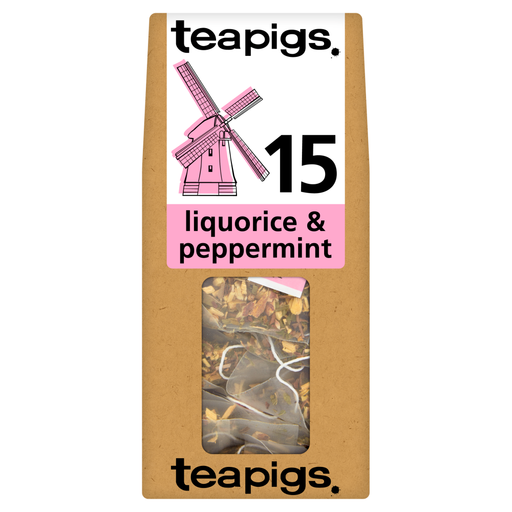
This smaller Teapigs liquorice-and-mint pack is an option for a shared cottage tea selection; check its product-specific caution before leaving it for guests.
 No image available
A 15-bag herbal option for a cottage tea shelf. The product description lists liquorice root and peppermint leaves, describes the tea as caffeine-free and gives one bag per cup as its preparation guidance. Teapigs advises people with hypertension to limit its liquorice-and-peppermint tea to one cup a day. If separate sealed guest portions matter, check the wrapping before buying.
Use individually wrapped bags when you want separate portions on an arrival tray. For a managed shared tea shelf, Twinings’ 40-bag Refresh Double Mint pouch offers unwrapped pyramid bags; keep the opened pouch closed and dry.
Do not assume so from the category or flavour name. Twinings describes Refresh Double Mint as naturally caffeine-free, and Teapigs says the same of its peppermint Tea Temples; check the statement on any other blend.
Read its ingredient list and pack caution. Teapigs says its liquorice-and-peppermint tea can increase blood pressure if consumed excessively and advises people with hypertension to limit that product to one cup a day.
No blanket disposal instruction fits every product. Clipper describes its PLA bags as industrially compostable, while Pukka makes a UK home-compostability claim for its tea bags; check the exact packaging and local collection guidance before labelling a bin.
Keep the product’s ingredients, caffeine statement and any blend-specific caution accessible so guests can check the tea themselves. Describe it by flavour or stated product features, not as a treatment or a promised health benefit.