What should you check before choosing?
Start with the recipient’s flavour and ingredient needs, then decide whether pyramid bags, individual wrapping or a mixed selection would make the gift more useful.
Herbal pyramid bags
Choose when: the recipient enjoys a known herbal blend and the bag format or individually wrapped portions matter to the gift.
Bear in mind: pyramid bags are not necessarily individually wrapped, and the format says nothing about the blend’s ingredients.
Mixed or conventional herbal bags
Choose when: several flavours would be more useful than a single blend, or pyramid shape is not important to the recipient.
Bear in mind: a mixed box can still contain an unwanted flavour, so check every included blend.
| Priority |
What to check |
Your needs |
| Presentation |
Check the bag shape, whether portions are individually wrapped and how many bags the pack contains. Twinings’ 40-bag Unwind pouch, for example, is not individually wrapped. |
I would like a gift that is easy to share or take out for a single cup, without assuming the pyramid shape guarantees separate wrapping. |
| Flavour |
Read the ingredient list for a floral, fruit-led or spiced blend. Compare a single-flavour pack with a mixed selection if the recipient’s preferences are unclear. |
If I know she likes chamomile, a single blend could suit her. Otherwise, I would rather give her several flavours to try. |
| Ingredients and caffeine |
Check the exact blend’s caffeine statement and ingredients; ‘pyramid’ does not mean herbal or caffeine-free. Screen individual blends for ingredients the recipient needs to avoid. |
Avoiding caffeine or a particular herb matters more to my choice than the shape of the tea bag. |
| Preparation |
Read the brewing directions for the chosen blend, including the stated water and infusion time. Do not transfer instructions from a different tea in the range. |
I want the recipient to be able to prepare the tea as directed, rather than guess how long to leave the bag in. |
| Disposal |
Follow the specific pack’s disposal directions and local collection rules. A plant-based bag material does not, by itself, establish home-composting suitability. |
If bag disposal affects my choice, I need instructions that apply to this pack and the recipient’s local collection. |
Brands and retailer references
These references help distinguish pyramid-bag ranges from other herbal options; they are not a list of products stocked by Joybuy.
Twinings
Twinings lists loose-leaf pyramid bags, including specific herbal infusions.
- Its Camomile & Orange product is described by Twinings as a caffeine-free infusion in pyramid bags.
- Other Twinings pyramid products are not necessarily herbal. Check both the blend and whether its bags are individually wrapped.
teapigs
teapigs calls its pyramid bags Tea Temples and lists ingredients for individual herbal blends.
- Its chamomile listing specifies whole chamomile flowers; Super Fruit lists hibiscus and several berries and currants.
- Those floral and fruit-led blends offer different flavours, so select by the recipient’s preference rather than the Tea Temple name alone.
Pukka
Pukka’s Herbal Collection offers four teas for someone who would welcome a variety of blends.
- A mixed collection avoids committing the whole gift to one flavour.
- If pyramid bags are essential, check the exact pack format before choosing this collection.
Clipper
Clipper offers a chamomile infusion in conventional tea bags.
- Clipper describes its chamomile infusion as naturally caffeine-free and says its tea bags use plant-based PLA sealing material.
- Choose by the specific product format if pyramid bags matter; follow the pack and local guidance for disposal.
Tesco
Tesco has a fruit-and-herbal-tea grocery category.
- Its category can be a starting point for looking at different herbal blends.
- Check an individual product’s bag format, ingredients and delivery options before relying on it for a gift.
A Joybuy herbal pyramid option
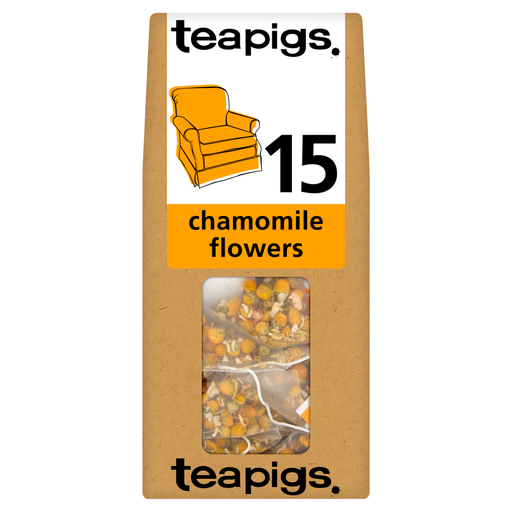
This single-flavour chamomile option suits a recipient who already likes floral herbal infusions and wants temple-shaped tea bags.
 No image available
teapigs Chamomile Flowers, 15 tea bags, 180g
For a recipient who enjoys chamomile: this single-flavour pack is listed as 15 temple-shaped bags containing 100% chamomile flowers and is described as caffeine-free. Check the pack for brewing directions and individual wrapping if either matters to the gift.
View on Joybuy
Frequently asked questions
Are all pyramid tea bags herbal and caffeine-free?
No. Pyramid describes the bag format, not the tea inside it. Twinings has pyramid ranges that include different types of tea, while its Camomile & Orange pyramid infusion is specifically described as caffeine-free; check the exact blend.
What if I do not know which flavours the recipient likes?
Consider a mixed herbal selection rather than a large pack of one flavour. Pukka’s Herbal Collection contains four teas; if pyramid bags are a firm requirement, check the shape and contents of the specific mixed pack before buying.
Can I choose herbal tea as a gift for someone who is pregnant?
Check each blend rather than assuming ‘herbal’ or ‘caffeine-free’ makes it suitable. The NHS advises against more than four cups of herbal tea a day during pregnancy and says to avoid teas containing liquorice root; ingredient questions are a reason to consult NHS or clinical guidance before choosing a gift.
How long should a herbal pyramid bag brew?
Follow the directions for the exact blend. teapigs gives a brew time of at least three minutes for its listed herbal Tea Temples, while Twinings directs three minutes for Camomile & Orange; do not assume every pyramid tea has identical instructions.
How should I check a herbal tea gift for allergens?
Read the ingredients and any allergen or precautionary statements for the exact product before buying. The Food Standards Agency identifies 14 regulated allergens; a label such as ‘herbal tea’ is not a substitute for checking the pack against the recipient’s needs.


