Choose a single-herb camomile or peppermint infusion for a straightforward floral or mint cup, a flavoured camomile blend for sweeter-tasting notes, or a selection box when people want different flavours. Check the caffeine statement and ingredients on the exact pack: blends within the same box can differ, and some contain liquorice root.
Who is choosing herbal tea for afternoon tea?
Afternoon tea drinkers avoiding caffeine
If you want an alternative to caffeinated black tea, look for a naturally caffeine-free statement on the particular infusion you choose. Twinings Pure Camomile and Clipper Organic Peppermint are two manufacturer-labelled examples.
Hosts with different flavour preferences
A selection box gives guests a choice of distinct infusions without committing everyone to one flavour. Check what is in each sachet before serving it.
Shoppers checking ingredients closely
If an allergy, intolerance or pregnancy affects your choice, read the exact pack rather than relying on the word “herbal”. Ingredients and warnings can differ between blends in one collection.
What matters when choosing an afternoon infusion?
Settle on the flavour direction first, then check caffeine labelling, individual ingredients and whether one flavour or an assortment suits the occasion.
| Priority |
What to check |
Your needs |
| Flavour |
Compare plain camomile’s floral profile with peppermint’s mint flavour. For a sweeter-tasting or spiced cup, check the named blend and its ingredients rather than assuming all herbal teas taste alike. |
I would prefer a gentle floral cup, a crisp mint infusion or a more pronounced flavoured blend. |
| Caffeine |
Look for a caffeine-free statement on the exact pack. Twinings labels Pure Camomile naturally caffeine-free; Clipper gives the same description for its Organic Chamomile and Organic Peppermint infusions. |
A cup labelled caffeine-free matters more to me than choosing by flavour name alone. |
| Ingredients |
Read the full ingredient list and any warnings for each blend. Twinings says the Spiced Ginger tea in its Herbal Discovery Collection contains liquorice root and carries a hypertension warning. |
If I am serving someone with an allergy or choosing tea during pregnancy, I need to check the particular blend before making a cup. |
| Variety |
Check how many different teas a box contains and identify each one. Twinings lists four named blends in Herbal Discovery; Pukka describes its Herbal Collection as containing four teas. |
Several flavours would give guests a choice, while a single-flavour pack would suit a household that already knows what it likes. |
What should you check before serving a blend?
-
Assuming every herbal tea has the same caffeine status
A caffeine-free label applies to the specified infusion, not every tea beside it on the shelf.
If avoiding caffeine matters, check the statement on the exact pack or product page before buying.
-
Treating a selection box as one ingredient list
Twinings Herbal Discovery contains several blends; its Spiced Ginger tea contains liquorice root and carries a warning about excessive consumption for people with hypertension.
Read the ingredients and warnings for each sachet, particularly when serving other people.
-
Reading wellbeing wording as a treatment claim
Flavour descriptions do not establish a medical effect. UK Advertising Standards Authority guidance prohibits claims that a food prevents, treats or cures human disease.
Choose an infusion by its flavour, ingredients and product-specific caffeine labelling, not as a treatment for symptoms.
-
Overlooking the label when allergies matter
Ingredients differ between blends. GOV.UK says regulated allergens present as ingredients in prepacked food or drink must be clearly identified in the ingredients list.
Check the current pack, including relevant precautionary statements, and ask the business for clarification if needed.
Which brands offer these flavour styles?
These brand ranges offer different ways to shop by flavour or format; the details of any one tea still need checking on its own pack.
Twinings
Its UK range includes a single-flavour Pure Camomile pack and a four-blend Herbal Discovery Collection.
- Twinings labels Pure Camomile naturally caffeine-free and gives brewing guidance of one bag in 200 ml of freshly boiled water for 3 minutes.
- Herbal Discovery’s Spiced Ginger contains liquorice root and has a hypertension warning; the four blends do not share one ingredient list.
Clipper
Its Organic Chamomile and Organic Peppermint infusions offer simple floral and mint choices.
- Clipper lists chamomile as the sole ingredient of Organic Chamomile and peppermint as the sole ingredient of Organic Peppermint; both are labelled naturally caffeine-free.
- Do not extend those ingredient lists to other Clipper teas: its Organic Lemon & Ginger also contains liquorice root.
Pukka
Its range includes flavoured camomile and a Herbal Collection for trying different teas.
- Pukka describes its Chamomile, Vanilla & Manuka Honey tea in terms of camomile and sweet vanilla and honey notes; it describes the Herbal Collection as containing four teas.
- Flavour and wellbeing wording is not evidence of a medical effect. Check the ingredients of the exact blend.
Teapigs
Its herbal-tea range lists individual choices including peppermint, chamomile, fruit and ginger profiles.
- The range offers several flavour directions for an afternoon cup rather than a single herbal formula.
- Check each product’s ingredients and caffeine statement individually; the range description does not establish either for every tea.
Tesco
Tesco is a grocery retailer whose UK tea catalogue lists fruit-and-herbal products from several brands, not one tea formulation.
- Its catalogue can be used to compare listed brands and pack formats alongside a grocery shop.
- Check the individual listing and local delivery options; a third-party tea’s ingredients do not describe a Tesco own-label product.
Joybuy herbal teas for different afternoon cups
These Joybuy options cover flavoured camomile, peppermint, plain chamomile, spiced chai and a mixed collection. Choose by the cup you want, then check the exact pack for ingredients and brewing directions.
 No image available
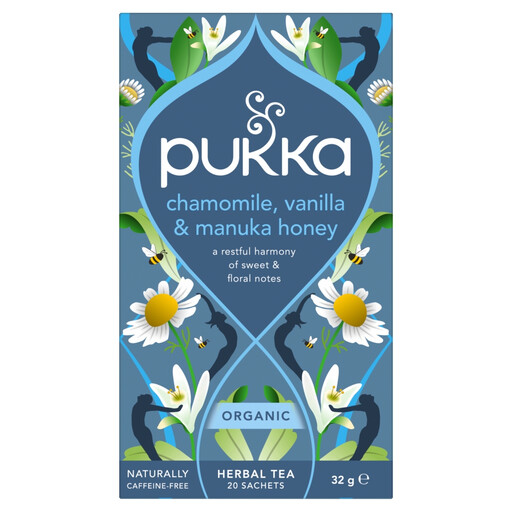
Pukka Chamomile Vanilla & Manuka Honey, 20 sachets, 32g
For an afternoon cup with flavoured camomile rather than a plain floral profile, this is a 20-sachet pack. Check the ingredient list for liquorice root; the NHS advises avoiding teas containing it during pregnancy.
View on Joybuy
 No image available
Twinings Pure Peppermint, 80 pack
Choose the peppermint profile if you would rather serve mint than a floral infusion. The pack is labelled as an 80 pack; check its own caffeine statement and brewing instructions.
View on Joybuy
 No image available
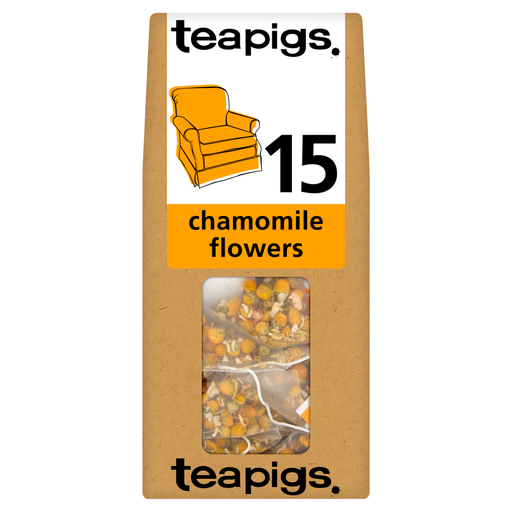
Teapigs Chamomile Flowers, 15 tea bags, 180g
A chamomile-flower option for a floral afternoon cup, supplied as 15 tea bags. Check the exact pack for its ingredients, caffeine statement and brewing directions.
View on Joybuy
 No image available
Pukka Vanilla Chai, 20 sachets, 40g
Consider this 20-sachet vanilla-chai option if a spiced flavour appeals more than camomile or mint. Check the ingredient list for liquorice root; the NHS advises avoiding teas containing it during pregnancy.
View on Joybuy
 No image available
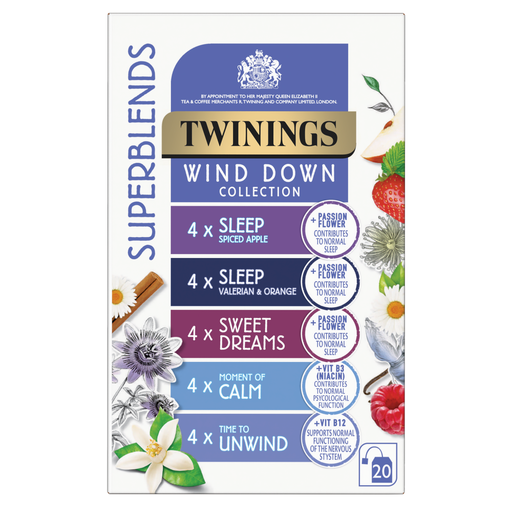
Twinings Superblends Wind Down Collection, 20 tea bags, 33.2g
This 20-bag collection offers an alternative to serving one flavour throughout afternoon tea. Check each included blend separately: the listed Time to Unwind blend contains liquorice root, which the NHS advises avoiding during pregnancy.
View on Joybuy
Afternoon herbal tea questions
Should I choose camomile, peppermint or a flavoured blend?
Choose camomile for a floral cup, peppermint for a crisp mint flavour, or a vanilla-and-honey-style camomile blend for sweeter-tasting notes. Check the named ingredients for the particular tea; flavour descriptions do not establish a medical effect.
How should I brew a herbal tea bag?
Follow the instructions for the particular blend. Twinings specifies one Pure Camomile bag in 200 ml of freshly boiled water for 3 minutes; do not assume the same directions apply to another tea.
What if a blend contains liquorice root?
Check the warning on that exact blend before drinking or serving it. Twinings says its Spiced Ginger tea in the Herbal Discovery Collection contains liquorice root and that people with hypertension should avoid excessive consumption; this warning should not be treated as a conclusion about every herbal tea.
What should I check when choosing herbal tea during pregnancy?
Check every blend for liquorice root and follow NHS pregnancy advice: it says to avoid teas containing liquorice root and not to drink more than four cups of herbal tea a day. The NHS also notes limited research on herbal tea’s effects in pregnancy; discuss individual concerns with a midwife or clinician.
Where should I look for allergen information?
Read the ingredient list on the exact pack. GOV.UK says any of the 14 regulated allergens present as ingredients in prepacked food or drink must be clearly labelled there; ask the business for ingredient information when buying a loose or non-prepacked tea.


