
24/7 Customer Support

Free returns

Same-day & Next-day Delivery

Quality Guaranteed

Unlock Your Welcome Offers: FREE Delivery | Up to 80% OFF | Free 30-day JoyPlus trial
Download the APP
Herbal tea bags are an easy way to enjoy a warm drink without the preparation involved in loose leaves. However, choosing between caffeine-free tea, organic herbal tea, bedtime blends and decaffeinated black tea is not always straightforward. Packaging can emphasise calming language, ethical sourcing or premium ingredients while leaving practical details unclear.
Before adding a box to your basket, watch for three common pitfalls:
For a naturally caffeine-free drink, look for ingredients such as peppermint, chamomile, lemon balm, ginger, hibiscus, rosehip or lavender. A peppermint tea made from mint leaves will taste fresh and cooling, while a chamomile tea usually has softer floral notes.
Decaffeinated tea bags contain black tea that has undergone a caffeine-reduction process. They can provide a more familiar breakfast-tea taste, but “decaffeinated” does not always mean exactly zero caffeine unless the product information specifically states this. If avoiding caffeine is essential, check the packaging rather than relying on the front-of-box wording.
A light mint infusion can work after lunch or with a meal. Lemon and ginger tea tends to have a warming, citrus-led flavour that many shoppers enjoy during colder weather or after eating. For evening use, consider a bedtime tea containing chamomile, lemon balm or lavender.
Blends containing valerian, passionflower or liquorice have more distinctive flavour profiles. They may not suit everyone, so a mixed collection can be a practical way to try different recipes before buying several boxes of one type.
A 15- or 20-sachet box is useful for trying a new flavour, while 80 or 160 bags may offer better value for households that drink tea daily. Compare the number of bags and net weight, rather than judging value by box size alone.
Follow the brewing time on the label. Herbal ingredients can require several minutes in freshly boiled water to develop their flavour. Store tea bags in a cool, dry place away from strong odours and moisture. Compostable packaging is also worth checking carefully: the tea bag, string and outer packaging may have different disposal requirements.
The following options are grouped by practical shopping profile rather than by unverified claims. Product suitability depends on flavour preference, intended use and the information printed on the packaging.

Why This Fits Their Persona: A familiar 20-bag format suits shoppers testing a bright, warming caffeine-free blend without committing to a bulk pack.
The ingredient list identifies ginger root at 37% and lemon peel at 9%, making the flavour direction clearer than vague “wellness” wording.
20 tea bags; ginger, lemon peel, lemongrass and fennel; listed as a naturally caffeine-free herbal infusion.

Why This Fits Their Persona: Suitable for shoppers who value organic ingredients, individually wrapped sachets and a sweet floral profile for evening drinking.
The stated composition shows chamomile flower at 68.5%, with fennel, liquorice root, vanilla extract and natural Manuka honey flavouring also listed.
20 individually wrapped tea bags; naturally caffeine-free; product information states organic herbs and home-compostable bags.

Why This Fits Their Persona: The larger format is practical for regular drinkers who want a straightforward mint infusion at home or in the office.
The formula is clearly stated as 100% peppermint, avoiding a blend whose additional flavours may not suit a daily drinker.
80 tea bags; single-ingredient peppermint; approximately 2 kcal per 100 ml brewed infusion according to the supplied product information.
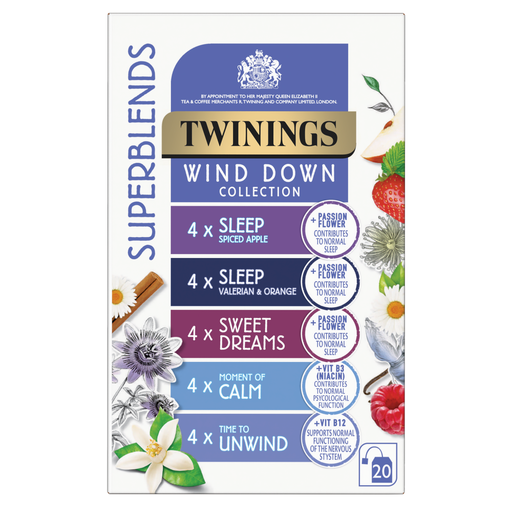
Why This Fits Their Persona: A mixed collection suits people building a bedtime tea routine who prefer variety rather than one repeated flavour.
The box contains named blends, including chamomile, lemon balm, limeflower, passionflower, lavender, valerian and fruit-spice recipes.
20 bags across several infusions; includes chamomile-based options and specified vitamin B12 or niacin content in selected blends.
We have compiled a complete, real-time list of products that fully satisfy these strict selection criteria and UK safety regulations.
Most infusions made solely from herbs, flowers, fruit, roots or spices are naturally caffeine-free. Always check the ingredient list, particularly when a product uses terms such as “tea blend”. Decaffeinated black tea is separate and may retain a small amount of caffeine unless the product states otherwise.
Use the best-before date on the packaging as a quality guide. Unopened tea bags generally retain their intended flavour when stored in a cool, dry cupboard. Once opened, keep the box sealed and away from moisture, heat and strong food aromas.
Bedtime tea is a beverage category, not a treatment. Check the ingredients before drinking, especially if you are pregnant, taking medication or managing a health condition. Blends containing liquorice root may carry specific warnings; for example, the supplied Pukka peppermint and liquorice product advises people with high blood pressure to avoid excessive consumption.