What should you check before choosing?
Start with how quickly you will use the box, then compare the blend and packaging instructions for the exact product.
| Priority | What to check | Your needs |
|---|
| Wrapping and storage |
Check whether bags have individual envelopes, how many are in the box and the stated storage directions. Twinings offers wrapped 15-bag and non-enveloped 40-bag Honey & Rooibos pyramid formats. |
I may open a box only occasionally or carry a few bags with me; individual wrapping matters more in that case than it does for tea I use regularly. |
| Bag format and brewing |
Check whether the exact blend uses pyramid or conventional bags and follow its brewing directions. Teapigs directs a brew of at least 3 minutes for its Honeybush & Rooibos tea temples. |
I want to know whether a whole-leaf or whole-herb presentation fits the way I make tea, rather than assuming the bag shape changes the flavour. |
| Blend details |
Read the ingredients, caffeine statement and allergen information for the exact blend. Teapigs states that its Honeybush & Rooibos tea is made in a factory that handles nuts. |
For an evening cup or a shared pantry, I want the blend and its stated caffeine and allergen details to suit the people drinking it. |
| Disposal |
Check the instructions separately for the tea bag, any envelope and the box. Teapigs specifies industrial composting for its tea temples; Pukka describes its own tea bags as home compostable. |
I need a disposal route I can actually use locally, not just a general claim that a bag is plant-based or biodegradable. |
Which brands illustrate the options?
These brands illustrate different herbal-tea formats; a brand name alone does not establish the bag construction of every blend.
Twinings
Its Honey & Rooibos line provides a direct choice between 15 individually wrapped pyramid bags and 40 non-enveloped pyramid bags.
- Twinings says the envelopes around its 15-bag pack provide extra freshness protection.
- Check which pack format you are selecting; the 40-bag version is not individually wrapped.
Teapigs
Teapigs calls its pyramid-style bags Tea Temples; its Honeybush & Rooibos blend is a 15-temple example.
- The brand describes Tea Temples as containing whole leaves and directs a brew of at least 3 minutes for Honeybush & Rooibos.
- Teapigs directs its tea temples towards industrial composting, not home composting.
Pukka
Pukka offers individually enveloped herbal blends and a Herbal Collection containing four blends; these are alternatives to consider by blend and wrapping, rather than examples of the pyramid format.
- Pukka says its envelopes protect tea bags from air and moisture.
- Check the construction of the particular bag if pyramid shape is important to you.
Clipper
Clipper Organic Peppermint is a conventional 20-bag herbal infusion, labelled naturally caffeine-free.
- Its product directions call for cool, dry storage.
- Clipper describes a plant-cellulose PLA seal on its heat-seal bags; do not interpret that description as a home-compostability claim.
Yogi Tea
Yogi Tea presents organic herbal blends, making it a flavour-led option to examine alongside bag format.
- Its range includes herbal blends with different ingredient combinations.
- Check the exact pack for bag construction and disposal instructions rather than relying on the brand name or blend wording.
Tesco
Tesco lists own-label lemon & ginger, camomile and peppermint herbal tea bags in 40-bag packs.
- The listed flavours offer conventional-bag options for a frequently used pantry box.
- Check the particular listing if pyramid construction or individual envelopes matter to you.
Joybuy herbal tea options
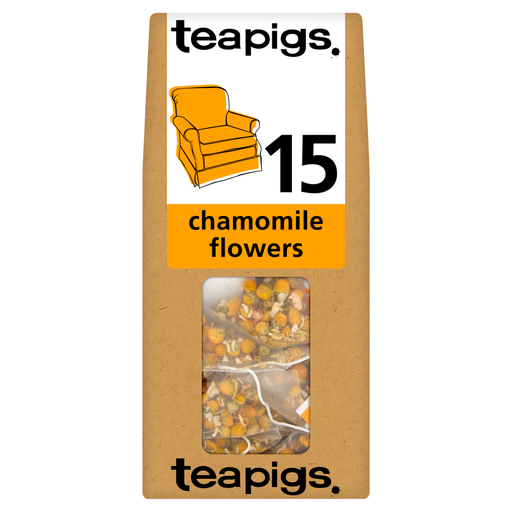
This chamomile tea option is relevant if you are stocking a herbal-infusion pantry; check its bag shape and wrapping if those are deciding factors.
 No image available
Teapigs Chamomile Flowers, 15 tea bags, 180 g
A chamomile option for a pantry stocked with herbal infusions. The product name specifies 15 tea bags and 180 g; check the pack for bag shape, individual wrapping, brewing directions and disposal instructions if those affect your choice.
View on Joybuy
Frequently asked questions
Are pyramid herbal tea bags automatically better than ordinary bags?
No. Choose a pyramid bag if its particular blend and presentation appeal to you, but do not assume bag shape alone determines flavour. Twinings says its pyramid design allows leaves to unfurl, and teapigs describes whole leaves in its Tea Temples; those descriptions do not establish how every pyramid tea compares with a conventional bag.
Should I choose individually wrapped or non-enveloped pyramid bags?
Individually wrapped bags make sense when you will use a box gradually, carry bags to work or offer them to guests. For regular use, a non-enveloped pack may be sufficient if separate protection for each bag matters less. Twinings offers both a wrapped 15-bag and a non-enveloped 40-bag Honey & Rooibos pyramid format.
Can every plant-based tea bag go in a home compost bin?
No. Pukka describes its tea bags as home compostable, whereas teapigs directs its Tea Temples towards industrial composting through council food-waste collection. Check the instructions for the exact bag and any wrapping, as well as the collections available locally.
Do names such as “sleep” or “wellbeing” tell me what a herbal tea will do?
No. A blend name is not, by itself, evidence of an effect. For a pantry purchase, read the ingredients, caffeine statement and preparation directions, and assess any specific claim on its own stated terms.
What if I am choosing tea alongside herbal medicines?
Check the tea's exact ingredients rather than treating all herbal products as equivalent. The NHS advises seeking appropriate professional guidance about herbal medicines where suitability or interactions may be a concern; that advice should not be read as a blanket statement about every ordinary herbal infusion.


