What should you check?
Pick the flavour and caffeine status first. Then decide whether the brewing time, bag shape and pack format suit the way you serve tea at breakfast.
| Priority | What to check | Your needs |
|---|
| Caffeine |
Read the exact blend’s caffeine statement and ingredients. Check for black or green tea rather than assuming a product is caffeine-free because it appears in a herbal range. |
I want a breakfast infusion labelled caffeine-free, so the statement on the particular pack matters more than its shelf category. |
| Flavour and ingredients |
Compare named botanicals: Twinings Refresh Double Mint contains peppermint and spearmint; Teapigs lists ginger, lemongrass, lemon peel and liquorice root in its lemon and ginger blend. Check the current label for ingredients and allergens. |
Am I after mint, a rooibos and honeybush blend, or a ginger-led cup? If I avoid an ingredient, I need to check the specific blend before serving it. |
| Brewing time |
Follow the product directions rather than using one time for every pyramid bag. Twinings specifies 2–3 minutes for Refresh Double Mint; Teapigs specifies at least 3 minutes for its honeybush and rooibos Tea Temples. |
A longer infusion fits my breakfast when there is time to let it brew; on a quicker morning, I would check the directions before choosing. |
| Bag and pack format |
Confirm that the particular product uses pyramid bags, then check pack count and individual wrapping. Twinings offers Refresh Double Mint as a 40-bag loose-pyramid pack and a separate 15-pyramid individually wrapped pack. |
Will I serve several cups at home, or do I want separate bags to set out for guests or take away? Those uses call for different pack formats. |
| Disposal instructions |
Read the instructions for the bag and any envelope separately. Pukka describes its tea bags as home compostable; Clipper describes its heat-seal bags as biodegradable. Neither statement is a disposal instruction for every component of every pack. |
I want to know where each part of the pack should go, rather than treating the bag, wrapper and carton as though they have the same instructions. |
Brand and range references
These examples help distinguish particular pyramid products from broader herbal ranges; a brand’s herbal tea bags do not necessarily all share the same shape or packaging.
Twinings
Refresh Double Mint is offered in loose pyramid bags and in a separate individually wrapped pyramid format.
- Twinings describes the infusion as naturally caffeine-free and gives a 2–3 minute brewing time.
- Check which pack you are choosing: the 40-bag and individually wrapped 15-pyramid formats serve different storage and carrying needs.
Teapigs
Teapigs calls its pyramid bags Tea Temples and describes them as containing whole leaves.
- Its honeybush and rooibos Tea Temples are labelled naturally caffeine-free and described as suitable with or without milk.
- Follow the directions for the chosen blend; the honeybush and rooibos product specifies at least 3 minutes.
Clipper
Clipper’s infusion range includes an Organic Double Mint product in a 20-pyramid-bag format.
- The named product lets shoppers identify a pyramid format rather than relying on the wider infusion category.
- Check the individual listing for its ingredients, caffeine statement and preparation directions; the range also includes other bag formats.
Pukka
Pukka is a reference for herbal blends and individually protected sachets, not a reason to assume pyramid-shaped bags.
- Pukka describes its tea bags as home compostable and says its sachets help protect blends from air and moisture.
- If shape or disposal route determines your choice, check the exact product and each packaging component.
Yogi Tea
Yogi Tea’s ingredient information is useful when comparing botanical blends.
- Yogi Tea describes its ingredients as organic.
- Check the individual blend for tea ingredients, caffeine status and bag shape rather than applying a range-wide assumption.
Tesco
Tesco’s own-label fruit and herbal selection includes lemon and ginger, camomile and peppermint bags in 40-bag packs.
- These give shoppers named standard-bag flavours to compare when pyramid shape is not essential.
- Check the particular listing if you require a pyramid bag; the fruit-and-herbal category name does not establish bag shape.
A Joybuy herbal tea option
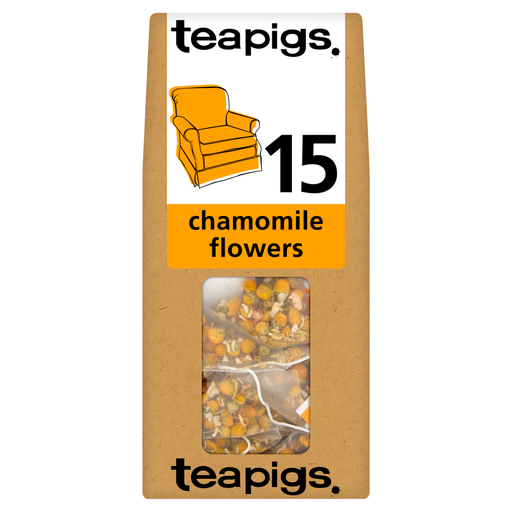
This chamomile Tea Temples pack is an option for a weekend breakfast when you want a caffeine-free herbal infusion in a pyramid-style bag.
 No image available
Teapigs Chamomile Flowers, 15 tea bags, 180g
The product description identifies whole chamomile flowers in temple-shaped bags and describes the infusion as caffeine-free. Check its brewing directions and whether the bags are individually wrapped if either detail matters for breakfast.
Joybuy
Questions about herbal tea bags
Are all herbal pyramid tea bags caffeine-free?
No. Check the caffeine statement and ingredients for the exact blend. Twinings labels Refresh Double Mint naturally caffeine-free, and Teapigs says the same of its honeybush and rooibos infusion; those statements do not cover every product in either brand’s range.
How long should I brew a herbal pyramid bag?
Follow the directions for the particular tea. Twinings specifies 2–3 minutes for Refresh Double Mint, while Teapigs specifies at least 3 minutes for its honeybush and rooibos Tea Temples.
When are individually wrapped bags useful?
They suit serving separate portions to guests or carrying a bag away from home. Twinings describes its individually wrapped Refresh Double Mint pyramids as sealed for freshness. For tea kept at home, compare that format with an unwrapped pack and follow its storage instructions.
Can a used herbal tea bag go in food waste or compost?
Follow the instruction for that specific bag and your local collection rules. Pukka says its home-compostable tea bags can go in food waste, but a statement about the bag does not automatically cover its envelope or carton.
What should I check if I need to avoid an ingredient?
Read the current product’s ingredients and any precautionary allergen statement before serving it. UK prepacked-food guidance from the Department for Environment, Food & Rural Affairs and the Food Standards Agency requires an ingredients list including allergens; a blend name or general brand page is not a substitute for the product label.


