What should you check?
Start with the flavour profile, then check the individual pack for the attributes that matter to you. A range-wide description does not replace the named blend’s ingredients and warnings.
| Priority | What to check | Your needs |
|---|
| Flavour and complexity |
Compare the principal ingredients and their proportions where stated. Check whether the blend is floral, fruit-led, earthy or spice-led, and whether it contains flavourings. |
I would rather choose a flavour I will drink regularly than pick a blend for its packaging. A short ingredient list appeals if I want one recognisable flavour; a mixed collection lets me try several. |
| Caffeine status |
Read the named product’s caffeine statement and ingredient list. Check for green or black tea leaves even when herbs feature in the name. |
For an evening or all-day alternative to caffeinated tea, I want the caffeine status to be clear on the blend I am buying. |
| Ingredients and warnings |
Review the full ingredients, allergen information and any precautionary statements. Check for product-specific warnings, including those on liquorice-containing blends. |
If an ingredient or allergen matters to me, I need to assess the exact pack rather than assume that all herbal infusions have the same recipe. |
| Organic and sourcing claims |
Check what an organic or sourcing statement covers: the brand’s range, the named product or particular ingredients. Do not treat certification as a statement about medical effects. |
Organic sourcing may influence my choice, but I still want a flavour and ingredient list that suit me. |
| Brewing and format |
Follow the blend’s brewing directions and note the number of bags or sachets. Teapigs recommends at least 3 minutes for its Honeybush & Rooibos infusion. |
I want a format that fits how often I make tea, and I will brew a new blend as directed before deciding whether I like its flavour. |
Brand ranges to explore
These ranges illustrate different approaches to herbal infusions; compare individual packs because ingredients and warnings vary by blend.
Pukka
Pukka’s UK range spans mint, ginger, chamomile, berry and spice-led herbal blends.
- Pukka states that its products are certified organic and that its teas are Fair for Life certified in connection with wild-collected plants.
- Certification does not establish whether a particular blend suits your ingredient needs; check its pack.
Twinings
Twinings offers fruit-and-herbal infusions with fruit, floral and spice-led flavour profiles.
- Twinings describes its fruit-and-herbal range as naturally sugar and caffeine free and suitable for serving hot or cold.
- Do not extend that caffeine statement to every Twinings product: Green Tea & Ginger contains green tea.
Clipper
Clipper’s herbal-infusion range includes chamomile, peppermint and lemon-and-ginger options.
- Clipper describes the range as organic and caffeine free; its Organic Chamomile Infusion lists chamomile as its sole ingredient.
- Other blends have more ingredients. Clipper’s Sleep Easy, for example, includes cinnamon, chamomile, rooibos, lemon balm and valerian root.
Teapigs
Teapigs Honeybush & Rooibos offers a two-ingredient alternative to more complex herbal blends.
- Teapigs lists honeybush and rooibos for this product, labels it naturally caffeine free and recommends brewing for at least 3 minutes.
- Teapigs states that the product is made in a factory handling nuts; check the specific pack if this is relevant to an allergy.
Yogi Tea
Yogi Tea offers layered botanical and spice blends, including Ginger Orange with Vanilla.
- The Ginger Orange with Vanilla product is labelled organic and caffeine free, with 17 tea bags.
- It contains liquorice and carries a warning that people with hypertension should avoid excessive consumption.
Joybuy herbal tea options
These Joybuy options cover a single-flower infusion, citrus and berry blends, and a collection for trying several flavours. Check each named pack for the ingredients and warnings relevant to you.
 No image available
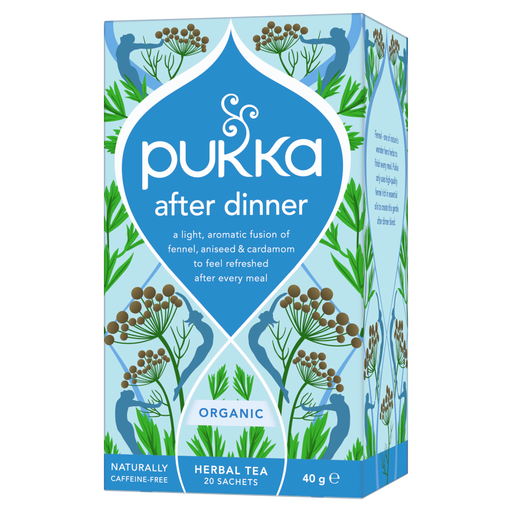
Pukka Feel New Organic, 20 sachets, 40g
For a multi-ingredient blend rather than a single-flower infusion. The product description notes traces of celery, so check the pack if celery is a concern.
View on Joybuy
 No image available
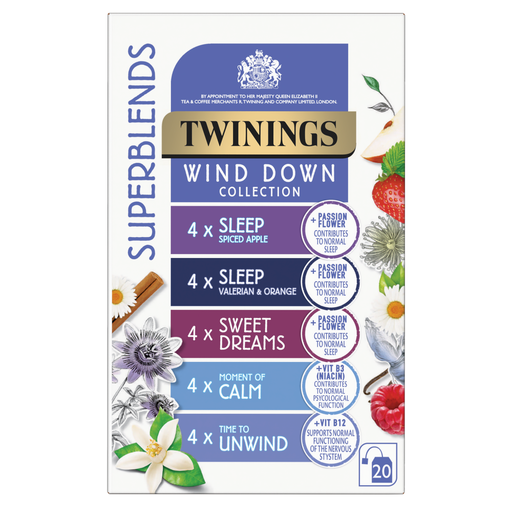
Twinings Superblends Wind Down Collection, 20 tea bags, 33.2g
A collection to consider if you want to try different blends rather than repeat one flavour. Their ingredients differ; check each one, including the liquorice listed in Time to Unwind.
View on Joybuy
 No image available
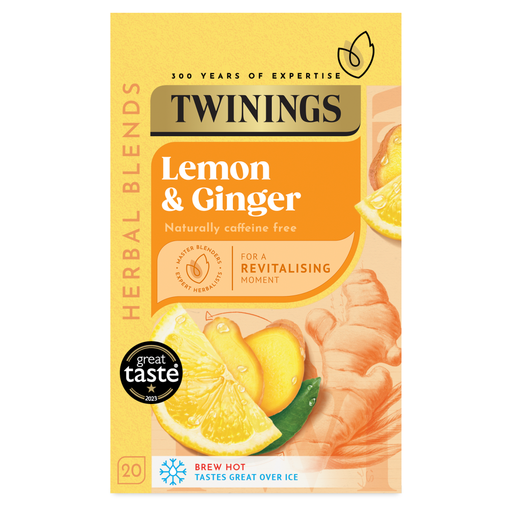
Twinings Lemon & Ginger, 20 tea bags
For shoppers who prefer a lemon-and-ginger blend to a floral infusion. Check the full ingredient list if you prefer to avoid flavourings or other botanicals.
View on Joybuy
 No image available
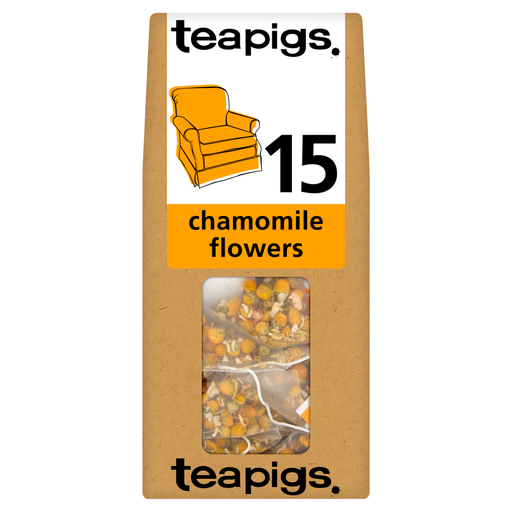
Teapigs Chamomile Flowers, 15 tea bags
A chamomile-focused choice if you prefer a floral infusion to a mixed-flavour collection. Check the pack if chamomile or a related botanical is a concern for you.
View on Joybuy
 No image available
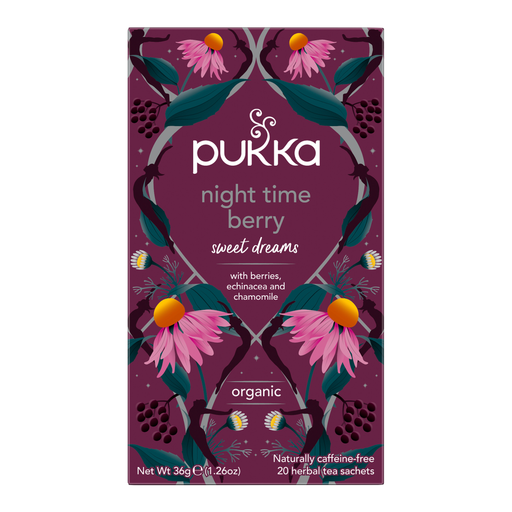
Pukka Night Time Berry Organic, 20 tea sachets, 36g
For a berry-led blend with several botanicals. Check the pack for liquorice and valerian, and confirm its caffeine statement if you are avoiding caffeine.
View on Joybuy
Herbal tea questions
Are all herbal tea blends caffeine free?
No. Check the named product’s ingredients and caffeine statement. Twinings describes its fruit-and-herbal infusions as caffeine free, but Twinings Green Tea & Ginger contains 40% green tea.
Should I choose a simple infusion or a mixed blend?
Choose by the flavour and ingredients you want: Teapigs Honeybush & Rooibos lists two ingredients, while ginger, fruit and spice blends can combine several botanicals. Read the full list and any warnings before choosing a more complex blend.
Do I need to check allergen information on herbal tea?
Yes, if an allergy is relevant to you. Check the delivered pack’s ingredients, declared allergens and precautionary statements rather than relying on the blend name; UK Food Standards Agency guidance addresses allergen information and labelling for foods.
What if a blend contains liquorice and I have hypertension?
Read its warning before choosing it. Twinings Spiced Ginger and Yogi Ginger Orange with Vanilla both state that people with hypertension should avoid excessive consumption because the blends contain liquorice. Seek individual advice from an appropriate healthcare professional if needed.
Can a herbal tea treat sleep or digestive problems?
Do not rely on a tea’s wellbeing positioning as evidence of treatment. NHS guidance says herbal medicines are not suitable for everybody and may present particular concerns during pregnancy or breastfeeding, with kidney or liver problems, or alongside certain medicines. Seek appropriate professional advice about a health concern.


