What should you check before buying?
Start with the certification on the exact product, then check whether its format, caffeine statement and ingredients work for your lunch break.
| Priority |
What to check |
Your needs |
| Fairtrade certification |
Inspect the current pack or exact listing for the mark. The Fairtrade Foundation says the classic black-background Mark covers all ingredients that can be Fairtrade-certified; the white-background Fairtrade Sourced Ingredient Mark identifies one Fairtrade-sourced ingredient. |
I want to know whether the certification covers the eligible ingredients or a named ingredient, rather than relying on an organic label or a general ethical claim. |
| Desk-lunch preparation |
Check the portion format and preparation instructions against the hot-water facilities at work. If avoiding caffeine, check the exact infusion’s caffeine statement. |
A portion I can prepare during a short break matters more to me than a blend requiring extra equipment. |
| Ingredients |
Read the full herb list, including ingredients beyond those named on the front. During pregnancy, follow the NHS advice to avoid teas containing liquorice root and drink no more than four cups of herbal tea a day. |
I need to recognise what is in each blend, particularly if I must avoid an ingredient or want advice about a medicine or health condition. |
Relevant brands and ranges
These ranges offer different starting points for choosing an infusion; a brand’s inclusion does not establish Fairtrade certification for a particular herbal product.
Pukka
An option for shoppers who accept Fair for Life as a distinct ethical-trade certification.
- Pukka says all its teas are Fair for Life certified and that its packs identify certified ingredients.
- Fair for Life does not establish that an individual Pukka blend carries the Fairtrade Mark.
Clipper
Offers herbal infusions alongside the company’s wider Fairtrade tea positioning.
- Clipper describes its peppermint, chamomile and fennel infusions as naturally caffeine-free.
- Check the Fairtrade Mark on the exact herbal infusion; the company’s wider positioning does not settle every product’s status.
Twinings
Lists fruit and herbal infusions as well as a separate Organic & Fairtrade tea collection.
- Its collections provide both herbal-infusion and Fairtrade-labelled tea ranges to browse.
- A place in the herbal-infusion range does not establish that a particular product carries the Fairtrade Mark.
teapigs
Has a herbal-tea range that includes mint, chamomile and rooibos options.
- The range gives shoppers several herb and blend choices to compare by flavour and ingredients.
- Check certification on the particular pack if the Fairtrade Mark is essential.
Tesco
Its fruit-and-herbal tea category includes own-label infusions as well as branded products.
- Listed own-label examples include peppermint, camomile and lemon-and-ginger infusions.
- Check the current listing or pack for the particular product’s ingredients and certification.
Mint infusions on Joybuy
These mint options suit a desk-lunch search, but their names do not establish Fairtrade certification. If the Fairtrade Mark is essential, check the current pack or exact product listing before choosing one.
 No image available
Pukka Organic Three Mint Herbal Tea, 20 sachets, 32g
The 20-sachet pack offers a portioned mint infusion for a short lunch break.
Pukka describes its teas as Fair for Life certified; check this pack for the Fairtrade Mark if that separate certification is your requirement.
View on Joybuy
 No image available
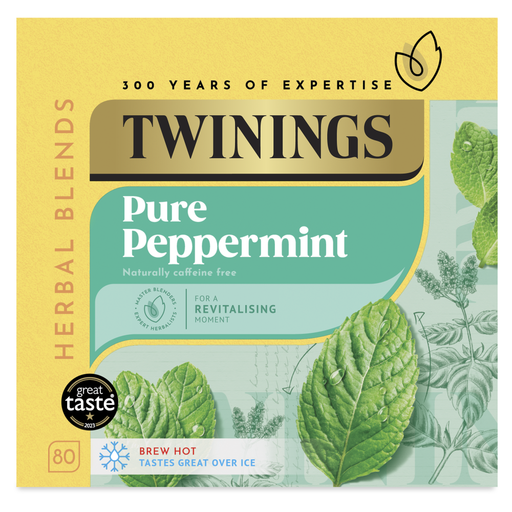
Twinings Pure Peppermint, 80-pack
This 80-pack is a peppermint option to consider for repeated desk lunches.
If Fairtrade certification determines your choice, check the mark on the current pack rather than relying on Twinings’ separate Organic & Fairtrade tea collection.
View on Joybuy
 No image available
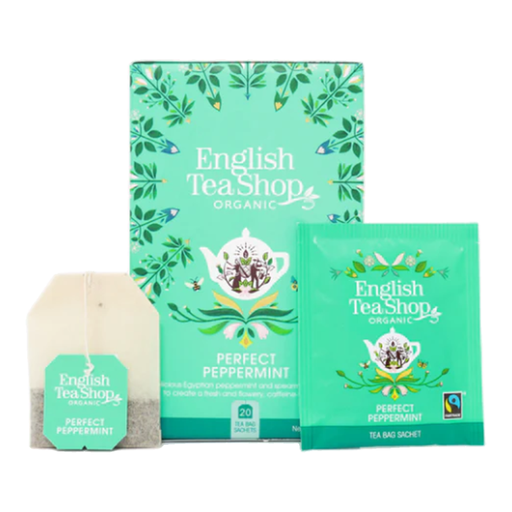
English Tea Shop Organic Perfect Peppermint, 20g
This 20g peppermint product is another mint option for a desk-lunch drink.
Organic describes a different attribute from Fairtrade certification; inspect the current pack for the Fairtrade Mark if you require it.
View on Joybuy
Common questions
Does a fair-trade claim mean a herbal tea is Fairtrade-certified?
No. Check the exact product for the Fairtrade Mark. The Fairtrade Foundation says its classic black-background Mark covers all ingredients that can be Fairtrade-certified, while its white-background Fairtrade Sourced Ingredient Mark identifies one Fairtrade-sourced ingredient. Pukka’s Fair for Life certification is a separate scheme.
What makes a herbal infusion practical for a quick desk lunch?
A portioned format and an ingredient list you can check make preparation and selection straightforward. If you want to avoid caffeine, look for a statement on the particular product: Clipper describes its peppermint, chamomile and fennel infusions as naturally caffeine-free.
Do I need to check the herbs in a blend during pregnancy?
Yes. The NHS advises avoiding herbal teas containing liquorice root during pregnancy and drinking no more than four cups of herbal tea a day. Read the full ingredient list, including herbs that are not named on the front of the pack, and seek professional advice about individual concerns.
Should I choose a herbal tea for a promised wellness effect?
Choose it as a drink, not as a treatment for symptoms. Check its flavour and ingredients against your preferences and circumstances; speak to a pharmacist or clinician about symptoms, medicines or a health condition rather than relying on a blend’s wellness name.


