Hosts with a specific certification requirement
If a guest asks for the FAIRTRADE Mark, check the exact herbal blend rather than relying on the brand name. Fair for Life is a different named certification and should be described as such.


If you specifically require the FAIRTRADE Mark, confirm it on the exact herbal tea pack; a brand’s Fairtrade range is not enough. If Fair for Life also meets your criteria, Pukka says all its teas carry that certification, and Fair for Life lists Pukka as a certified brand. For a shared Sunday brunch, consider flavour choice alongside each blend’s ingredients, particularly when guests have allergies or pregnancy-related questions.
The right starting point depends on whether certification, flavour choice or guests’ ingredients are the deciding concern.
If a guest asks for the FAIRTRADE Mark, check the exact herbal blend rather than relying on the brand name. Fair for Life is a different named certification and should be described as such.
A selection of herb- and fruit-led blends gives guests more choice than a single flavour. Check what is in each blend before putting the box on the table.
Keep the exact pack available so guests can read its ingredients and allergen information. This matters particularly when someone needs to avoid an ingredient or is checking pregnancy-specific guidance.
Decide which certification you mean before comparing flavours; then check the exact blends you plan to serve.
Choose this route: If the Fairtrade Foundation’s mark is the requirement, look for it on the particular herbal tea pack.
Watch for: Clipper sells Fairtrade teas, but its shop lists several herbal infusions separately; its brand positioning does not establish the mark for those infusions.
Choose this route: If a different named fair-trade certification meets your criteria, Pukka says its teas are Fair for Life certified; Fair for Life also lists Pukka as a certified brand.
Keep in mind: Fair for Life is not the FAIRTRADE Mark, and a mixed box still calls for an ingredient check on each blend.
| Priority | What to check | Your needs |
|---|---|---|
| Certification | Read the scheme name and mark on the exact pack. The Fairtrade Foundation explains what its classic FAIRTRADE Mark covers; Pukka Herbs UK says its packs identify Fair for Life certified ingredients and their overall percentage. | I want to know which certification applies to the herbal blend I am serving, rather than assuming that a brand’s other teas carry the same claim. |
| Flavour choice | Compare the blends in a selection box or pick distinct single flavours. Pukka Herbs UK describes four blends in its Herbal Collection; Twinings and teapigs list herbal options including mint, camomile and ginger. | With several guests at brunch, I would rather offer a choice than expect everyone to like one strong flavour. |
| Ingredients | Read each blend’s full ingredients and allergen information on the exact pack. For a pregnant guest, NHS guidance says to avoid tea containing liquorice root. | Before I serve a blend, I need to be able to show guests what it contains so they can check it against their own requirements. |
A certification claim and an ingredient list both need to apply to the tea guests will actually drink.
Fair for Life, organic status and the FAIRTRADE Mark do not make the same claim. A differently certified tea may not meet a guest’s request for the Fairtrade Foundation’s mark.
Settle which scheme matters, then read the certification wording on the exact pack. Pukka Herbs UK identifies Fair for Life as its scheme; the Fairtrade Foundation explains the separate FAIRTRADE Mark.
Clipper Tea Shop lists Fairtrade teas and several organic herbal infusions separately. The brand’s Fairtrade positioning alone does not confirm certification for an individual infusion.
Check the herbal product’s own pack or listing for the scheme name and any certified-ingredient information before choosing it for a certification-led menu.
Different sachets can contain different herbs. NHS pregnancy guidance specifically advises avoiding teas containing liquorice root, so the name of a selection box is not enough to assess every blend.
Keep the carton and ingredient panels available for guests, and offer another drink when a blend does not meet someone’s requirements.
These ranges illustrate why flavour availability and certification should be checked as separate questions; a brand reference is not a claim about every product it sells.
A herbal range to consider when Fair for Life, rather than the FAIRTRADE Mark, meets your certification requirement.
Relevant to a search for Fairtrade tea, but individual herbal infusions need their own certification check.
Its UK herbal collection lists single-herb and blended flavours that could provide a choice for brunch guests.
A flavour-led herbal range with options including peppermint, camomile, rooibos and lemon and ginger.
This Twinings collection is a flavour-choice option for a shared brunch. If you require the FAIRTRADE Mark or Fair for Life certification, check the exact pack’s wording before choosing it for that reason.
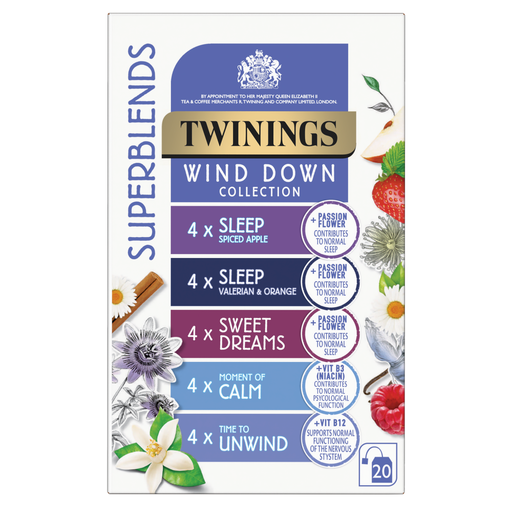 Image unavailable
The collection offers five named fruit and herbal blends for guests with different flavour preferences.
Its listed Time to Unwind blend contains liquorice root; NHS pregnancy guidance advises avoiding teas containing liquorice root. Check the exact pack’s ingredients and allergen information before serving it to guests.
If a named fair-trade certification is essential, confirm the certification wording on this collection’s exact pack rather than relying on Twinings’ other ranges.
No. The Fairtrade Foundation describes what its classic FAIRTRADE Mark covers, while Pukka Herbs UK identifies Fair for Life as the separate standard for its teas. If the mark itself is required, confirm it on the exact herbal product.
Do not assume so. Clipper Tea Shop lists Fairtrade teas separately from several organic herbal infusions; check the individual infusion’s pack or product page for its certification claim.
A mixed selection offers several flavours in one box: Pukka Herbs UK describes four blends in its Herbal Collection, while Twinings and teapigs list broader herbal ranges. Read each chosen blend’s ingredients before serving it.
Read the exact pack’s ingredients list. GOV.UK explains that prepacked food labels in Great Britain must show the food name and ingredients, with the 14 allergens required to be declared by law emphasised in the list.
The ingredients matter. NHS pregnancy guidance advises no more than four cups of herbal tea a day and says to avoid teas containing liquorice root. Check the exact blend rather than treating all herbal teas as interchangeable.