Regular loose-tea brewers
If you enjoy measuring a blend for a slower weekend brew, a protective jar or caddy gives loose tea a dedicated place between breakfasts. You will also need a way to infuse it.


A dedicated jar makes sense if you regularly brew loose herbal tea and are happy to measure it and use an infuser. For a breakfast table with different tastes, portioned tea bags or a selection box avoid committing to one loose blend; if you do buy a jar, TeaTrade recommends an opaque, airtight, odour-neutral container kept somewhere cool and dark.
If you enjoy measuring a blend for a slower weekend brew, a protective jar or caddy gives loose tea a dedicated place between breakfasts. You will also need a way to infuse it.
Assorted sachets or individually portioned tea let family or guests choose different flavours without opening a large quantity of one loose blend.
If caffeine or particular ingredients matter to you, check the exact blend’s ingredients, allergen information and caffeine statement rather than relying on the word “herbal”.
Choose it when: You regularly make the same loose blend and are willing to measure it and use an infuser.
Bear in mind: The extra preparation and storage container may be unnecessary if you only occasionally make loose tea.
Choose them when: You want single-cup portions or several flavours available at the same breakfast.
Bear in mind: Pre-portioned tea offers less scope to vary the amount used in each cup.
| Priority | What to check | Your needs |
|---|---|---|
| Loose-tea storage | Check whether the container is opaque, airtight and odour-neutral. TeaTrade advises keeping tea in a cool, dark place away from moisture and strong smells. | I plan to keep an opened loose blend between weekend breakfasts, rather than leave a clear display jar on the worktop. |
| Brewing effort | Check whether the tea is loose or portioned, what equipment it needs and the directions for that blend. Twinings specifies one teaspoon per cup and a two-to-three-minute brew for its Blackcurrant & Lavender loose infusion. | For a quick cup or several flavour choices, I would rather use individual portions; for a slower brew, measuring loose tea suits my routine. |
| Ingredients and caffeine | Read the full ingredients list, allergen information and any explicit caffeine statement on the specific product. A flavour name or the word “herbal” is not a substitute. | If I am avoiding caffeine or an ingredient, I need to check the blend I will actually serve. |
| Drink format | When comparing brewed tea with an instant, concentrated or ready-to-drink product, check the ingredients, preparation directions and nutrition information for each. | I want to know whether I am choosing a brew for the teapot or a different kind of drink for breakfast. |
Light, air, moisture and kitchen odours can affect stored tea.
For loose tea, follow TeaTrade’s advice to choose an opaque, airtight, odour-neutral container and keep it in a cool, dark cupboard away from steam and strong smells. If you use clear glass, keep it in a dark cupboard.
Products using the word “herbal” can differ in ingredients and caffeine status.
When avoiding caffeine, read the complete ingredients list and look for an explicit caffeine-free statement on the particular blend.
Words associated with a particular effect do not establish what a blend will do, or tell you everything it contains.
Compare ingredients, flavour and preparation format instead. Seek qualified advice if a concentrated herbal product raises questions about your circumstances.
A dedicated jar is more useful for a loose blend you expect to make regularly; an assortment lets people try different flavours first.
Try a smaller loose pack or portioned selection before choosing a container for repeat use.
Opening a large quantity of an unwanted blend can leave tea unused.
These examples illustrate loose and portioned formats; each ingredient or preparation detail applies to the named product, not every blend from its brand.
Pukka’s Herbal Tea Selection contains 45 sachets across nine blends, according to Pukka Herbs UK.
Twinings offers a 100 g Blackcurrant & Lavender loose infusion for buyers who want tea to measure and store.
Clipper’s Organic Peppermint Infusion is a 20-bag, single-ingredient peppermint option.
Teapigs lists its chamomile tea in both tea-temple and loose formats.
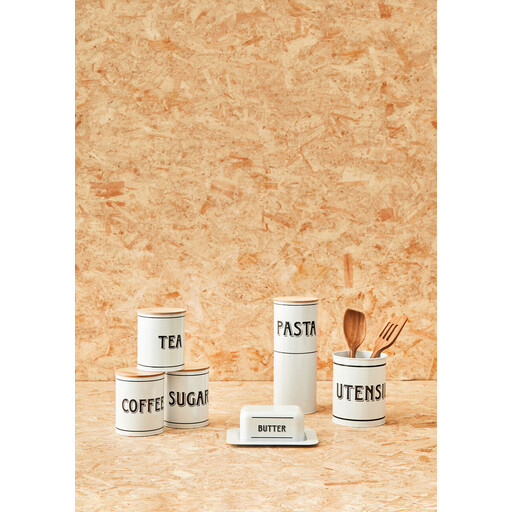
This tea canister is an option for storing a loose blend between weekend breakfasts. Check the closure, usable capacity and food-contact suitability against the tea you intend to keep in it.
 No image available
This white metal tea canister is a dedicated container to consider if you regularly brew loose herbal tea. Confirm its food-contact suitability, usable capacity and lid closure before choosing it for your blend.
A clear counter-top jar is not TeaTrade’s recommended choice for longer-term tea storage. Its guidance favours an opaque, airtight, odour-neutral container in a cool, dark place; if you prefer clear glass, keep the jar inside a dark cupboard.
A dedicated loose-tea jar is not necessary for portioned bags or tea temples. It is more relevant when you regularly measure loose tea, while a selection box can offer several flavours for breakfast guests.
Do not assume so from the word “herbal”. Check the ingredients and look for an explicit caffeine-free statement on the particular product if caffeine status matters to you.
Check the exact current pack or product information for its ingredients and allergen details rather than relying on the brand or flavour name. For prepacked foods sold in England, Northern Ireland and Wales, GOV.UK and Food Standards Agency technical guidance addresses allergen-information requirements; check the applicable information for the product’s place of sale, including Scotland.
No: wording associated with a health effect does not establish an outcome. Choose by the actual ingredients, flavour and preparation format, and seek qualified advice about regular use of concentrated herbal products where your circumstances warrant it.