Households with a shared favourite
If several people regularly choose peppermint, a larger single-flavour pack can mean fewer repeat purchases. It makes less sense if only one person drinks it or the household often changes flavours.


Choose a larger pack of one herbal infusion when several people regularly drink the same flavour; Twinings Pure Peppermint, for example, comes in an 80-bag pack. If tastes differ, start with a smaller selection or separate flavours before buying in bulk. Check the current pack for ingredients and allergens, particularly with blends containing several botanicals.
If several people regularly choose peppermint, a larger single-flavour pack can mean fewer repeat purchases. It makes less sense if only one person drinks it or the household often changes flavours.
Mint, camomile, fruit and lemon-and-ginger infusions offer distinct choices. A mixed selection lets everyone try flavours before the household commits to more of any one blend.
When choosing for someone with an allergy or a reason to avoid particular botanicals, read the current pack rather than relying on the blend name. People taking medicines or managing a health condition may also want professional advice before using purpose-led herbal products.
Decide which flavours will be used regularly, then compare pack sizes and check the details of each blend.
| Priority | What to check | Your needs |
|---|---|---|
| Pack size | Compare the number of bags or envelopes, the current price per serving and whether the whole pack is likely to be used. An 80-bag peppermint pack and a mixed 20-bag box serve different purposes. | We drink the same mint infusion most days, so a larger pack could save repeat purchases. If tastes change often, I would rather buy fewer bags at once. |
| Flavour variety | Read the flavours and the number of servings of each. Twinings Fruit & Herbal Classic Collection has five envelopes each of peppermint, lemon and ginger, camomile, and strawberry and raspberry, according to Twinings. | Some of us prefer mint while others choose fruit or floral flavours. A selection would help us work out what to buy again. |
| Caffeine status | Check the statement on the exact product and pack. Twinings describes its Pure Peppermint 80-bag infusion as naturally caffeine-free; do not apply that statement to a different blend. | If I am buying a caffeine-free drink, I want to confirm it for every flavour in the basket. |
| Ingredients | Compare a plain infusion with each multi-botanical blend, then read the current ingredient and allergen information on the pack. A routine-led name is not evidence of a medical effect. | When serving several people, I need to know what is in each blend rather than assuming every herbal tea suits everyone. |
Floral, fruity and multi-botanical blends may not appeal to people who usually choose plain mint. A large pack leaves little room to change course.
Try a smaller selection or individual flavours first, then buy more of those the household regularly finishes.
Names such as “Bedtime” describe how a product is positioned, not a proven effect. NHS 111 Wales cautions that herbal medicines are not automatically safe because they are natural and may interact with medicines; that guidance does not establish an effect or risk for every food tea.
Choose a blend for its ingredients and flavour. If the aim is to manage a symptom, ask a pharmacist or clinician for advice rather than relying on a tea name.
Clipper lists a 250-envelope peppermint pack, but its size is useful only if enough people will consistently drink that flavour.
Compare servings and the current price per bag after confirming that the blend suits the regular drinkers.
A saved listing may not reflect the pack being served, which matters when someone needs to avoid an ingredient.
Check the current pack’s ingredient and allergen information before serving, especially for blends with several botanicals.
Tesco lists a 40-bag peppermint infusion for households that want a straightforward mint option.
Twinings offers both an 80-bag Pure Peppermint pack and a 20-envelope Fruit & Herbal Classic Collection.
Clipper lists an organic peppermint infusion in a 250-envelope format.
Pukka’s Three Mint offers a mint blend rather than a plain peppermint infusion.
Yogi Tea lists a 17-bag Bedtime blend containing several botanicals, including fennel, camomile, peppermint and valerian.
Teapigs lists herbal options including peppermint, camomile, and lemon and ginger.
These options include a larger plain peppermint pack and smaller packs for households choosing different flavours. Match each pack to the people who will drink it, rather than treating every blend as interchangeable.
 No image available
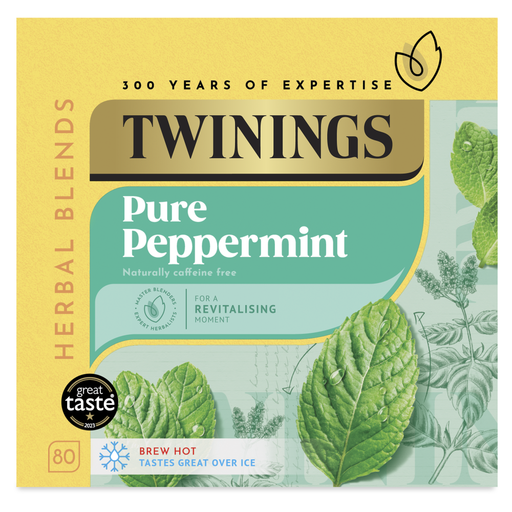
An 80-bag single-flavour option when several household members regularly choose peppermint. Twinings describes its Pure Peppermint 80-bag infusion as naturally caffeine-free; check the current pack label before serving.
 No image available
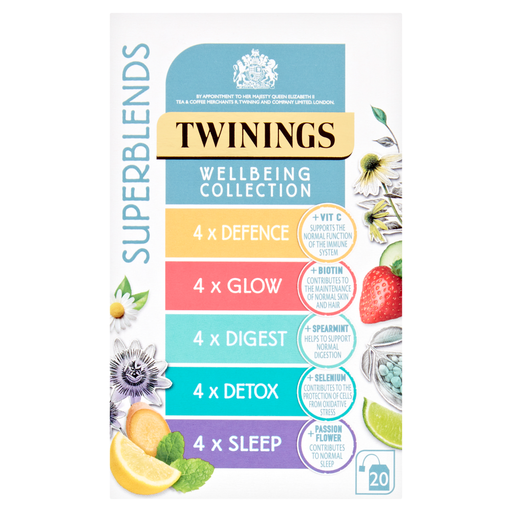
A smaller collection to consider when household members want a choice rather than one everyday flavour. Check the individual blends on the current pack for ingredients and caffeine status before buying for someone with specific requirements.
 No image available
A 20-sachet option for household members who want a mint blend alongside plain peppermint. Its after-meal positioning is a flavour and routine choice, not evidence of a medical effect; check the current pack’s ingredients.
 No image available
A 20-bag alternative when some household members would choose lemon and ginger over mint. Check the current pack for its full ingredients and allergen information.
 No image available
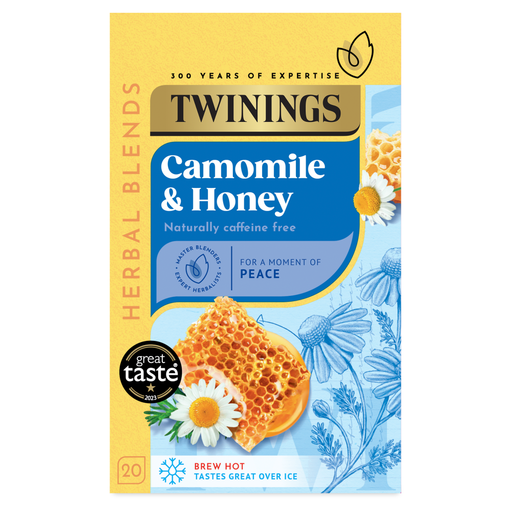
A 20-bag choice for someone who prefers a camomile, honey and vanilla profile to mint or citrus. Check the current pack’s ingredient and allergen statements rather than assuming what the flavour name contains.
Check the exact blend rather than relying on the category name. Twinings describes its Pure Peppermint 80-bag pack as naturally caffeine-free, but that statement should not be carried over to a different product or every blend in a collection.
Buy a larger single-flavour pack when several people repeatedly choose that flavour; use a variety box when preferences differ or are still uncertain. Twinings says its Fruit & Herbal Classic Collection contains four flavours with five envelopes each, so it offers choice rather than a large supply of one favourite.
No: a routine-led product name does not establish a medical effect. NHS 111 Wales cautions that herbal medicines are not automatically safe because they are natural and may interact with medicines; its guidance should not be read as a finding about every food tea. Choose food infusions by their disclosed ingredients and ask a healthcare professional if you intend to use a herbal product to manage a symptom.
Read the current pack’s ingredient and allergen information before serving, especially for a multi-botanical blend. If medicines or a health condition make a botanical’s suitability uncertain, ask a pharmacist or clinician rather than assuming that a herbal product suits everyone.