Who might choose each format?
Where you make your tea can matter more than pyramid shape: separate envelopes help with carrying bags, while a larger pack can stay at home.
Students revising away from home
If you carry tea to a library or campus, separate envelopes may make it easier to take a few bags at a time. Twinings says its 15-bag Unwind Spiced Apple & Camomile pack contains individually sealed pyramids and is naturally caffeine free.
Home revisers who prefer a single herb
If you have time for a longer tea break, teapigs describes its 40-temple chamomile pack as pure whole chamomile flowers, with a brewing time of at least three minutes. That is a different pack from the 15-bag Joybuy product below.
Shoppers checking packaging disposal
If disposal instructions influence your choice, check the bag and its envelope separately. Twinings describes the envelopes on its cited Unwind pack as recyclable; Pukka describes its UK tea bags as home compostable, while Clipper describes its PLA-sealed bags as industrially compostable.
What matters when choosing?
Start with where you will drink the tea, then check the exact blend and pack. A pyramid shape alone does not establish caffeine content, flavour or the right disposal route.
| Priority |
What to check |
Your needs |
| Caffeine statement |
Read the statement for the exact blend. Twinings calls Unwind Spiced Apple & Camomile naturally caffeine free; teapigs says the same of its cited chamomile tea temples. |
For an evening break, I want to check the drink itself rather than assume every pyramid bag has the same ingredients. |
| Ingredients and flavour |
Compare the full ingredient lists. Twinings Unwind is a flavoured camomile blend, while teapigs lists pure whole chamomile flowers for its cited 40-temple pack. |
I might prefer a single-flower infusion, or I might want a blend; the word “camomile” on the front does not settle that choice. |
| Preparation time |
Follow the pack’s water and brewing directions. Twinings gives 2–3 minutes for Unwind; teapigs specifies at least three minutes for its cited chamomile temples. |
If my break is short, I want to know how long this particular tea takes to brew. |
| Pack format |
Check the bag count, net weight and whether each bag has its own envelope. The cited Twinings pack has 15 individually enveloped pyramids; the cited teapigs pack has 40 tea temples. |
Separate envelopes suit tea carried in a bag. If I mainly revise at home, I may prefer to keep a larger pack there. |
| Packaging and storage |
Read disposal instructions for each component and check what your local collection accepts. For storage, follow the exact pack; Clipper specifies a cool, dry place for its cited peppermint infusion. |
I want to store tea between revision sessions and know whether its bags and wrappers go through different disposal routes. |
| Allergen information |
Read the current ingredients and allergen information for the exact flavour and pack size, especially when choosing a blend. |
If an ingredient matters to me, I need to check this pack rather than rely on another tea with a similar name. |
Brand and format references
These examples illustrate different bag and packaging choices; a brand’s inclusion here does not mean every tea it makes uses a pyramid bag.
Twinings
Twinings’ Unwind Spiced Apple & Camomile is a flavoured herbal infusion sold in a 15-bag pack of individually enveloped pyramids.
- Twinings specifies a 2–3 minute infusion and describes this blend as naturally caffeine free.
- It is a blend rather than a single-herb camomile tea. Twinings’ description of ingredients unfurling in its pyramids does not establish that they make a better cup than other bags.
teapigs
teapigs calls its pyramid bags Tea Temples. Its cited 40-temple chamomile pack contains pure whole chamomile flowers.
- teapigs describes the cited chamomile tea as naturally caffeine free and specifies brewing for at least three minutes.
- The cited 40-temple pack is a different carrying proposition from individually enveloped bags; check its packaging if you need separate portions away from home.
Pukka
Pukka is a reference for shoppers comparing herbal blends and bag-disposal information when pyramid shape is not essential.
- Pukka says its UK tea bags are certified home compostable and that individual sachets protect its blends from air and moisture.
- Check the format of the particular Pukka tea if a pyramid bag is part of your buying decision.
Clipper
Clipper provides a conventional-bag reference; its cited organic peppermint infusion lists peppermint as its ingredient.
- Clipper describes that peppermint infusion as naturally caffeine free and its PLA-sealed tea bags as industrially compostable.
- Those bag-material statements do not establish a pyramid format. Check the exact product if shape or local disposal arrangements matter.
Joybuy camomile option
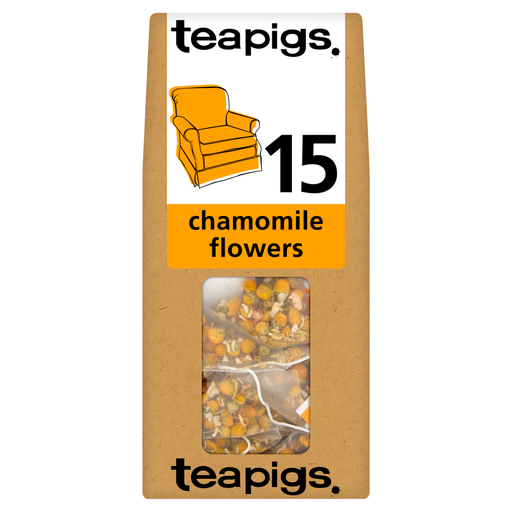
This 15-bag camomile option may suit tea breaks at a home study space. If you specifically want a pyramid bag or separate envelopes for carrying, check those details on the product and pack before choosing it.
 No image available
Teapigs Chamomile Flowers, 15 tea bags, 180g
A camomile tea option for a revision break at home. The product name specifies 15 tea bags and 180g; check the current ingredients, caffeine statement and brewing directions for this pack rather than applying details from teapigs’ separate 40-temple product.
If you plan to carry individual bags or need a particular disposal route, check the wrapping and disposal instructions on this pack.
View on Joybuy
Questions about herbal tea bags
Are herbal pyramid bags automatically caffeine free?
No: bag shape does not tell you the caffeine content. Twinings describes its cited Unwind blend as naturally caffeine free, and teapigs says the same of its cited chamomile tea temples; check the statement for any other blend separately.
How long should I brew one during a revision break?
Follow the directions for the exact tea. Twinings specifies 2–3 minutes for Unwind Spiced Apple & Camomile, while teapigs specifies at least three minutes for its cited whole-flower chamomile temples. Do not transfer either time to a different pack.
What should I check if an ingredient or allergen matters to me?
Read the current ingredients and allergen information on the exact flavour and pack size. A product labelled camomile may be a single-flower tea or a blend with other ingredients, so a similar name is not enough to identify its contents.
Can herbal tea bags go in home compost or food waste?
Use the route stated for the exact bag and accepted by your local arrangement. Pukka describes its UK tea bags as home compostable, while Clipper describes its PLA-sealed bags as industrially compostable. Check envelopes and cartons separately rather than extending a bag claim to the whole pack.
How should I store tea bought for a revision period?
Follow the storage directions on your pack. Clipper specifies a cool, dry place for its cited peppermint infusion; Pukka says its individual sachets protect blends from air and moisture. Check whether the tea you choose is individually wrapped if you expect to carry it.


