Choose a winter herbal tea pyramid bag by its ingredients and format, not its seasonal name. Teapigs Spiced Winter Red combines rooibos with orange peel and spices, while Twinings Honey & Rooibos offers individually wrapped loose-leaf pyramids; if caffeine avoidance or disposal matters, check the statement and instructions on the exact pack.
Who might choose these teas?
Evening tea drinkers avoiding caffeine
If caffeine matters to you, look for an explicit statement on the exact infusion rather than relying on a winter-themed or herbal-sounding name. Rooibos and chamomile options give you different ingredient and flavour choices to compare.
Shoppers looking for winter spices
Teapigs lists orange peel, cinnamon and cloves in Spiced Winter Red. For a different direction, Pukka Three Ginger lists ginger, turmeric and galangal, although its stitched tea bags should not be mistaken for a confirmed pyramid format.
Shoppers particular about bags and packaging
If you want a pyramid bag, check the individual product rather than assuming every tea bag from a brand has that shape. Twinings specifies loose-leaf pyramids in individually wrapped envelopes for Honey & Rooibos; disposal claims also need checking for the particular bag.
What should you check before buying?
Narrow the choice by caffeine labelling and ingredients, then check whether the bag format and packaging fit how you plan to use it.
| Priority | What to check | Your needs |
|---|
| Caffeine |
Find a caffeine statement for the exact blend. Check its base ingredients rather than relying on words such as ‘winter’ or ‘chai’. |
I want an evening drink and need to know whether this particular tea is labelled caffeine-free. |
| Flavour |
Compare named ingredients and flavourings. Teapigs lists rooibos, orange peel, cinnamon and cloves in Spiced Winter Red; Pukka lists ginger, turmeric and galangal in Three Ginger. |
Do I want orange and spice, a rooibos blend with other flavours, or a ginger-led cup? The ingredients matter more to me than a seasonal name. |
| Bag format |
Confirm that the exact product says pyramid or tea temple. Twinings describes Honey & Rooibos as 15 loose-leaf pyramids in recyclable envelopes. |
I specifically want a pyramid bag, or I prefer individually wrapped portions to an unwrapped pack. |
| Disposal |
Read the claim on the exact bag and check local collection rules. Pukka’s home-compostable claim concerns its tea bags; Clipper says its bags use plant-cellulose PLA sealing. |
I need to know where the used bag and any individual envelope can actually go, rather than assuming plant-based means suitable for home compost. |
Common buying mistakes
-
Assuming a seasonal name settles the caffeine question
A warming flavour description does not tell you whether the exact blend is labelled caffeine-free.
Read the product’s caffeine statement and ingredients if you are choosing an evening drink.
-
Using ‘compostable’ and ‘home compostable’ interchangeably
Bag materials and disposal claims differ between products. Pukka’s home-compostability information applies to its tea-bag system, not automatically to another brand’s pyramid bag.
Follow the instructions for the specific pack and check what your local food-waste collection accepts.
-
Choosing by the winter-themed name alone
Teapigs Spiced Winter Red lists flavourings, gingko and ginseng alongside rooibos and spices. Those ingredients may matter if you want a simpler infusion or avoid particular botanicals.
Compare full ingredient lists before choosing between spiced, flavoured and single-ingredient blends.
Brand references for this choice
Bag shape and ingredients vary by product, so these brand references are starting points for checking a particular blend, not a list of interchangeable pyramid teas.
Teapigs
Its Tea Temples range uses pyramid bags, and Spiced Winter Red is a rooibos blend with orange peel, cinnamon and cloves.
- The Spiced Winter Red ingredient list makes its spice and citrus components clear.
- It also contains flavourings, gingko and ginseng, so check the full list if you want a simpler blend.
Twinings
Honey & Rooibos is sold as 15 loose-leaf pyramid bags in individually wrapped envelopes.
- Twinings describes the individual envelopes as recyclable.
- Check the ingredients if you expect honey itself from the product name, and follow the pack’s separate bag-disposal instructions.
Clipper
Clipper Tea Shop lists Organic and Fairtrade Rooibos in a 20-pyramid-bag format.
- Clipper describes its tea-bag sealing material as plant-cellulose PLA.
- Check the individual pack for its ingredients and disposal instructions; the material description alone does not establish home-composting suitability.
Pukka
Three Ginger offers a ginger, turmeric and galangal blend for shoppers whose flavour preference matters more than a pyramid bag.
- Pukka describes Three Ginger as naturally caffeine-free and says its tea bags are home compostable.
- That tea-bag claim does not establish a comparable Three Ginger pyramid format.
Yogi Tea
Yogi Tea describes a wider range of teas using spices and botanicals.
- Its collection offers a reference point for shoppers comparing spiced flavour descriptions.
- Check an individual product’s ingredients, caffeine statement and bag shape before treating it as a pyramid-bag alternative.
A Joybuy herbal tea option
This chamomile tea offers a simpler herbal flavour for a winter cup; confirm the bag shape if a pyramid format is essential to your choice.
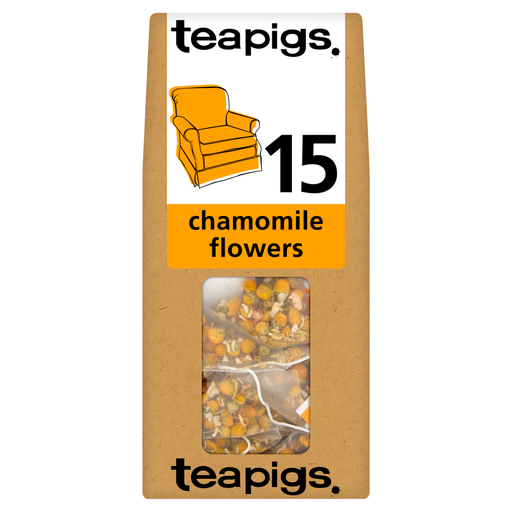 Image unavailable
Teapigs Chamomile Flowers, 15 Tea Bags, 180g
Consider this for a chamomile cup rather than an orange-and-spice blend. The listing describes a caffeine-free infusion made with 100% chamomile flowers and specifies 15 tea bags, 180g. Check the exact bag shape, brewing instructions and disposal information on the pack if those affect your choice.
View on Joybuy
Questions about herbal tea bags
Are all herbal pyramid teas caffeine-free?
Do not assume so from the bag shape or a herbal-sounding name. If you need to avoid caffeine, choose an exact blend whose pack explicitly states its caffeine status and check the ingredients.
How long should I brew a pyramid herbal tea?
Follow the instructions for the particular blend rather than applying one brewing time to every pyramid bag. Check the pack before preparing a new tea, especially when switching between chamomile, rooibos and spiced infusions.
Can herbal pyramid bags go in home compost or food waste?
Not automatically. A plant-based material description does not by itself mean a bag belongs in home compost, and Pukka’s home-compostable tea-bag claim should not be applied to another product’s pyramids. Follow the exact pack instructions and your local collection rules.
Should I choose herbal tea to treat a symptom while taking medicine?
Do not use a herbal infusion as a substitute for medical care. Guy’s and St Thomas’ NHS Foundation Trust cautions that herbal products may interact with conventional medicines; ask the clinician or pharmacist managing your medicines about particular ingredients.


