Shoppers stocking an everyday tea cupboard
If the box needs to last through your usual weekly routine, start with a flavour you expect to drink regularly. Then decide whether you prefer one named herb or a blend with several ingredients.


For a familiar everyday flavour and a short ingredient list, choose a plain chamomile or peppermint infusion; choose a flavoured blend if you specifically want fruit, spice or other botanical notes. For an evening drink, check the exact pack’s caffeine statement and ingredients rather than relying on its name, and do not treat a bedtime blend as a remedy for sleep problems.
If the box needs to last through your usual weekly routine, start with a flavour you expect to drink regularly. Then decide whether you prefer one named herb or a blend with several ingredients.
Look for an explicit caffeine-free statement on the individual blend. Pukka says many of its herbal teas contain no caffeine; that is not a statement about every product in its wider range.
An infusion’s natural ingredients or wellbeing name do not establish that it works as a remedy. NHS guidance identifies pregnancy, breastfeeding, kidney or liver problems and certain medicines as important cautions for herbal medicines; ask a pharmacist, GP or midwife for advice about your circumstances before using herbal products as remedies.
Settle on a flavour and pack format you will use, then check the caffeine wording and full ingredient list of the exact blend.
| Priority | What to check | Your needs |
|---|---|---|
| Flavour | Compare the named herbs and flavourings. Clipper lists chamomile as the ingredient in its Organic Chamomile infusion; Twinings lists spearmint, rooibos, apple and other ingredients in its Superblends Digest infusion. | I want a flavour I will reach for throughout the week, whether that is straightforward floral chamomile or a blend with fruit and mint notes. |
| Caffeine | Read the statement for the exact product, not just its range. Twinings labels its Superblends Sleep Valerian & Orange Blossom caffeine-free; Pukka says many of its herbal teas naturally contain no caffeine. | For a caffeine-free evening routine, I need the chosen pack itself to say it contains no caffeine. |
| Ingredients | Check the complete ingredient list, particularly for liquorice or a multi-botanical blend. Pukka advises seeking professional advice about specified liquorice-containing teas during pregnancy. | A short ingredient list matters to me, or I need to check particular herbs before choosing a blend. |
| Pack and brewing | Check the bag count, whether an assortment identifies each blend, and the brewing directions. Teapigs specifies a 40-temple pack and a brew of at least 3 minutes for its chamomile. | If I drink the same infusion often, I may prefer a larger pack; if I want variety, I need to know what is in the assortment. |
A blend sold for an evening occasion is still a drink choice, not evidence that it treats insomnia or another health condition.
Choose it for its disclosed flavour, ingredients and caffeine status. Seek clinical advice about persistent symptoms rather than relying on the blend’s positioning.
Caffeine statements apply to the product or range they actually describe. Pukka says many of its herbal teas naturally contain no caffeine, while Twinings explicitly labels its named Superblends Sleep infusion caffeine-free.
Check the statement and ingredients on the exact pack going into your basket.
A mint blend containing liquorice is not the same ingredient choice as plain peppermint. Pukka advises professional advice about some liquorice-containing teas during pregnancy; NHS guidance also identifies circumstances requiring caution with herbal medicines.
If you are pregnant, breastfeeding, have kidney or liver problems, or take medicines, ask a pharmacist, GP or midwife before using herbal products as remedies.
A product title and its description can identify different blends, leaving the ingredients of the intended variant unclear.
Check that the selected variant, ingredient list and pack size agree before placing an order.
A reference point for simple herbal infusions: Clipper lists organically grown chamomile as the ingredient in its Organic Chamomile product.
Its range includes different herbal flavour combinations, including Peppermint & Liquorice.
Its named Superblends products offer multi-ingredient flavour combinations for different drinking occasions.
Its 40-temple chamomile pack is an option to consider if you regularly choose the same floral infusion.
These options cover mint, citrus-and-ginger and flavoured camomile teas, plus a liquorice-and-mint blend and an evening-oriented assortment. Compare the exact pack when deciding which belongs in a regular weekly shop.
 No image available
Consider this 20-pack if you want a lemon-and-ginger flavour alongside simpler infusions. Check the pack’s full ingredients and caffeine statement for your intended routine.
 No image available
The 80-pack is worth considering if peppermint is a flavour you use regularly rather than one you only want occasionally. Follow the brewing directions on the pack.
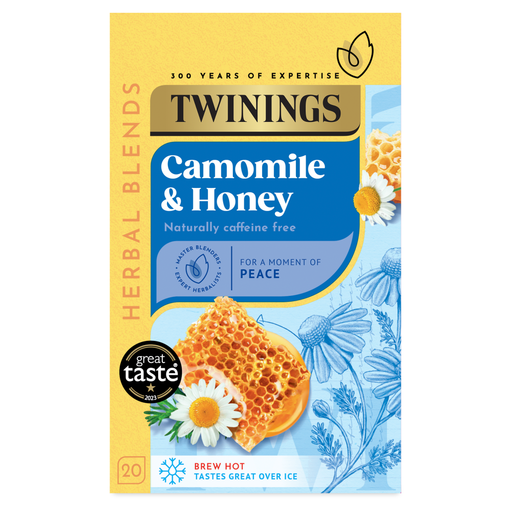 No image available
This 20-pack offers a named camomile flavour with honey and vanilla notes rather than a plain chamomile choice. Check the ingredients if you need to distinguish flavourings from ingredients such as honey.
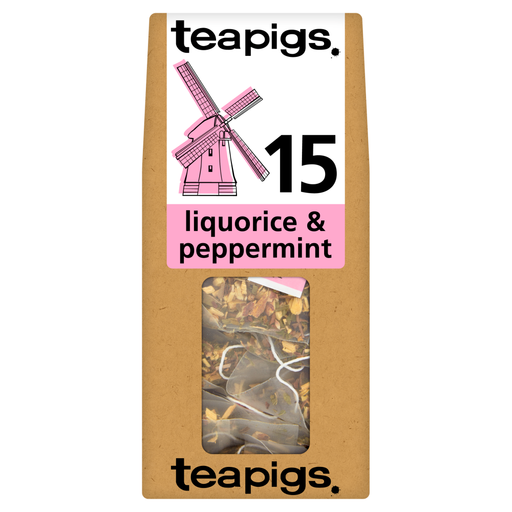 No image available
Choose this 15-bag blend only if you want liquorice as well as mint; it is not a substitute for plain peppermint. Check the ingredient list, particularly if you are avoiding liquorice.
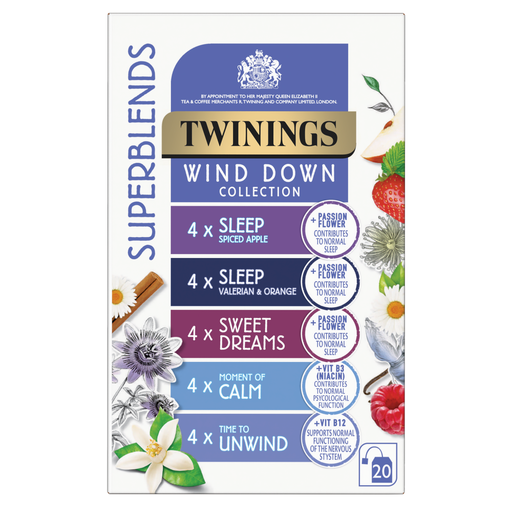 No image available
This assortment may suit a weekly shop if you want to alternate between evening-oriented flavours rather than repeat one infusion. Check each blend’s ingredients and the assortment breakdown; its wind-down name is not a claim that it treats sleep problems.
Do not assume so from the category name. Pukka says many of its herbal teas naturally contain no caffeine, while Twinings explicitly labels its Superblends Sleep Valerian & Orange Blossom infusion caffeine-free. Check the statement on the blend you intend to buy.
The ingredient list may be much shorter: Clipper’s Organic Chamomile lists chamomile, and Teapigs lists pure whole chamomile flowers. Twinings’ named Superblends Sleep infusion lists several botanicals, including camomile, passionflower, lavender, orange blossom and valerian root; its bedtime positioning does not establish that it treats insomnia.
Follow the directions for the particular product. Teapigs recommends at least 3 minutes for its chamomile; do not assume that time applies to every blend in your cupboard.
Do not rely on a tea’s natural or wellbeing wording as individual safety advice. NHS guidance cautions against herbal medicines during pregnancy or breastfeeding and identifies kidney or liver problems and certain medicines as further concerns. Ask a pharmacist, GP or midwife about your circumstances before using a herbal product as a remedy.