What matters when stocking herbal tea?
Start with the tea’s packaging: it determines whether a jar serves a storage purpose or mainly tidies the shelf. Then check where the tea will sit and how much of each blend your household uses.
| Priority |
What to check |
Your needs |
| Bag format |
Check whether each bag has its own envelope. Pukka says its envelopes protect against air and moisture and reduce flavour transfer; keep them intact if moving sachets into a jar. |
I want a tidier shelf, but do not need to unwrap protected sachets to achieve it. |
| Storage conditions |
For loose tea or unwrapped bags, check that a container closes securely. The UK Tea & Infusions Association advises storing tea somewhere cool and dry, away from strongly flavoured or perfumed foods. |
If my tea is exposed after opening, I need a suitable place for it between brews. |
| Jar and labelling |
Choose a jar identified as suitable for food contact; Business Companion describes the food-contact wording and glass-and-fork symbol used on suitable packaging. Keep the pack or label the jar with the blend’s details and best-before date. |
I need to recognise each blend and keep its ingredients and brewing instructions after decanting. |
| Pack size and variety |
Compare bag counts and named blends with how often they are used. Twinings lists 20- and 80-bag herbal-infusion formats, while Pukka lists a 45-sachet selection containing nine flavours. |
For a familiar blend, I may want a larger pack; for several flavours, I would rather keep the varieties distinct and use them before stocking more. |
Brand and retailer references
These ranges illustrate different pack formats and storage instructions; check the details of the particular blend you choose.
Pukka
Herbal blends in individually wrapped sachets, including a 45-sachet, nine-flavour selection box.
- Pukka says its envelopes protect tea bags from air and moisture and reduce flavour transfer.
- That packaging statement is not evidence that putting the wrapped sachets in a jar extends their shelf life.
Twinings
A herbal-infusion range listing 20- and 80-bag formats as well as loose infusions.
- The listed formats allow a choice between bagged and loose tea.
- Check the specific blend and pack before deciding how to store it.
Clipper
Herbal infusions including peppermint, chamomile and lemon-and-ginger blends.
- Clipper’s 20-bag peppermint infusion instructs buyers to store it in a cool, dry place.
- That instruction does not establish that a jar extends the tea’s shelf life.
Teapigs
Herbal teas including a peppermint product sold as 15 tea temples, with directions also given for loose tea.
- The peppermint product provides a specific bag count and separate loose-tea preparation directions.
- Check each blend’s own ingredients and packaging rather than applying one product’s details across the range.
Tesco
Its grocery range lists own-label 40-bag herbal teas alongside branded options.
- Listed own-label flavours include peppermint, camomile and lemon and ginger.
- Check the current pack and its storage directions for the product you select.
Herbal tea options on Joybuy
These packaged tea bags and sachets offer different blends and bag counts for pantry stocking; they are tea products, not storage jars. Check each pack’s wrapping and storage directions before deciding whether a separate jar would be useful.
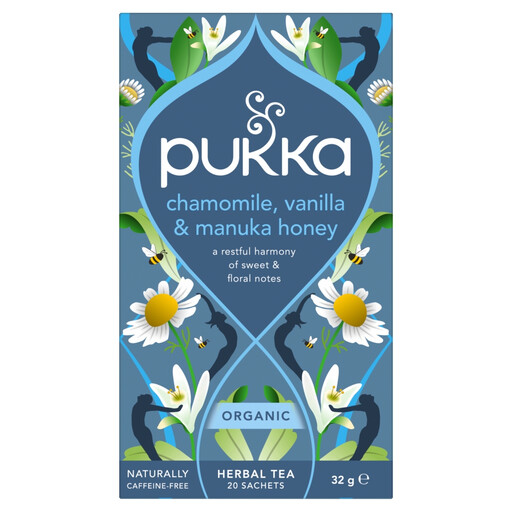 Image unavailable
Pukka Chamomile Vanilla & Manuka Honey, 20 sachets, 32g
A 20-sachet pack for keeping this named blend together. If the sachets have individual envelopes, leave them wrapped when organising them in a jar; keep the pack details and check its best-before date.
View on Joybuy
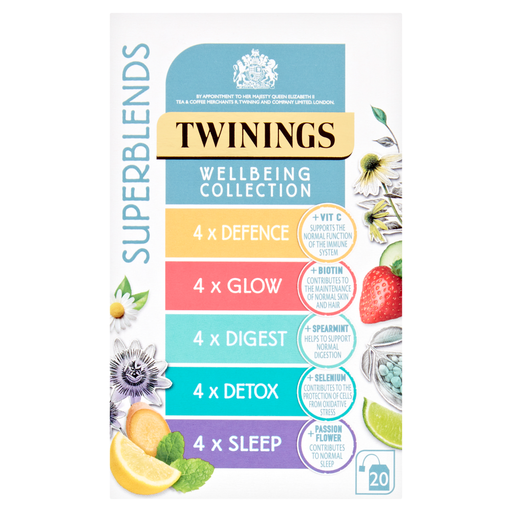 Image unavailable
Twinings Superblends Wellbeing Collection, 20 bags, 37g
An assortment for keeping several blends in one pack. It includes green tea, so check the individual ingredients if you want exclusively herbal infusions; keep the blends identifiable if you reorganise them.
View on Joybuy
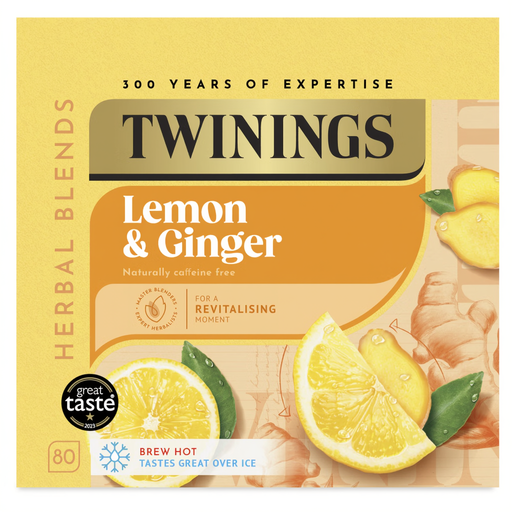 Image unavailable
Twinings Lemon & Ginger, 80 bags
An 80-bag pack to consider if this blend is used regularly and the quantity fits your pantry. Its storage directions call for the original packaging in a cool, dry place away from strong odours; check the pack before deciding whether to decant it.
View on Joybuy
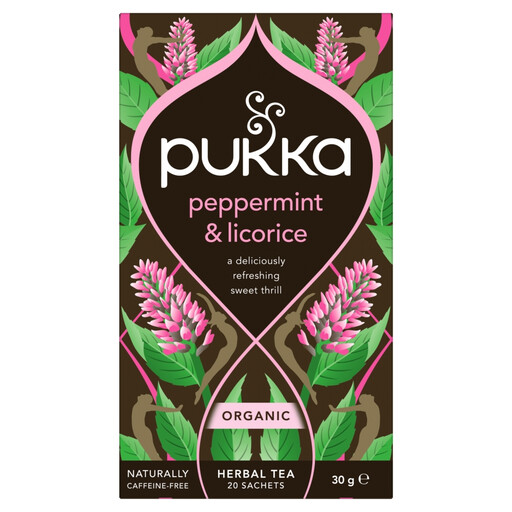 Image unavailable
Pukka Peppermint & Liquorice, 20 sachets, 30g
A 20-sachet pack of one named blend; retain its identifying packaging if you move the sachets into a jar. The product directions say to store the unopened box somewhere cool and dry. Its liquorice warning advises people with high blood pressure to avoid excessive consumption and advises seeking professional advice during pregnancy; read the pack before use.
View on Joybuy
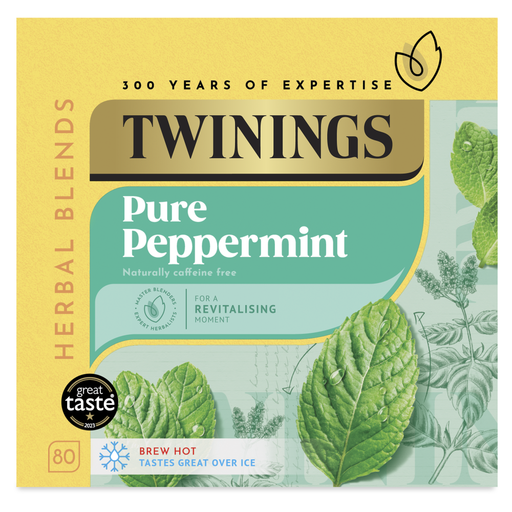 Image unavailable
Twinings Pure Peppermint, 80 bags
An 80-bag peppermint pack for households planning to use that quantity. Store it somewhere cool and dry, and check how the bags are wrapped before deciding whether a jar would serve a storage purpose or simply organise them.
View on Joybuy
Herbal tea storage questions
Do individually wrapped herbal tea bags need a jar?
No jar is needed solely because the box has been opened if each bag stays in its protective envelope. Pukka says its envelopes protect tea bags from air and moisture and reduce flavour transfer; a jar can still help organise the wrapped sachets.
When is a jar useful for herbal tea?
Consider a suitable, well-closing jar for loose tea or unwrapped bags. Keep it in a cool, dry place away from strongly flavoured or perfumed foods, as the UK Tea & Infusions Association advises for tea storage.
What should I check before putting tea directly into a jar?
Check that the container is intended for food contact. Business Companion describes food-contact wording and the glass-and-fork symbol as relevant markings; also make sure you can keep the blend and its pack information identifiable.
Should I keep the box after decanting herbal tea?
Keep the box or label the jar with the product name, ingredients, brewing directions and best-before date. This is particularly useful when several blends look similar or share a cupboard.
Can I assume every herbal-tea assortment is caffeine-free?
No. Check the ingredients and caffeine statement for each blend rather than relying on the assortment’s name: the Twinings Superblends Wellbeing Collection listed here includes green tea.


