People avoiding caffeine at mid-morning
If you are replacing black or green tea, look for a caffeine-free statement on the individual infusion you plan to drink.


Choose by the flavour you would enjoy at mid-morning: floral chamomile, cooling peppermint or a more pronounced lemon-and-ginger blend. If avoiding caffeine or particular ingredients matters to you, check the exact pack’s caffeine statement and full ingredient list rather than relying on the flavour name.
If you are replacing black or green tea, look for a caffeine-free statement on the individual infusion you plan to drink.
A single-herb infusion makes its botanical focus easier to identify. With a flavoured blend, read the whole list for other herbs and flavourings.
Ingredients and daily quantity need particular attention. The NHS advises avoiding herbal teas containing liquorice root during pregnancy and drinking no more than four cups of herbal tea a day.
Start with the flavour route, then check the caffeine statement, ingredients and brewing directions on the product you actually choose.
| Priority | What to check | Your needs |
|---|---|---|
| Flavour | Compare floral chamomile, cooling peppermint and lemon-and-ginger blends. A shared flavour name does not mean an identical recipe. | I would rather choose a flavour I enjoy for a regular mid-morning cup than buy on the blend name alone. |
| Caffeine | Read the caffeine statement and ingredients on the exact product. Pukka says many of its organic herbal teas are naturally caffeine-free; that is not a statement about every product in its range. | For my elevenses break, avoiding caffeine matters more than whether a pack is broadly described as herbal tea. |
| Ingredients | Check every botanical and flavouring, particularly in mixed blends. Clipper lists peppermint as the sole ingredient in Organic Peppermint, but its Organic Lemon & Ginger also lists liquorice root. | I want to spot ingredients I avoid, or check whether a more complex blend suits my circumstances. During pregnancy, the NHS advises avoiding herbal teas containing liquorice root. |
| Preparation | Look for the water amount and infusion time for your chosen pack. Twinings specifies one bag in 200 ml of freshly boiled water for three minutes for its Lemon & Ginger 20 Tea Bags; those directions are product-specific. | A clear brewing method helps when I have only a short break and want to make the same cup again. |
A broad herbal-tea range is not a caffeine statement for every pack. Pukka describes many of its organic herbal teas as naturally caffeine-free, rather than all of them.
When caffeine avoidance is important, check the individual product’s statement and ingredients.
Recipes can include other botanicals. Clipper lists liquorice root at 11% in its Organic Lemon & Ginger infusion, alongside ingredients including hibiscus and natural flavouring.
Compare full ingredient lists, especially when you are avoiding a particular herb or flavouring.
Liquorice root can appear in a blend named for other flavours. The NHS advises pregnant people to avoid herbal teas containing liquorice root and to drink no more than four cups of herbal tea a day.
Check each pack’s ingredients before making a blend part of your routine; ask a midwife or another healthcare professional about individual circumstances.
The Medicines and Healthcare products Regulatory Agency warns that herbal products can cause adverse reactions and interact with conventional medicines. A tea’s name does not establish that it treats symptoms.
If you take medicines or have symptoms you want to address, seek advice from a pharmacist or clinician rather than relying on a blend.
These brand and retailer examples show why it is worth comparing individual products, not assuming that every infusion in a range has the same ingredients.
Pukka offers herbal infusions including its Three Chamomile blend.
Twinings lists both Pure Camomile and Lemon & Ginger in 20-bag formats.
Clipper offers a peppermint-only infusion as well as a multi-ingredient lemon-and-ginger blend.
Teapigs lists peppermint and several flavoured herbal infusions in its UK tea collection.
Tesco’s grocery listings include own-label camomile and peppermint tea bags alongside other herbal teas.
These options span citrus-and-ginger, mint, camomile and soursop-leaf infusions for an elevenses break. Use the individual pack details to settle questions about caffeine, ingredients and brewing.
 No image available
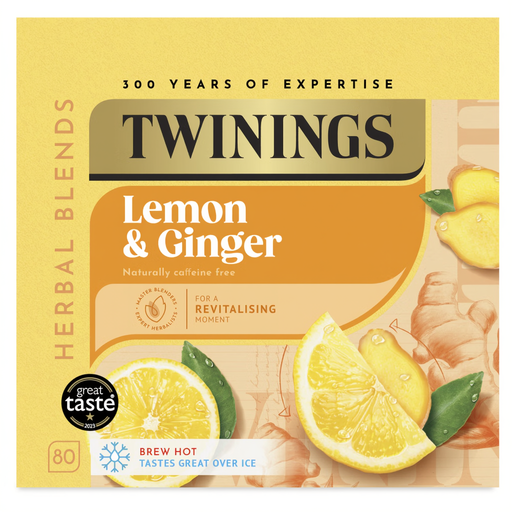
Consider this citrus-and-ginger option if you prefer a more pronounced flavour at elevenses. Check this 80-pack variant’s full ingredients, caffeine statement and brewing directions before making it a regular choice.
 No image available
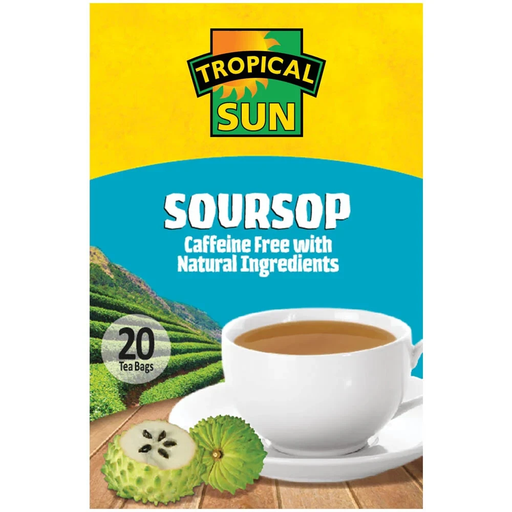
This 20-tea-bag soursop option offers a different botanical route from mint or chamomile. If you are pregnant or take medicines, ask a healthcare professional about soursop leaves before drinking it regularly.
 No image available
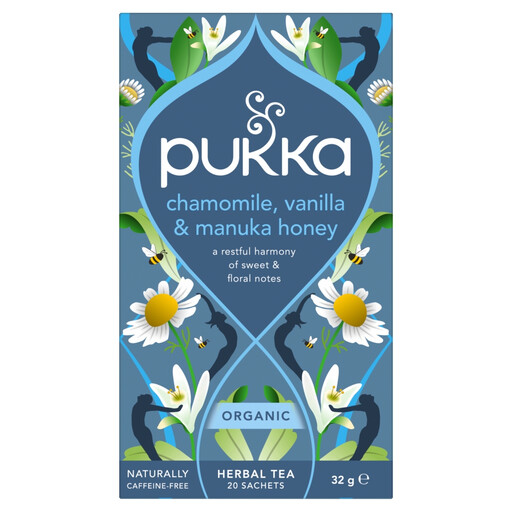
This is a chamomile-led choice if you want vanilla and honey-style flavour notes rather than plain chamomile. The blend includes liquorice root; the NHS advises avoiding herbal teas containing it during pregnancy. Check the ingredients rather than assuming the name means honey itself is included.
 No image available
If mint appeals more than floral or citrus flavours, this 80-pack option fits that direction. Check the exact pack for its caffeine statement and brewing instructions.
 No image available
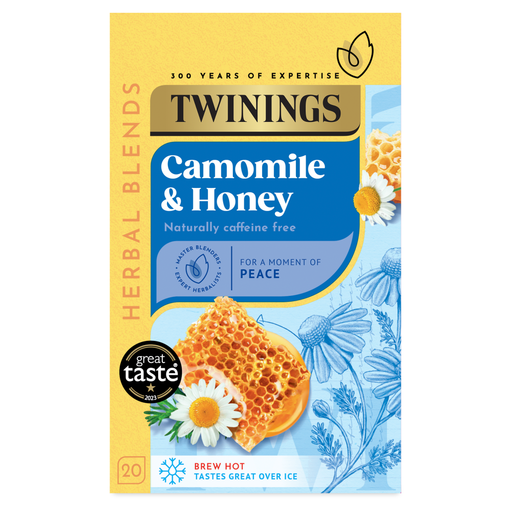
For a floral elevenses cup with added honey-and-vanilla notes, consider this 20-bag option. Read the ingredients to distinguish flavourings from honey, and check this pack’s caffeine statement and brewing directions.
Do not assume so from the category name. Pukka says many of its organic herbal teas are naturally caffeine-free; if avoiding caffeine is essential, choose an individual product with a clear caffeine-free statement and check its ingredients.
Clipper Organic Peppermint lists peppermint as its only ingredient. If you are considering a lemon-and-ginger blend instead, compare the complete ingredient lists: products with similar flavour names can contain different botanicals.
Follow the directions for your chosen product. For its Lemon & Ginger 20 Tea Bags, Twinings specifies one bag in 200 ml of freshly boiled water for three minutes, or longer for a stronger cup; this is not a universal method for herbal tea.
Check each blend for liquorice root: the NHS advises avoiding herbal teas that contain it during pregnancy and drinking no more than four cups of herbal tea a day. Clipper Organic Lemon & Ginger, for example, lists liquorice root at 11%. Ask a midwife or another healthcare professional about your own circumstances.
No tea blend should replace medical advice or prescribed treatment. The Medicines and Healthcare products Regulatory Agency warns that herbal products can cause adverse reactions and interact with conventional medicines; speak to a pharmacist or clinician if symptoms or medicines are relevant to your choice.