Hotel and guesthouse tea-tray buyers
For bedroom trays, welcome packs or self-service stations, portioned tea is easier to replenish than loose tea. Keep each flavour identifiable and its ingredient information accessible.


For a self-service hotel-room tray, individually enveloped herbal tea bags are a practical starting point: staff can replenish portions while keeping each flavour identifiable. A jar can organise them, but loose, mixed bags should not become separated from their product information. Choose the pack size and brewing instructions to suit room turnover, and keep ingredient and allergen information available for guests.
For bedroom trays, welcome packs or self-service stations, portioned tea is easier to replenish than loose tea. Keep each flavour identifiable and its ingredient information accessible.
A short selection and a pack size matched to occupancy can be more manageable than a large assortment. Check that guests can follow the brewing instructions with the equipment provided.
Single-herb infusions and mixed botanical blends need different ingredient checks. Retain the exact product information so guests can assess a tea for themselves, including any stated allergen information.
Decide how guests will find and identify the tea, then match the flavour range and pack size to the space and replenishment routine.
| Priority | What to check | Your needs and survey context |
|---|---|---|
| Hot-drink choice | Check what is already on the tray, how much space another flavour takes and whether staff can replenish it consistently. | I want a herbal choice alongside the room’s other hot drinks. In YouGov’s March 2023 survey of 2,059 Britons, 79% selected in-room coffee or tea as something they expected in a standard or basic hotel room, and 85% did so for a premium or luxury room. The question allowed multiple selections and did not measure demand for herbal tea specifically. |
| Portion format | Check whether bags are individually enveloped, how the supplied pack identifies each flavour and where staff will keep the outer packaging. | I need portions that can go onto a room tray without leaving guests or staff to identify loose bags from memory. |
| Flavour and preparation | Check the exact ingredients, stated caffeine status and brew time. A mixed botanical blend is not interchangeable with a single-herb infusion. | Guests should be able to recognise the flavour and make the drink with the room’s kettle and mug. |
| Pack size and storage | Compare bag count with rooms replenished each week, check the best-before date and store stock in a cool, dry place away from strong odours, as advised by the UK Tea & Infusions Association. | For a smaller property, I would rather choose a quantity I can manage than keep a large case in storage for longer than planned. |
| Product information | Keep the exact product identity, ingredient list and allergen information available when stocking or presenting tea. GOV.UK and Food Standards Scotland state that food businesses must provide allergen information for prepacked and non-prepacked food and drink. | If a guest asks about a bag on the tray, I need to know which product it is and where to find its current information. |
Staff may struggle to identify the product when a guest asks about its ingredients or allergens. GOV.UK and Food Standards Scotland say food businesses must provide allergen information for food and drink, whether prepacked or not.
Use a jar as an organiser only if each tea remains identifiable. Keep its packaging or a current product-information record with the replenishment stock.
Chamomile, peppermint and multi-botanical blends contain different ingredients and can require different brewing times.
Start with clearly labelled flavours that fit the tray, then check the ingredients and instructions of any additional blend before adding it.
A large pack may be convenient to replenish from, but a low-occupancy property may keep it for longer than intended.
Estimate how many rooms need fresh tea each week, check the pack’s best-before date and store unopened stock away from scented cleaning products and food odours.
A flavour name or botanical theme does not tell every guest whether a blend suits them. Multi-herb products can contain ingredients that are not obvious from a short display label.
Describe the flavour, stated caffeine status and preparation method factually, and keep the full ingredient information available. Do not present the tea as a treatment.
These examples illustrate formats and ingredient checks; a brand example does not establish that every product in its range has the same packaging.
Clipper Tea Shop lists an Organic Chamomile Infusion in a 250-envelope catering pack.
Twinings lists Lemon & Ginger as a 20-bag herbal infusion and describes it as naturally caffeine-free.
Pukka describes Three Chamomile as a naturally caffeine-free chamomile tea.
Teapigs lists a naturally caffeine-free peppermint tea in its tea-temple format.
Yogi Tea’s Bedtime product is a 17-bag botanical blend labelled naturally caffeine-free.
These tea-bag packs offer floral, mint and citrus-and-ginger flavours for a hotel-room selection. Check each supplied pack’s wrapping and product information before putting individual bags on a guest tray.
 No image available
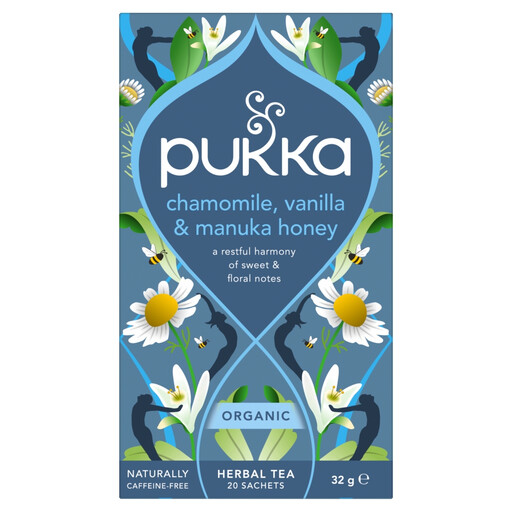
A chamomile blend for a room tray where a floral flavour is wanted. This is a 20-sachet pack; keep its ingredient information with the replenishment stock.
 No image available
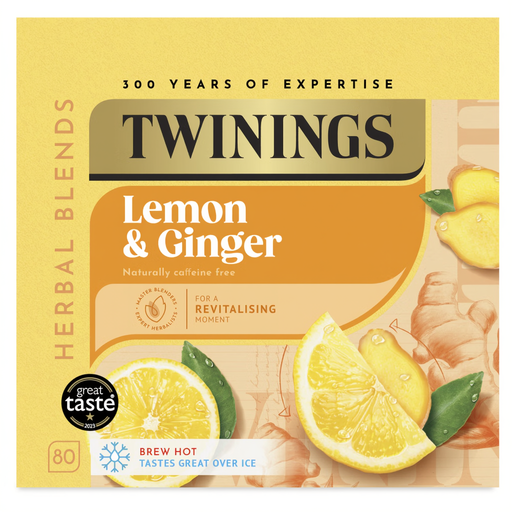
An 80-pack to consider where rooms are replenished regularly and a lemon-and-ginger flavour fits the selection. Confirm whether the supplied bags are individually enveloped before placing them on separate trays.
 No image available
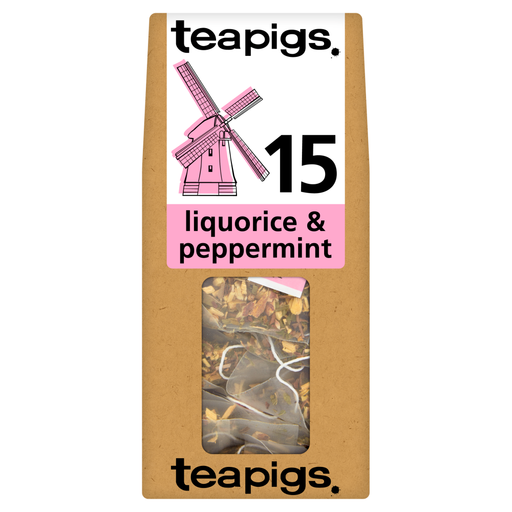
A liquorice-and-mint blend for a property that wants this distinct flavour rather than a plain peppermint option. Check the supplied pack’s wrapping and retain its ingredient and allergen information.
 No image available
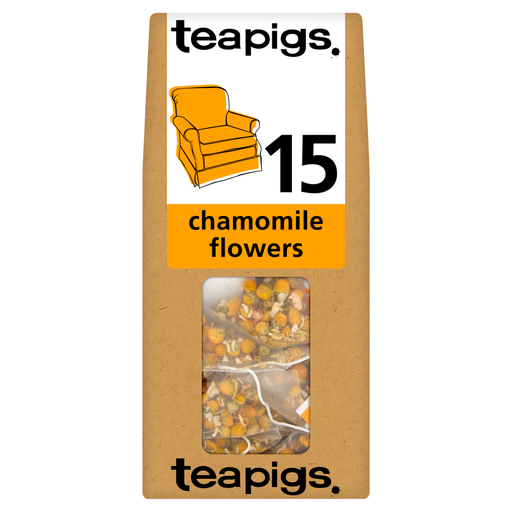
A chamomile-flower choice for a short floral selection. Check the supplied pack for individual wrapping and brewing instructions before preparing a room card.
 No image available
An 80-pack for a property planning to replenish a peppermint option across rooms. Check the supplied pack’s envelope format and brewing instructions before setting out individual bags.
A jar can organise the selection, but keep each tea identifiable rather than mixing loose bags without their product information. Individually enveloped bags are one way to do that; retain the outer packaging or a current ingredient-and-allergen record. The UK Tea & Infusions Association advises storing tea somewhere cool and dry, away from strong odours.
It supports considering an in-room hot-drink choice, not a specific claim about herbal tea demand. In YouGov’s March 2023 multiple-choice survey of 2,059 Britons, 79% selected in-room coffee or tea as an expectation for a standard or basic hotel room and 85% did so for a premium or luxury room. Choose whether to add a herbal flavour based on the property’s guests, tray space and replenishment routine.
Keep information for the exact tea being served accessible, including its identity, ingredients and stated allergens. GOV.UK guidance for food businesses and Food Standards Scotland’s guidance say allergen information must be provided for prepacked and non-prepacked food and drink; an unlabelled mix of bags makes product identification harder.
Use the instructions for each supplied product instead. Clipper’s listed chamomile infusion specifies two to five minutes, Twinings Lemon & Ginger three minutes, Teapigs peppermint three or more minutes, and Yogi Tea Bedtime five to six minutes. A single instruction may not reflect all the teas on a tray.