
24/7 Customer Support

Free returns

Same-day & Next-day Delivery

Quality Guaranteed

Unlock Your Welcome Offers: FREE Delivery | Up to 80% OFF | Free 30-day JoyPlus trial
Download the APP
Replacing factory xenon lighting can seem straightforward, but choosing the wrong HID replacement LED headlight bulbs may leave you with flickering, dashboard warnings, poor beam control or a bulb that will not physically fit. The same applies when converting compatible halogen units to LED.
The main issue is that brightness figures alone do not tell you whether a bulb is suitable for your vehicle. Before buying, check the original socket, headlight housing, driver compatibility and installation space.
D1S, D1R, D2S, D2R, D3S, D3R, D4S and D4R bulbs are not interchangeable simply because they look similar. The letter also matters:
Check the marking on the old bulb, the vehicle handbook or a reliable fitment catalogue. Do not rely on a marketplace title that lists several socket types unless the exact version is selected.
Listings may quote very high theoretical output, but actual visibility depends on the headlamp reflector or projector, LED chip position, lens condition and beam alignment. A poorly positioned LED can create dark patches or excessive glare, even if the advertised lumen figure looks impressive.
A 1:1 LED headlight bulb aims to place the light-emitting area in a similar position to the original bulb. This can help preserve the intended beam shape, but it is not a guarantee for every housing. After installation, check the cut-off and have the headlamps aligned if necessary.
CANbus-ready headlight bulbs include an integrated driver or decoding system intended to reduce flicker, radio interference and bulb-out warnings. However, vehicle electrical systems vary. Some sensitive cars may still need an additional decoder, resistor or wiring adjustment.
Treat claims such as “99% compatibility” as product-listing guidance rather than a promise that the bulb will work without errors in every UK vehicle.
Confirm whether you are replacing factory HID or halogen lighting. Some products are explicitly marked “only replacement for HID” and should not be fitted to a halogen assembly. Conversely, HIR2 9012 LED bulbs are intended for compatible 9012/HIR2 sockets rather than D-series xenon housings.
For HID replacements, check whether the existing ballast or igniter remains in circuit. Certain LED conversion designs connect differently from the original xenon setup, so read the fitting instructions before removing or bypassing components.
6000K LED headlight bulbs normally produce a cool white appearance, while 6500K LED headlight bulbs appear slightly bluer and whiter. Colour temperature does not directly measure brightness. A higher Kelvin number is not automatically more useful in rain, fog or dirty conditions.
For many drivers, 6000K offers a relatively neutral cool-white appearance. A 6500K option may suit those who prefer a colder white look, provided the beam remains controlled and the vehicle’s housing is compatible.
LED chips generate heat at the rear of the bulb. Many direct-fit products use an aluminium body, copper heat-transfer parts and LED bulbs with cooling fan technology. Fans can help move heat away from the chips, but they also introduce a moving component and may produce a faint operating sound.
Measure the rear clearance inside the dust cover. A bulb may be described as plug and play LED bulbs, yet still be unsuitable if its fan housing or driver touches the cover. Also check that the sealing ring sits correctly to help retain the headlamp’s weather resistance.
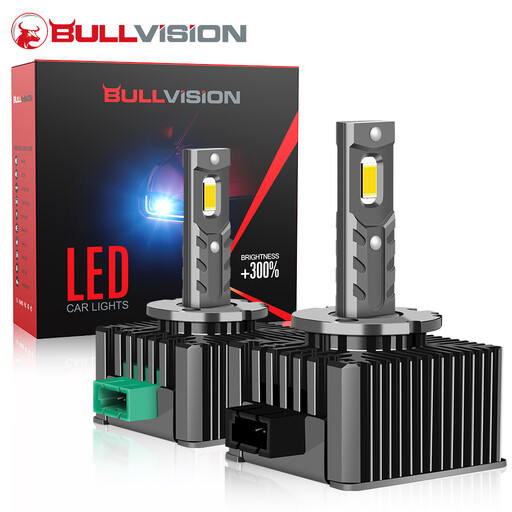
Why This Fits Their Persona: A multi-fit listing may suit DIY motorists who have confirmed one of the listed D-series sockets and want a 6000K pair with a straightforward installation format.
The listing specifies a 1:1 design, cooling fan and CANbus-ready driver rather than relying on brightness claims alone. Confirm your exact D-series version before ordering.
6000K cool white output, 18,000LM listed brightness, IP68 waterproof construction and a two-bulb pack.
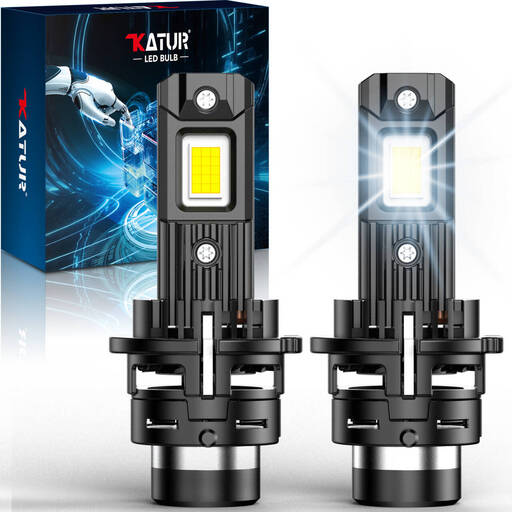
Why This Fits Their Persona: Suitable for owners of HID-equipped vehicles who prioritise a colder white appearance, integrated cooling and a compact replacement design.
It is clearly described as an HID-only replacement, helping avoid the common mistake of fitting a D2S LED bulb to a halogen assembly.
The listing specifies 6500K output, a built-in 16,000RPM fan, aluminium construction and no external driver.
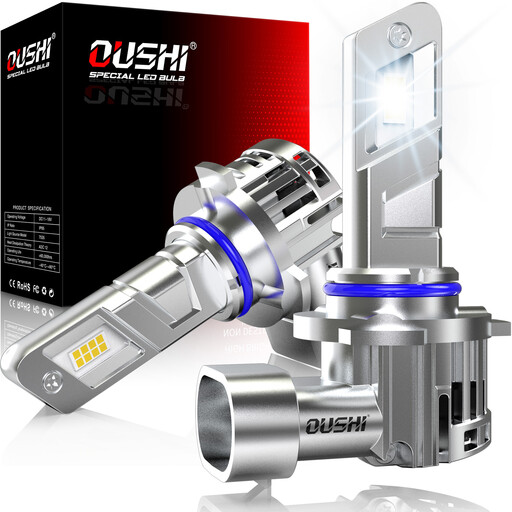
Why This Fits Their Persona: A practical option for drivers covering dark rural roads or frequent night journeys with a confirmed HIR2/9012 halogen socket.
The listing identifies the 9012 socket, 1:1 mini-size format and notes that some sensitive vehicles may need an additional CANbus decoder.
6000K output, listed 30,000LM per pair, built-in turbo fan and plug-and-play installation without an external driver.
We have compiled a complete, real-time list of products that fully satisfy these strict selection criteria and UK safety regulations.
Before fitting any bulb:
Lighting conversions must remain suitable for the vehicle and road use. Check the current UK Road Vehicles Lighting Regulations, the vehicle handbook and MOT requirements. A product being labelled plug and play does not by itself confirm approval for every vehicle or headlamp housing.
Legality depends on the vehicle, headlamp housing, bulb type, installation and applicable regulations. Poor beam control or glare can create an MOT issue and a road-safety problem. Check the relevant UK requirements and aim the headlights correctly after fitting.
Many listings specify claimed operating lives of 50,000 to 60,000 hours, supported by aluminium housings and cooling fans. This is a product specification rather than a guarantee of service life in every vehicle. Heat, moisture, voltage fluctuations and fan wear can affect durability.
Power consumption varies by model. Check the stated wattage rather than assuming every LED uses less electricity. A lower electrical load can also trigger a bulb warning on some vehicles, which is why CANbus compatibility and vehicle-specific fitment matter.