
24/7 Customer Support

Free returns

Same-day & Next-day Delivery

Quality Guaranteed

Unlock Your Welcome Offers: FREE Delivery | Up to 80% OFF | Free 30-day JoyPlus trial
Download the APP
Replacing ageing Xenon or HID lamps can improve the appearance and responsiveness of your headlights, but choosing HID replacement LED headlight bulbs is not simply a matter of selecting the highest lumen figure. Compatibility, beam control, heat management and UK road-use requirements all matter.
For UK drivers, the right replacement should fit the existing headlamp housing, work with the vehicle’s electrical system and produce a controlled beam. Before buying, check the original bulb marking, headlamp type and vehicle manual rather than relying only on a vehicle compatibility list.
Listings may promote very high lumen numbers, but output figures do not automatically indicate better road illumination. Beam position, projector optics, LED chip alignment and headlamp condition have a major effect on what reaches the road.
A bulb with a 1:1 replacement design and correctly positioned chips may provide a more usable beam than a higher-rated bulb that sits incorrectly inside the reflector or projector.
D1S LED bulbs, D2S LED bulbs, D3S LED bulbs and D4S LED bulbs use different bases and electrical arrangements. The corresponding reflector versions, including D1R, D2R, D3R and D4R LED bulbs, may include a shading feature for reflector housings.
“Plug-and-play” usually describes the physical installation. It does not guarantee that the original ballast, igniter, dust cover or vehicle wiring will require no further attention. Some conversions may need ballast bypassing, a decoder or additional clearance for a cooling fan.
CANbus error-free bulbs are designed to reduce dashboard warnings, flickering or communication issues, but vehicle electronics differ between models and trims. A bulb advertised as compatible with a high percentage of vehicles may still need a decoder on a particular Audi, BMW, Mercedes-Benz, Volkswagen, Lexus or other 12V vehicle.
Check the return terms and be prepared to test both sides before permanently refitting the headlamp covers.
Remove the old bulb or inspect the vehicle documentation to confirm whether the car uses D1S, D1R, D2S, D2R, D3S, D3R, D4S or D4R. The “S” and “R” suffixes are not interchangeable by default because they relate to different optical housing designs.
Also confirm that the LED product is intended for LED bulbs for HID headlights, not halogen or factory LED assemblies. Some products are suitable only for vehicles with an existing HID projector and may require the ballast to be bypassed.
6000K LED headlight bulbs generally produce a cool white appearance, while 6500K white headlight bulbs have a slightly cooler, bluer tone. A whiter colour does not necessarily provide more usable illumination, particularly in rain, spray or mist.
For regular UK driving, consider beam control and weather visibility before choosing colour alone. Headlamp lenses should also be clear and correctly aimed; replacing bulbs cannot compensate for clouded plastic or misalignment.
LED bulbs generate heat around the chip and require effective dissipation. Aluminium housings, copper heat-transfer components and built-in fans are common features. A fan may improve cooling but introduces a moving component and needs enough space behind the dust cover.
Look for the stated operating voltage, fan design, waterproof rating and whether the driver is integrated. Claimed service-life figures, such as 50,000 or 60,000 hours, should be treated as manufacturer specifications rather than a guaranteed period in every driving environment.
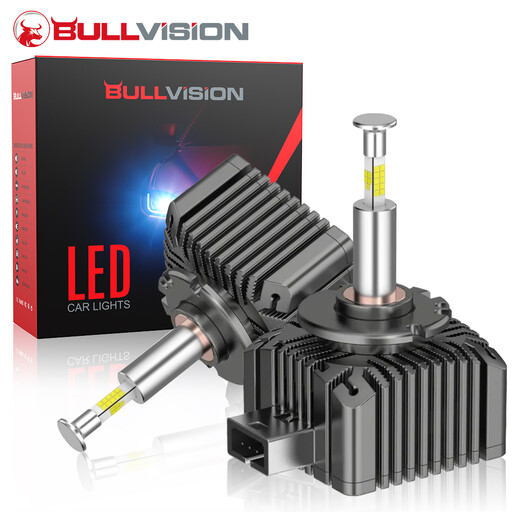
Why This Fits Their Persona: A practical starting point for owners whose vehicle already uses D2S or D2R HID bulbs and who want a pair of cool-white replacements for regular commuting.
The listing identifies D2S/R fitment, a 1:1-style design and CANbus-ready electronics, helping buyers check the essential details rather than selecting by colour alone.
6000K cool white output; aluminium housing, IP68 water resistance and a built-in 10,000 RPM fan are listed specifications.
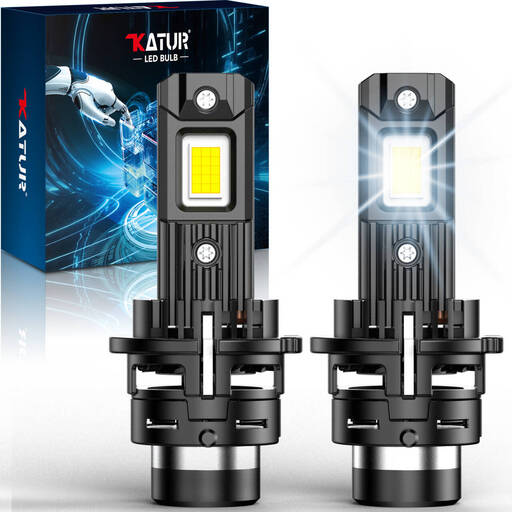
Why This Fits Their Persona: Suitable for drivers who prioritise an immediate start-up, a cooler white appearance and an integrated design without external wiring modifications.
The product information clearly states that it is for HID assemblies only, so it is not presented as a substitute for a halogen or factory LED unit.
The listing specifies a 0.01-second start-up, integrated driver, cooling fan and stated service life of up to 60,000 hours.
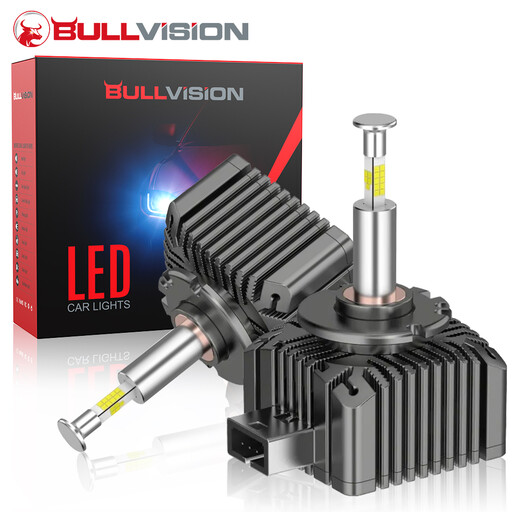
Why This Fits Their Persona: A useful option for frequent night drivers who need D3S or D3R compatibility and want cooling features for repeated use.
The stated D3S/R designation, 1:1 body size and CANbus-ready design give buyers several fitment points to verify before ordering.
The product lists IP68 water resistance, an integrated 10,000 RPM fan and a stated 50,000-hour operating life.
Before installation, switch off the engine and lights, allow the bulbs to cool and follow the vehicle manual. Wear gloves, avoid touching the LED chips and ensure the bulb is locked in the correct orientation. Check that the fan and driver do not obstruct the dust cover.
After fitting:
A well-aligned beam is more important than simply creating bright car headlights. Poor positioning can dazzle oncoming traffic and may cause an MOT issue, regardless of the advertised output.
We have compiled a complete, real-time list of products that fully satisfy these strict selection criteria and UK safety regulations.
Some are designed specifically for HID projector or reflector assemblies, but they are not automatically suitable for every vehicle. Confirm the D-series code, housing type, ballast arrangement and available installation space before ordering.
LED products may have different stated wattage and electrical requirements from the original Xenon system, but actual running cost depends on usage, vehicle electronics and whether the ballast remains in circuit. Check the product’s voltage and installation instructions rather than assuming a saving.
Listings commonly state service-life figures such as 50,000 or 60,000 hours. These are manufacturer specifications, not a guarantee for every car. Heat, vibration, moisture, fan wear and installation quality can affect practical service life.