Compare fibre per 100 g first, then choose a cereal format that works with the cottage kitchen and likely guest needs. Kellogg's All-Bran Fibre Plus has the highest declared fibre amount among the reviewed options, while wholewheat biscuits, porridge and muesli each bring different ingredient, preparation and allergen considerations; fibre content alone does not establish a performance benefit.
Who this is for
Holiday-cottage hosts stocking a practical breakfast cupboard
Choose shelf-stable cereals that cover quick cold breakfasts and simple hot options without assuming every guest has the same diet. Prioritise clearly labelled fibre content, preparation requirements and allergens rather than one universal cereal. NHS guidance and manufacturer product information support these checks.
Self-catering guests wanting a higher-fibre breakfast
For guests looking for cereal that can contribute to a higher-fibre dietary pattern during a stay. The NHS advises adults to increase dietary fibre intake to 30 g a day as part of a healthy balanced diet, and lists higher-fibre cereal, wholewheat biscuits and porridge as options.
Guests needing simple ingredient or allergen-aware choices
For guests who need to inspect ingredients carefully, as wheat, barley, oats, milk, nuts and precautionary “may contain” statements can change whether a cereal is suitable for them.
Buying priorities
Start with the common per-100-g fibre measure, then check whether the cereal can be served with the equipment available and whether its ingredient statement works for the guests you expect.
| Priority |
What to check |
Your needs |
| Meaningful fibre content |
Compare fibre per 100 g before comparing serving sizes. For a “high fibre” claim, the UK-published nutrition-claim condition is at least 6 g of fibre per 100 g. Then check the declared serving amount separately. |
I want a cereal that genuinely meets the high-fibre condition, rather than relying on broad wellness wording. |
| Breakfast preparation |
Biscuits and muesli can be served with a preferred milk or yoghurt. Porridge sachets need liquid plus a microwave or hob; Quaker UK gives a two-minute cooking instruction for its Oat So Simple Original sachets. |
A quick cold breakfast may suit a late arrival, while a warm option only works if the cottage has suitable equipment. |
| Allergen and dietary suitability |
Read the full ingredients and allergen declaration for wheat, barley, oats, milk and nuts. Treat precautionary allergen wording seriously: the Food Standards Agency explains that it indicates a regulated allergen could be unintentionally present. |
I need an option whose current pack can be checked clearly, rather than assuming a wholegrain or high-fibre cereal suits every guest. |
Common buying pitfalls
-
Treating “high fibre” as a vague marketing phrase
Declared fibre amounts vary substantially between cereals, and different serving sizes can make direct comparisons misleading. A front-of-pack message alone does not show the fibre density.
Use the fibre line per 100 g as the first comparison point, then check the declared serving amount and ingredients.
-
Buying only cold cereal when guests may expect a hot breakfast
Porridge sachets need liquid and cooking equipment, whereas biscuits and muesli can be served without cooking. A format that does not fit the cottage routine may be less useful to guests.
Stock a ready-to-eat option first, and add porridge when a usable microwave or hob and suitable bowls or pans are reliably available.
-
Assuming wholegrain or high fibre means gluten-free or allergy-safe
The reviewed cereals include wheat, barley, oats, milk and nuts, and some carry precautionary allergen statements. This can rule out an otherwise appealing cereal for particular guests.
Keep the current packaging or a clear ingredient record available, and only describe a cereal as suitable for a dietary need when its exact current label supports that description.
-
Promising “sustained energy” from fibre alone
Nutrition information can establish fibre, ingredients and serving data, but it does not show that a particular cereal will produce the same effect for every guest.
Describe fibre factually and offer cereal as one part of a breakfast that can be paired with suitable milk, yoghurt, fruit or other foods according to dietary needs.
Relevant cereal brands
Kellogg's
For a high-fibre bran-cereal route, represented here by All-Bran Fibre Plus.
- Kellogg's UK declares 26 g fibre per 100 g and 10 g per 40 g serving for All-Bran Fibre Plus.
- This product contains wheat and barley and may contain gluten from other cereals, nuts, milk and soya.
Weetabix
For familiar wheat biscuits that can work as a cold breakfast base in a self-catering kitchen.
- Weetabix declares 10 g fibre per 100 g and 3.8 g per two-biscuit serving for Weetabix Original, which is labelled suitable for vegans.
- Weetabix Original contains wholegrain wheat and malted barley extract, so it is not a gluten-free choice.
Nestlé
For a minimal-ingredient wholewheat biscuit cereal, represented by Shredded Wheat Original.
- Nestlé Cereals UK states that Shredded Wheat Original is made from 100% wholegrain wheat and declares 14 g fibre per 100 g.
- It contains wheat and may contain peanuts and nuts; Nestlé states that it is not suitable for coeliacs.
Quaker
For portioned hot oat breakfasts where the cottage has a microwave or hob.
- Quaker UK declares 9 g fibre per 100 g for Oat So Simple Original and provides microwave and hob instructions.
- Preparation requires milk or another suitable liquid plus cooking equipment; it contains oats and may contain wheat, barley and soya.
Alpen
For high-fibre muesli with wholegrains, raisins and nuts, represented by Alpen No Added Sugar.
- Alpen declares 8.0 g fibre per 100 g and 3.6 g per 45 g serving for Alpen No Added Sugar.
- Its ingredients include wheat, oats, skimmed milk powder, milk whey powder, hazelnuts and almonds, and it may contain other nuts.
Dorset Cereals
For a fruit-and-nut muesli option that adds texture and variety to the cottage breakfast cupboard.
- Dorset Cereals declares 7.2 g fibre per 100 g for Delicious Fruit & Nut Muesli and labels it high in fibre and no added sugar.
- It contains oats, wheat, barley, cashews and hazelnuts; Dorset Cereals says its cereals cannot be guaranteed free from nut cross-contamination.
Joybuy product options
These Joybuy options cover cold fruit-and-nut cereals and hot oat breakfasts for a self-catering holiday-cottage cupboard.
 No image available
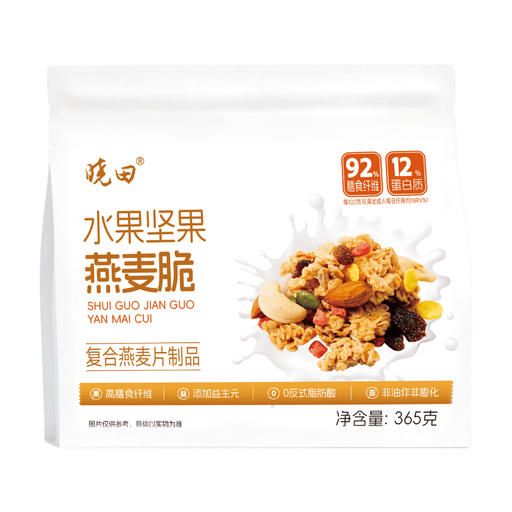
Xiao Tian Fruit & Nut Oat Crunch, 365 g
A ready-to-eat fruit-and-nut oat cereal for cold breakfasts with milk or yoghurt.
The product record states 22.9 g dietary fibre per 100 g. It contains gluten-containing oats, almonds and cashews, so check the current pack for guests avoiding these allergens.
Joybuy
 No image available
Quaker Oat So Simple Big Bowl Original 6 Pack, 231 g
A portioned hot oat option for cottages with a microwave and guests who prefer a warm breakfast.
The listing states 9.0 g fibre per 100 g and a 2½-minute microwave preparation route after adding water or milk. Check the current allergen statement for guests with cereal allergies or coeliac requirements.
Joybuy
 No image available
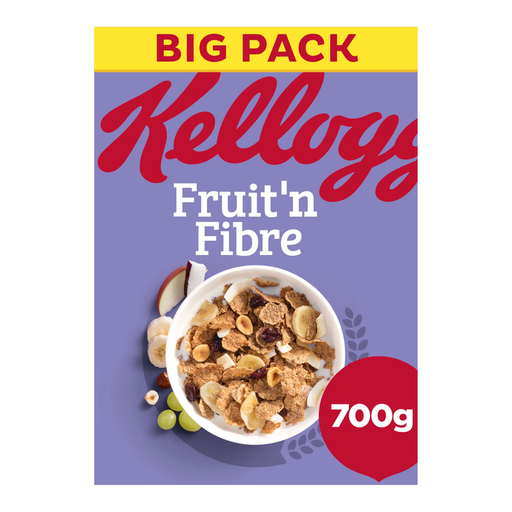
Kellogg's Fruit 'N Fibre, 700 g
A no-cook wholewheat fruit cereal for serving with milk or yoghurt.
The product record states 9.0 g fibre per 100 g. It contains wheat, barley and hazelnuts and may contain other gluten cereals and nuts.
Joybuy
 No image available
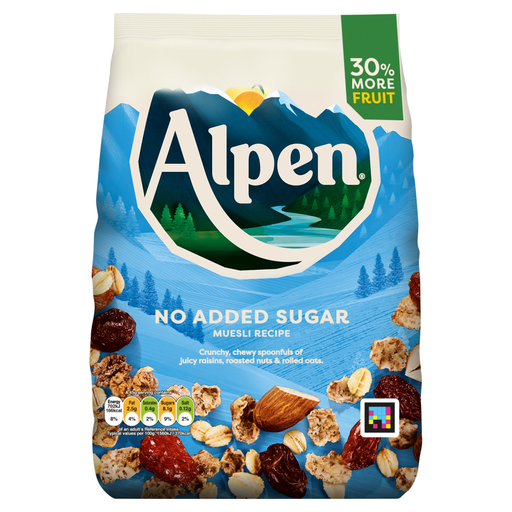
Alpen No Added Sugar Muesli, 950 g
A cold fruit-and-nut muesli for guests who want a more substantial bowl without cooking.
Alpen declares 8.0 g fibre per 100 g. The recipe contains wheat, oats, milk, almonds and hazelnuts, and may contain other nuts.
Joybuy
 No image available
Scotts Porage Oats Original, 1 kg
A simple-ingredient porridge base for guests able to prepare breakfast with water or milk.
The product record states 100% oatmeal and 9.0 g dietary fibre per 100 g. It may contain wheat and barley; check the current pack instructions before relying on a particular cooking method or preparation time.
Joybuy
Frequently asked questions
What counts as “high fibre” on a UK cereal label?
For this guide, use at least 6 g of fibre per 100 g, the condition set out for a high-fibre claim in the UK-published nutrition-claim Annex. Compare the per-100-g declaration first because stated serving sizes vary between cereals.
Can a holiday cottage rely on one cereal to meet guests’ fibre needs?
No. The NHS advises adults to increase dietary fibre intake to 30 g a day as part of a healthy balanced diet and recommends getting fibre from a variety of foods. A high-fibre cereal can contribute, but it is not a complete dietary solution.
Are high-fibre cereals automatically suitable for coeliac guests or guests with nut allergies?
No. The reviewed wheat biscuits and mueslis contain gluten-containing cereals, and several products include or may contain nuts. Check the current pack ingredients and allergen statement before serving; precautionary allergen labelling communicates possible unintended allergen presence.
Do dried-fruit mueslis automatically count as a portion of 5 A Day?
No. Dorset Cereals says it cannot make a definitive 5 A Day claim for its cereals. Dried fruit has specific portion guidance, while nuts and seeds do not count towards 5 A Day.


