What to check before buying
Start with the fibre figure per 100g, then check the serving size, format and current ingredient information for the exact cereal in your online order.
| Priority |
What to check |
Your needs |
| Fibre comparison |
Compare fibre per 100g before comparing portions. In the UK, legislation.gov.uk states that a high-fibre claim requires at least 6g per 100g or 3g per 100kcal. Then note the stated serving size. |
I want a cereal with a clearly stated fibre contribution, rather than relying on front-of-pack wording alone. |
| Ingredients and allergens |
Read the ingredient list and allergen statement for wheat, barley, milk, peanuts, tree nuts and any “may contain” wording. Check the exact variant, not just the cereal type. |
Our household needs ingredients that fit its dietary restrictions and allergen requirements. |
| Breakfast format |
Choose between ready-to-eat cereal and oats requiring liquid and hob or microwave preparation. Check whether the listed portion matches your usual breakfast routine. |
I need a format that works for the time I have in the morning, whether that is a cold bowl or prepared porridge. |
| Online pack details |
Review nutrition and allergen information on the product page before checkout. For prepacked food sold online, legislation.gov.uk requires mandatory food information before purchase and at delivery. |
I want to confirm the current product details, especially when an allergen or nutrient figure matters to my choice. |
Joybuy product options
Joybuy product options for high-fibre breakfast cereal, including ready-to-eat fruit-and-nut cereal, porridge oats and portioned microwave porridge.
 No image available
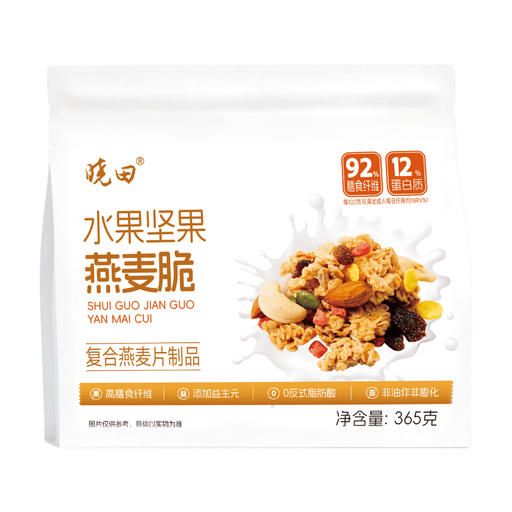
Xiao Tian Fruit & Nut Oat Crunch, 365g
A ready-to-eat fruit-and-nut oat cereal for milk, yoghurt or snacking.
The listing states 22.9g dietary fibre per 100g and lists oats, seeds, almonds and cashews. It contains gluten-containing oats, almonds and cashews; check the delivered pack for serving guidance and current allergen information.
Joybuy
 No image available
Scotts Porage Oats Original Porridge Oats, 1kg
A plain porridge option for shoppers happy to prepare breakfast with water or milk.
The ingredient list states 100% Scott's oatmeal, with 9.0g dietary fibre per 100g and 3.6g per 40g portion. It may contain wheat and barley; check the delivered pack if avoiding those cereals.
Joybuy
 No image available
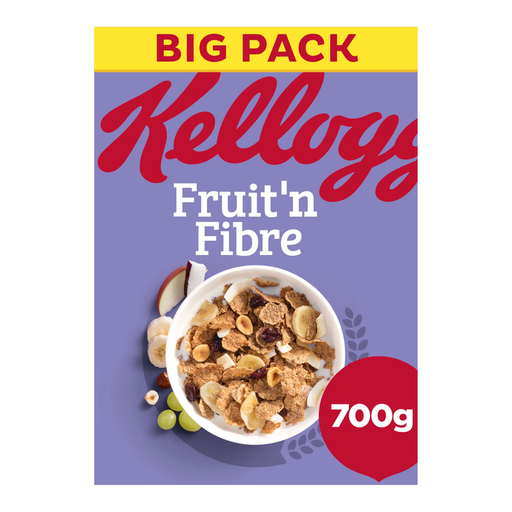
Kellogg's Fruit 'N Fibre, 700g
A ready-to-serve wholewheat cereal with dried fruit and hazelnuts for a cold-milk or yoghurt breakfast.
The listing states 9.0g fibre per 100g and 3.6g per 40g serving. It contains wheat, barley and hazelnuts, and may contain other nuts and cereals containing gluten.
Joybuy
 No image available
Quaker Oat So Simple Big Bowl Original, 6 Pack, 231g
A portioned porridge option for mornings when microwave preparation suits the routine.
Single sachets are stated to microwave in 2½ minutes. The listing gives 9.0g fibre per 100g and 3.5g per 38.5g sachet; prepare with water or milk and check the delivered pack for allergen details.
Joybuy
 No image available
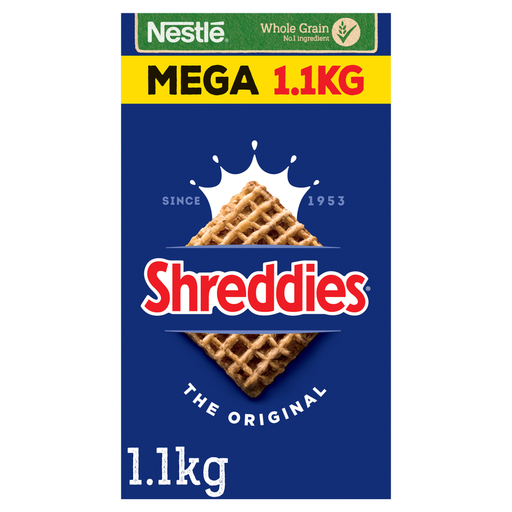
Nestlé Shreddies Original Malted Wheats, 1.1kg
A ready-to-serve wholegrain wheat cereal that can be eaten with cold or hot milk.
The listing states 96.1% wholegrain wheat, 12g fibre per 100g and 4.8g per 40g serving. It contains wheat and barley malt extract and may contain peanuts and nuts.
Joybuy
Frequently asked questions
What counts as “high fibre” on a UK cereal listing?
Under the UK rules set out by legislation.gov.uk, a product can make a high-fibre claim only if it contains at least 6g fibre per 100g or at least 3g per 100kcal. Use the per-100g panel for a consistent comparison, then check the stated serving contribution.
Which compared cereal has the most fibre per 100g?
Kellogg's All-Bran Fibre Plus lists 26g per 100g. The other compared examples list 14g for Nestlé Shredded Wheat Original, 10g for Weetabix Original, 9g for Quaker Traditional Rolled Oats and 7.7g for Alpen Original. These figures do not determine taste or suitability for every dietary requirement.
Can I choose a high-fibre cereal if I avoid gluten, milk or nuts?
Check the exact product's ingredient and allergen declaration before checkout and again on delivery. The compared wheat-based cereals are not gluten-free options, while Alpen Original contains milk and nuts and Shredded Wheat Original may contain peanuts and nuts.
What information should be available when buying cereal online?
For prepacked food sold by distance communication, legislation.gov.uk states that mandatory food information must be available before purchase and at delivery. Use the listing to review nutrition and allergens, then check the delivered pack because recipes and declarations can change.
Should I increase fibre intake quickly by switching cereal?
No. NHS patient guidance advises increasing fibre gradually over three to five days and drinking enough fluid, as a sudden increase can contribute to bloating or abdominal discomfort.


