Fibre-first brunch planners
For shoppers who want the cereal itself to make a meaningful contribution to fibre intake and are willing to compare fibre per 100g rather than relying on front-of-pack wording.


Choose by the declared fibre per 100g first, then by how you plan to serve the cereal. Kellogg’s All-Bran Fibre Plus has the highest declared fibre figure among the researched options, while wholewheat cereals suit quick cold bowls, rolled oats suit a cooked brunch, and muesli brings fruit and texture but needs closer checking of sugars and allergens.
For shoppers who want the cereal itself to make a meaningful contribution to fibre intake and are willing to compare fibre per 100g rather than relying on front-of-pack wording.
For shoppers serving cereal with milk, yoghurt, fruit or toppings who need a ready-to-eat wholegrain option and need to consider guests’ wheat, barley, nut or milk allergies.
For shoppers who prefer a cooked oat dish and can allow preparation time rather than choosing a ready-to-eat cereal.
Compare dry cereals on the same per-100g basis, then check the format, ingredients and nutrition panel for the bowl you plan to serve.
| Priority | What to check | Your needs |
|---|---|---|
| Declared fibre | Compare fibre per 100g on dry products. Under Regulation (EC) No 1924/2006, a high-fibre claim requires at least 6g per 100g or 3g per 100 kcal. | I want a cereal that meets the high-fibre criterion and makes comparing formats straightforward. |
| Sugars and ingredients | Read sugars per 100g alongside fibre. Check the ingredient and allergen lists for wheat, barley, milk, nuts and sulphites where relevant. | A high-fibre label is not the only detail I want to compare, especially when serving guests with different ingredient needs. |
| Serving format | Choose ready-to-eat biscuits, squares or muesli for a cold bowl. Choose oats when you have time for a warm dish and have milk or water available. | I want brunch to match the pace of the morning: an immediate cold bowl or a cooked oat dish. |
Wholegrain wording and high-fibre wording are not interchangeable. Regulation (EC) No 1924/2006 sets the threshold for a high-fibre claim at at least 6g of fibre per 100g or 3g per 100 kcal.
Check the fibre figure per 100g before treating a cereal as a high-fibre option.
Prepared porridge values can include the milk used to make it, whereas ready-to-eat cereal panels generally describe the cereal alone.
For a fair fibre comparison, use the dry product’s per-100g figure, then consider what milk, yoghurt, fruit or other toppings add separately.
Alpen No Added Sugar declares 18g sugars per 100g, while Dorset Fantastically Fruity declares 22g per 100g. Fruit ingredients can contribute to the total shown on the nutrition panel.
Read the total sugars figure and ingredient list, particularly when comparing fruit mueslis.
A rapid increase in fibre can be uncomfortable for some people. NHS guidance also advises including fluids when increasing fibre intake.
If your usual diet is low in fibre, build up gradually and include fluids. Seek individual clinical advice if you have a medical condition or prescribed dietary restriction.
All-Bran Fibre Plus is the fibre-density option within the researched range, with Kellogg’s declaring 26g fibre per 100g and 10g per 40g serving.
Weetabix Original is a quick-serve wholegrain-wheat biscuit cereal for a cold brunch bowl, declaring 10g fibre per 100g and 3.8g per two-biscuit serving.
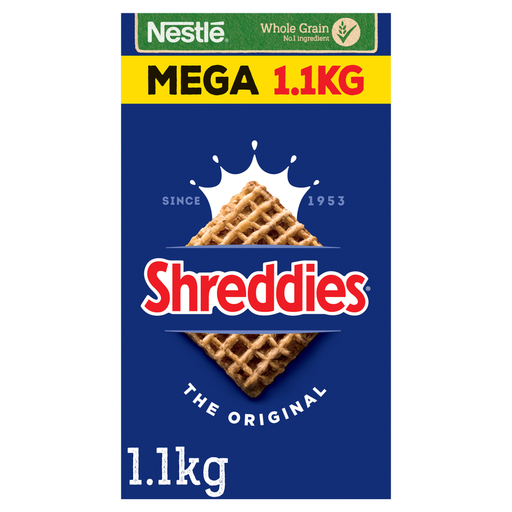
Nestlé Shreddies Original is a crunchy wholegrain-wheat square cereal with 12g fibre per 100g and 4.8g per 40g serving.
Quaker Traditional Rolled Oats is the warm-porridge route, made from 100% rolled oats and declaring 9g fibre per 100g.
Alpen No Added Sugar is a high-fibre muesli combining wholegrain wheat, rolled oats, raisins and nuts, with 8g fibre per 100g.
Dorset Fantastically Fruity is a fruit-forward muesli with wholegrain oat and wheat flakes, declaring 7.6g fibre per 100g.
Joybuy cereal and oat options relevant to high-fibre Sunday brunch plans, including ready-to-eat cold bowls and oat-based choices.
 No image available
A ready-to-serve crunchy cereal for a quick cold brunch bowl.
Declared fibre: 12g per 100g and 4.8g per 40g serving. Declared sugars: 12.5g per 100g.
Contains wheat and barley malt extract; may contain peanuts and nuts.
 No image available
An oat option for a warm Sunday brunch prepared with water or milk.
Made with 100% oatmeal, with declared fibre of 9g per 100g and sugars of 1g per 100g.
Requires preparation and may contain wheat and barley.
 No image available
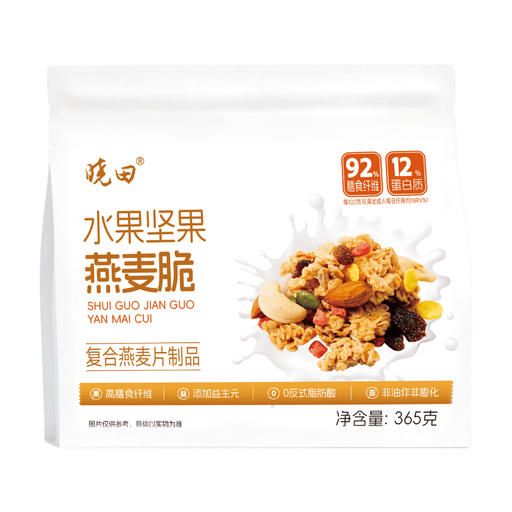
A ready-to-eat fruit-and-nut cereal for serving with milk or yoghurt.
Declared dietary fibre: 22.9g per 100g. The product includes oat flakes, fruit, seeds and nuts.
Contains cereals containing gluten, almonds and cashews. Check the pack if sugars per 100g are important to your comparison.
 No image available
An oatbran option for shoppers focusing on fibre from the cereal base.
Made with 100% oatbran, with declared fibre of 19.4g per 100g and sugars of 1.5g per 100g.
Check preparation directions for your preferred serving format. It contains oats and is stated to be unsuitable for wheat or barley allergy sufferers due to manufacturing methods.
 No image available
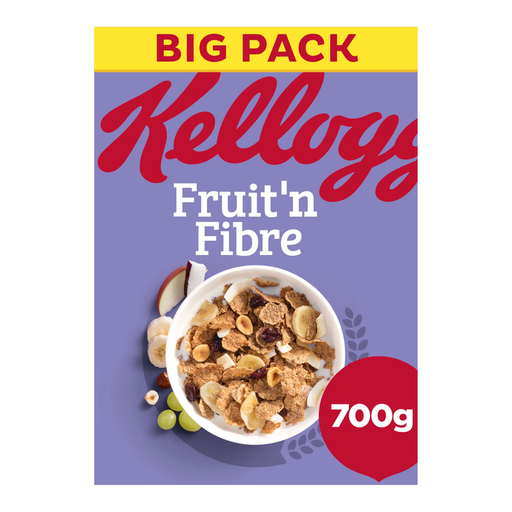
A fruit-and-nut cold-bowl cereal for serving with milk or yoghurt.
The cereal contains 69% wholewheat, dried fruit and hazelnuts, with declared fibre of 9g per 100g.
Contains wheat, barley and hazelnuts. Check the pack if sugars per 100g are important to your comparison.
Under Regulation (EC) No 1924/2006, a food may claim to be high in fibre only where it contains at least 6g of fibre per 100g or 3g per 100 kcal. When comparing dry cereals, use the fibre-per-100g figure in the nutrition declaration.
No. Kellogg’s All-Bran Fibre Plus has the highest declared fibre figure among the researched cereals at 26g per 100g, but wholewheat biscuits, oats and muesli differ in preparation, ingredients, allergens and sugars. Choose the format you will serve, then read the full nutrition panel and allergen statement.
Rolled oats are the researched warm option. Quaker Traditional Rolled Oats are intended for porridge and can also be used for overnight oats or baking, while ready-to-eat cereals and mueslis suit cold bowls.
Increase fibre across a varied diet rather than relying on one food alone. NHS guidance includes higher-fibre breakfast cereals, plain wholewheat biscuits, shredded whole grain and porridge oats among the options, and advises including adequate fluids when increasing fibre.
Check every pack rather than assuming high-fibre cereals have the same allergen profile. The researched options include wheat, barley, oats, milk, nuts and, in Dorset Fantastically Fruity, sulphur dioxide; cross-contact warnings also vary by product.