Start with the fibre figure on the nutrition panel: in the UK, a food described as high fibre must contain at least 6 g of fibre per 100 g or 3 g per 100 kcal. Bran cereal has the highest fibre density among the compared products, while wheat biscuits, oats and muesli differ in preparation, ingredients and texture, so compare fibre per 100 g, serving size, sugars and allergen information before choosing a weekday staple.
Who this is for
Busy adults building a more fibre-focused breakfast
For shoppers who want a repeatable breakfast before work or commuting and prefer to compare fibre per 100 g and per serving rather than relying on front-of-pack wording. NHS guidance and manufacturer nutrition panels provide the relevant context.
Shoppers choosing cold cereal or hot porridge
For people deciding whether immediate serving convenience, a short microwave option or a longer-cooked oat breakfast fits their morning routine.
Ingredient- and allergen-conscious cereal buyers
For shoppers who need to check wheat, barley, milk, nuts, peanuts, soya or gluten suitability on the exact pack before purchase.
What to check before buying
Compare the nutrition table on a like-for-like basis first, then choose a format that you can prepare and eat comfortably on weekday mornings.
| Priority |
What to check |
Your needs |
| Fibre content |
Compare fibre per 100 g first; a UK high-fibre claim requires at least 6 g per 100 g or 3 g per 100 kcal. Then check the stated serving amount. |
I want a cereal that meets the high-fibre definition, while also seeing what my usual bowl contributes. |
| Morning preparation |
Check whether the cereal is ready to eat, needs a microwave or requires hob cooking. Follow the stated preparation instructions and portion guidance. |
A cold cereal may suit an immediate breakfast; a sachet can offer a short hot option, while traditional oats need more preparation time. |
| Sugars and ingredients |
Read sugars per 100 g and per serving, then compare the ingredient list. A no-added-sugar claim does not mean that a product contains no sugars. |
I want to compare the full nutrition panel, especially when choosing between plain grain cereals and fruit-and-nut muesli. |
| Allergens and gluten |
Check the current pack for wheat, barley, milk, nuts, peanuts, soya and precautionary statements. Do not infer gluten suitability from fibre, oats or wholegrain wording. |
I need the exact cereal and pack to fit my dietary requirements, rather than assuming that all high-fibre options are interchangeable. |
Common buying pitfalls
-
Treating wholegrain wording as proof that a cereal is high fibre
Wholegrain describes an ingredient characteristic, but it does not by itself state the product’s fibre amount or confirm that it meets the UK high-fibre threshold.
Check fibre per 100 g. For a high-fibre claim, look for at least 6 g per 100 g or 3 g per 100 kcal.
-
Comparing serving figures without noticing different portion sizes
A smaller serving can show less fibre simply because the stated portion is smaller. The compared examples include a 27 g oat sachet and 45 g cereal servings.
Use fibre per 100 g for the main comparison, then use the per-serving figure to plan the breakfast portion you expect to eat.
-
Assuming high fibre or no added sugar suits every dietary need
High-fibre cereals can contain wheat, barley, milk, whey, nuts, peanuts or soya, and may carry precautionary allergen statements. Wheat-based cereals are not automatically suitable for coeliac disease.
Read the current pack’s ingredients, highlighted allergens and precautionary statements before buying, particularly if you have an allergy, intolerance or gluten-free requirement.
-
Choosing a format that does not fit the weekday schedule
Porridge products can have different preparation requirements: a Quaker oat sachet has a two-minute microwave method, while Quaker Traditional Rolled Oats specify five minutes of simmering.
Choose ready-to-eat cereal for immediate serving, a sachet for a short hot breakfast, or traditional oats when the extra preparation time works for your routine.
Relevant cereal brand references
Kellogg's
Relevant for bran-based cereal: Kellogg's All-Bran Fibre Plus lists 26 g fibre per 100 g and 10 g per 40 g serving, according to Kellogg's UK.
- Kellogg's describes All-Bran Fibre Plus as a high-fibre wheat-bran cereal.
- The product contains wheat and barley and may contain gluten from other cereals, nuts, milk and soya; check sugars and salt on the nutrition panel too.
Weetabix
Relevant for ready-to-eat wholewheat biscuits: Weetabix Original lists 10 g fibre per 100 g and 3.8 g per two-biscuit serving.
- The manufacturer describes the product as wholegrain wheat and suitable for vegetarians and vegans.
- It includes malted barley extract and is not an option for shoppers avoiding gluten.
Nestlé Cereals
Relevant for simple wholegrain-wheat biscuits: Shredded Wheat Original lists 14 g fibre per 100 g and has no added sugar or salt.
- Nestlé Cereals states that Shredded Wheat Original is made with wholegrain wheat.
- It contains wheat, may contain peanuts and nuts, and is not suitable for coeliacs according to the manufacturer.
Quaker
Relevant for oat porridge in quick-sachet and traditional rolled-oat formats; the referenced products list 9 g fibre per 100 g.
- Oat So Simple Original has a two-minute microwave method, while Traditional Rolled Oats offer a longer-cooked option.
- The referenced products may contain wheat and barley, and the sachets may contain soya.
Alpen
Relevant for fruit-and-nut muesli: Alpen No Added Sugar Muesli lists 8.0 g fibre per 100 g.
- The manufacturer describes the muesli as high fibre and no added sugar.
- Its nutrition panel lists 18 g sugars per 100 g, and it contains wheat, oats, milk, whey, hazelnuts and almonds.
Dorset Cereals
Relevant for muesli with fruit, nuts and seeds: Tasty Toasted Muesli lists 7.1 g fibre per 100 g and is described by Dorset Cereals as high fibre.
- This format offers a fruit, nut and seed muesli option rather than a plain biscuit or oat cereal.
- The product lists 19 g sugars per 100 g and includes fruit, nuts and seeds, so check ingredients when exclusions matter.
Joybuy product options
These Joybuy options cover ready-to-eat cereals and oat-based breakfasts for a high-fibre weekday cereal comparison.
 Image unavailable
Quaker Oat So Simple Big Bowl Original, 6 Pack 231g
For a hot weekday breakfast with individual sachets and a stated 2½-minute microwave route.
Lists 9.0 g fibre per 100 g and 3.5 g per 38.5 g sachet. Contains oats; check the current pack for specific gluten or allergen requirements.
Joybuy
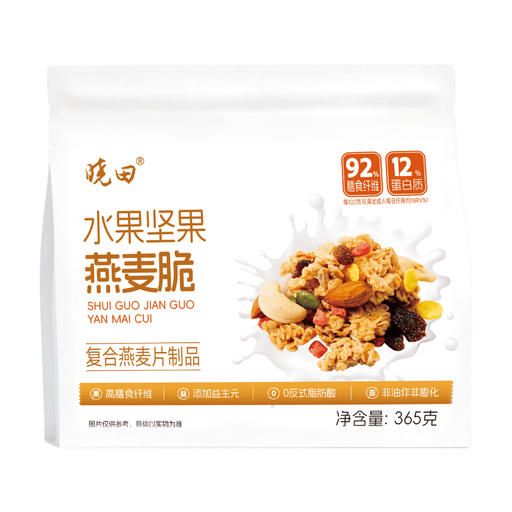 Image unavailable
Xiao Tian Fruit & Nut Oat Crunch, 365g
A ready-to-eat oat cereal for mornings when you do not want a cooking step.
Lists 22.9 g dietary fibre per 100 g. Contains gluten-containing cereals, almonds and cashews; check the current pack for sugars if that is important to your choice.
Joybuy
 Image unavailable
Scotts Porage Oats Original, 1kg
An oat-based option for shoppers prepared to make a warm breakfast bowl.
Lists 9.0 g dietary fibre per 100 g and 3.6 g per 40 g serving, with 1.0 g sugars and 0 g salt per 100 g. May contain wheat and barley.
Joybuy
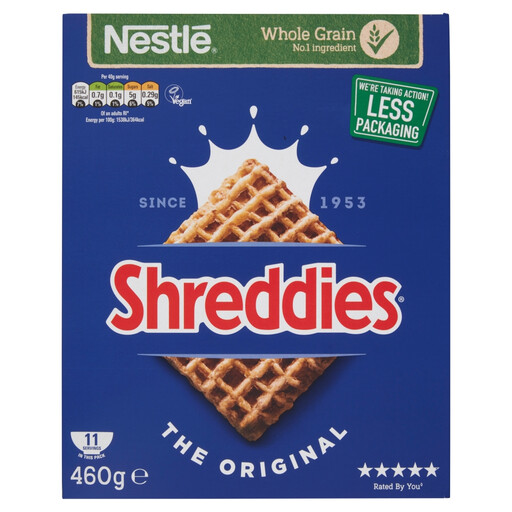 Image unavailable
Nestle Shreddies, 460g
A ready-to-eat wheat cereal that can be served with milk, yoghurt or fruit.
Lists 12 g fibre per 100 g and 5 g per 40 g serving. The nutrition table lists 13 g sugars per 100 g; contains wheat and may contain barley.
Joybuy
 Image unavailable
Mornflake Mighty Oats Original Oatbran, 800g
An oatbran option for shoppers prioritising fibre density in an oat-based breakfast ingredient.
Lists 19.4 g fibre, 1.5 g sugars and 0.02 g salt per 100 g. Contains oats and is stated to be unsuitable for wheat or barley allergy sufferers because of manufacturing methods.
Joybuy
Frequently asked questions
What counts as a high-fibre breakfast cereal in the UK?
Under the UK nutrition-claim rules set out in Regulation (EC) No 1924/2006, a food can make a high-fibre claim only if it contains at least 6 g of fibre per 100 g or 3 g per 100 kcal. Check the nutrition panel because wholegrain wording alone does not state the fibre amount.
Should I compare fibre per 100 g or fibre per serving?
Use fibre per 100 g to compare cereals on the same basis, then check fibre per serving to understand the amount in the portion you plan to eat. Serving sizes vary, including a 27 g oat sachet and 45 g muesli serving in the referenced products.
Is a no-added-sugar high-fibre cereal sugar-free?
No. Alpen No Added Sugar Muesli, for example, lists 18 g sugars per 100 g and 8.1 g per 45 g serving. Read both the sugars line and ingredient list, particularly for cereals containing dried fruit.
Are high-fibre wheat cereals suitable for coeliac disease?
Do not assume so. Nestlé states that Shredded Wheat Original contains gluten because it is made from wholegrain wheat and is not suitable for coeliacs. Check the exact current label and choose only a specifically suitable product if you need a gluten-free diet.
How can I add more fibre without changing my whole routine?
The NHS advises getting fibre from a variety of sources rather than relying on one food. A higher-fibre cereal can be one breakfast component alongside wholegrains, fruit, vegetables and pulses; use the pack instructions and serving size for the cereal you choose.


