Who this is for

Diabetes-aware cereal shoppers

For people comparing fibre, total carbohydrate, sugars and their actual portion instead of treating a high-fibre label as a diabetes-specific guarantee. Diabetes UK advises considering wholegrain cereals and fibre within an overall diabetes-management approach.

Carbohydrate-counting cereal eaters

For people using multiple daily insulin injections under dietitian advice who need the total carbohydrate in a weighed cereal portion, rather than relying on the “of which sugars” figure. This follows dietetic guidance from University Hospitals Coventry and Warwickshire NHS Trust.

Wholegrain breakfast shoppers avoiding sweet cereals

For shoppers looking at plain wholegrain wheat or oat cereals with low declared sugars, while checking wheat, gluten, nut and milk information on the current pack where relevant.

What to check before choosing

Priority What to check Your needs
Declared fibre Compare fibre per 100g across like-for-like dry cereals. Check whether the grain base is wholegrain wheat, bran or rolled oats. Use front-of-pack fibre wording only as a starting point. I want a cereal with a clearly stated fibre value and a wholegrain or oat-based ingredient list, rather than choosing by packaging alone.
Total carbohydrate and portion Use total carbohydrate per 100g and for the stated serving. Weigh your usual dry portion if it is larger than the label example. Add carbohydrate from milk, yoghurt and toppings separately. My bowl may not match the serving shown on the pack, so I need figures that let me calculate the amount I actually eat. University Hospitals Coventry and Warwickshire NHS Trust advises carbohydrate counters to use total carbohydrate rather than “of which sugars”.
Declared sugars and ingredients Compare sugars per 100g. Read the ingredients for dried fruit in muesli and fruit cereals. Treat “no added sugar” as a claim about added sugar, not a replacement for the nutrition panel. I prefer to see the total sugars and carbohydrate before choosing a cereal with raisins or other dried fruit.
Allergens and gluten Read the current ingredient list and allergen statement. Check for wheat, barley, oats, milk, nuts and precautionary “may contain” wording. Choose an explicitly labelled gluten-free product when that is required. I need the cereal to fit my allergy, intolerance or coeliac requirements as well as my breakfast preferences.

Avoid common cereal mistakes

  • Treating “no added sugar” as proof of low total sugar

    Fruit-containing mueslis can still list substantial total sugars. Alpen No Added Sugar lists 18g sugars per 100g and Dorset Cereals Tasty Toasted lists 19g per 100g, according to their manufacturers.

    Read total sugars and total carbohydrate per 100g, then check whether dried fruit is a major ingredient before choosing a muesli.

  • Choosing only by fibre and ignoring total carbohydrate

    A cereal can list substantial fibre while still providing a considerable amount of carbohydrate. Nestlé Cereals UK lists 64.9g carbohydrate and 14g fibre per 100g for Shredded Wheat Original; Weetabix lists 69g carbohydrate and 10g fibre per 100g for Weetabix Original.

    Use fibre as one comparison point, then plan the bowl using total carbohydrate for the portion you will eat, including milk, yoghurt and toppings where relevant.

  • Using the manufacturer serving size when your bowl is larger

    Pack serving examples can be smaller than the amount a person usually eats, which can make carbohydrate calculations inaccurate.

    Weigh your usual dry cereal portion at least once and calculate from the per-100g panel if it exceeds the stated serving.

  • Assuming a familiar cereal always has the same formulation or allergy profile

    Relevant cereals can contain or carry precautionary statements for wheat, barley, milk, nuts and soya, and recipes may change.

    Check the current pack or retailer-pack image nutrition panel and allergen statement each time you buy, especially when managing coeliac disease, food allergy or intolerance.

Relevant cereal brand references

Nestlé

Nestlé Shredded Wheat Original is a plain wholegrain-wheat biscuit option for shoppers comparing low declared sugars with a stated fibre figure.

  • Nestlé Cereals UK lists one ingredient, 100% wholegrain wheat, with 14g fibre, 64.9g carbohydrate and 0.7g sugars per 100g.
  • It contains wheat, may contain peanuts and nuts, and is stated as unsuitable for coeliac disease.

Weetabix

Weetabix Original is a compact wholegrain-wheat biscuit cereal for shoppers who prefer a defined two-biscuit portion.

  • Weetabix lists 10g fibre, 69g carbohydrate and 4.2g sugars per 100g; two biscuits provide 3.8g fibre and 26g carbohydrate.
  • It contains wholegrain wheat and malted barley extract, and includes added sugar.

Kellogg's

Kellogg's All-Bran Fibre Plus is a bran cereal route for shoppers prioritising the highest stated fibre figure among these brand references.

  • Kellogg's UK lists 26g fibre per 100g and 10g per 40g serving.
  • The same panel lists 15g sugars and 0.9g salt per 100g; check the current pack for wheat, barley, nuts, milk and soya information.

Quaker

Quaker Traditional Rolled Oats is a plain oat-porridge option for shoppers who want to control what is added to the bowl.

  • Quaker UK lists one ingredient, rolled oats, with 9.0g fibre, 60g carbohydrate and 1.1g sugars per 100g of dry oats.
  • Prepared values that include milk should not be compared directly with dry-oat values; the product may contain wheat and barley.

Alpen

Alpen No Added Sugar is a wholegrain muesli option for shoppers who specifically want oats, wheat, nuts and raisins.

  • Alpen lists 8.0g fibre per 100g and uses a wholegrain oat-and-wheat muesli format.
  • It lists 18g sugars per 100g and contains wheat, oats, milk, hazelnuts and almonds.

Dorset Cereals

Dorset Cereals Tasty Toasted is a fruit-and-nut muesli route for shoppers who value texture and mixed ingredients.

  • Dorset Cereals lists 7.1g fibre per 100g and makes a no-added-sugar claim for this product.
  • It lists 19g sugars and 62g carbohydrate per 100g, and contains dried fruit, oats, wheat, barley and nuts.

Joybuy cereal options

Joybuy product options for comparing plain oat cereals, wholegrain wheat cereal and fruit-and-nut muesli within a diabetes-aware breakfast choice.
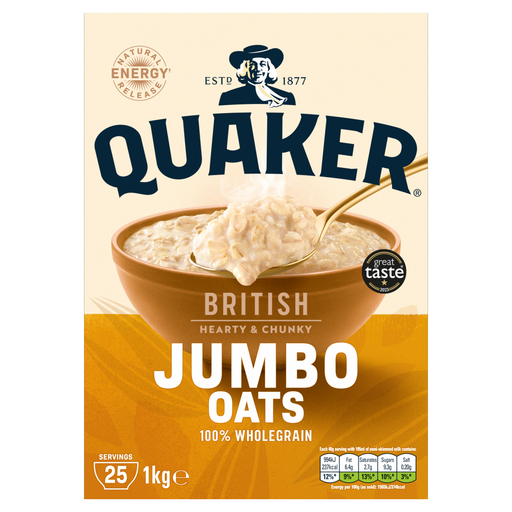
Quaker Jumbo Rolled Oats 1kg

Quaker Jumbo Rolled Oats 1kg

A plain oat option for shoppers who want to control milk, yoghurt and toppings.

The listing states 100% wholegrain oat flakes, with 9g fibre, 60g carbohydrate and 1g sugars per 100g. It may contain wheat; check the current pack if gluten avoidance is required and weigh the dry amount used for carbohydrate calculations.

Joybuy
Mornflake Mighty Oats Original Oatbran 800g

Mornflake Mighty Oats Original Oatbran 800g

A plain oatbran option for shoppers looking for a stated fibre value without fruit-and-nut cereal additions.

The listing states 100% oatbran with 19.4g fibre, 48.2g carbohydrate and 1.5g sugars per 100g. Check the pack for a serving suggestion, preparation guidance and gluten information; it is stated as unsuitable for wheat or barley allergy sufferers because of manufacturing methods.

Joybuy
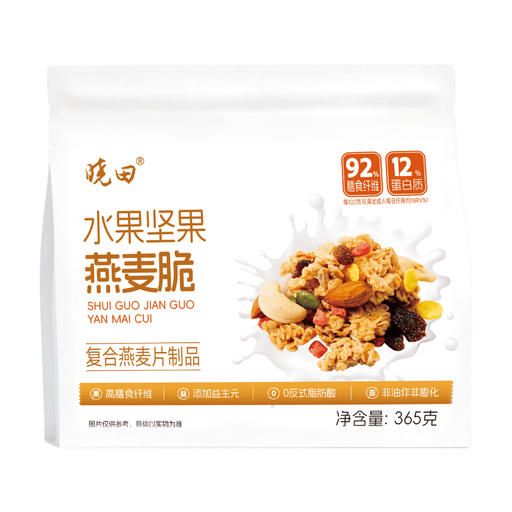
Xiao Tian Fruit and Nut Oat Crunch Multi-Grain Oat Cereal 365g

Xiao Tian Fruit & Nut Oat Crunch 365g

A ready-to-eat fruit-and-nut cereal for shoppers who prefer this format and are prepared to review its full label.

The listing states at least 47% oats, 22.9g dietary fibre and 42.5g carbohydrate per 100g. Check the current nutrition panel for sugars before using it as a lower-sugar option; it contains oats, gluten, almonds and cashews.

Joybuy
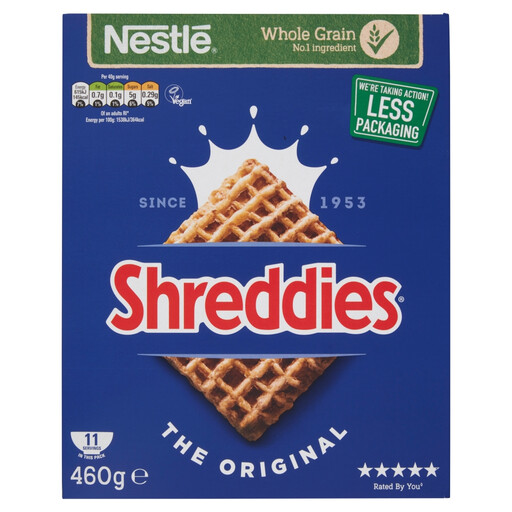
Nestlé Shreddies 460g

Nestlé Shreddies 460g

A wholegrain wheat cereal option with a stated serving size for portion-based meal planning.

The listing states 96% wholegrain wheat and, per 40g serving before milk or toppings, 28g carbohydrate, 5g sugars and 5g fibre. It contains wheat and may contain barley; the listing does not describe it as gluten-free.

Joybuy
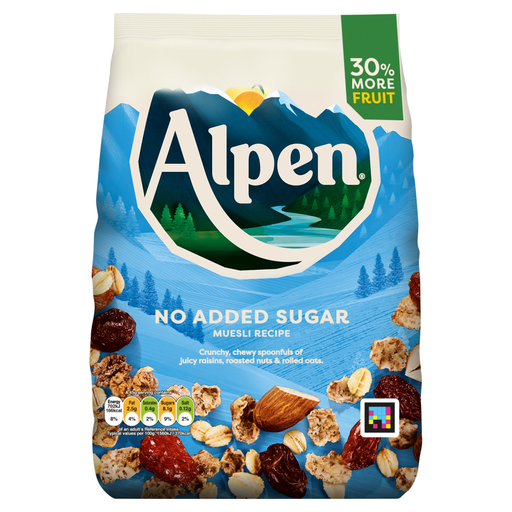
Alpen No Added Sugar Muesli 950g

Alpen No Added Sugar Muesli 950g

A wholegrain fruit-and-nut muesli option for shoppers who specifically want this cereal style.

The listing states wholegrain wheat and rolled oats, with 8g fibre, 65g carbohydrate and 18g sugars per 100g. It contains raisins, wheat, oats, milk, almonds and hazelnuts, so check the current pack for allergens and calculate values for your actual portion.

Joybuy

Questions about high-fibre cereal

Is a high-fibre cereal automatically suitable for diabetes?

No. Breakfast cereals are carbohydrate-containing foods, so compare total carbohydrate, sugars and your real serving size rather than relying on a high-fibre claim alone. Fit the meal into your individual diabetes-management plan.

Should I use total carbohydrate or “of which sugars” when carbohydrate counting?

Use total carbohydrate on the food label, not “of which sugars”, if you are carbohydrate counting with multiple daily insulin injections under dietitian advice. If your bowl differs from the stated serving, weigh it and calculate from the per-100g value, as advised by University Hospitals Coventry and Warwickshire NHS Trust.

Does “no added sugar” mean a cereal is low in sugar?

No. The claim refers to added sugar and does not replace checking total sugars or carbohydrate. Alpen No Added Sugar lists 18g sugars per 100g and Dorset Cereals Tasty Toasted lists 19g per 100g; both contain dried fruit, according to their manufacturers.

Can I choose these cereals if I need gluten-free food?

Check the specific product rather than assuming a high-fibre cereal is gluten-free. Nestlé Shredded Wheat Original contains wheat and is stated as unsuitable for coeliac disease; choose a product explicitly labelled gluten-free when that is your requirement.

How can I increase fibre without digestive discomfort?

Increase fibre gradually and drink more fluids. Diabetes UK gives this advice for people increasing fibre intake; seek personalised guidance if you have been given a specialised diet or fluid restriction.