What to check before buying
Start with a like-for-like fibre comparison, then read the pack for sugars, salt, ingredients and the serving size you expect to eat.
| Priority |
What to check |
Your needs |
| Fibre contribution |
Compare fibre per 100g when serving sizes differ. Then check fibre per labelled serving and how much you are likely to eat. NHS guidance says adults should aim for 30g of dietary fibre a day as part of a balanced diet. |
I want cereal to make a practical contribution to fibre intake without relying on one food alone. Wholegrain cereal can be one part of a varied day of fibre sources. |
| Sugars and salt |
Read sugars and salt on the same per-100g basis. Check the stated serving too, especially where dried fruit, flavourings or a salty cooked breakfast are involved. |
I am adding cereal to a breakfast that may already include richer or saltier items, so I want the full nutrition panel to fit the rest of the meal. |
| Ingredients and allergens |
Check the current ingredient list, highlighted allergens and any “may contain” statement. Only rely on a gluten-free claim where the exact product is labelled for that requirement. |
I need to know whether wheat, barley, oats, milk or nuts are present before choosing a cereal. |
| Gradual change |
If your usual fibre intake is low, increase portions gradually. Follow any personal fluid allowance or clinician-led dietary plan. |
I want to introduce a higher-fibre cereal in a way that suits my usual eating pattern and dietary restrictions. |
Joybuy cereal options
Joybuy product options for the oat and fruit-and-nut cereal route, including porridge for a warm breakfast and ready-to-eat cereal for a quicker accompaniment.
 No image available
Scotts Porage Oats Original Porridge Oats 1kg
A plain oat accompaniment for shoppers willing to prepare porridge alongside a cooked breakfast.
Listed values include 9g fibre, 1g sugars and 0g salt per 100g; the listing identifies 100% oatmeal as the sole ingredient. It may contain wheat and barley, so gluten-free suitability should be checked on the current pack.
Joybuy
 No image available
Flahavan's Organic Porridge Oats 1kg
A warm oat option for a Full English-style breakfast where simple ingredients are a priority.
The listing states 8.3g fibre per 100g and 3.3g per 40g serving, with 0.9g sugars and less than 0.01g salt per 100g. It contains oats, and porridge preparation is required.
Joybuy
 No image available
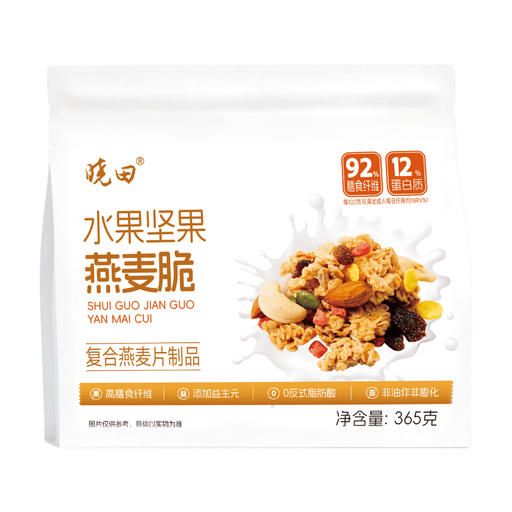
Xiao Tian Fruit & Nut Oat Crunch 365g
A ready-to-eat fruit-and-nut cereal for shoppers who prefer crunch or a yoghurt topping.
The listing states 22.9g dietary fibre and 0.07g salt per 100g, with oat flakes at 47% or more. It contains gluten-containing oats, almonds and cashews; check the current nutrition panel if sugars are a priority.
Joybuy
 No image available
Quaker Oat So Simple Big Bowl Original 6 Pack 231g
An individually portioned oat option for time-limited breakfasts with microwave preparation.
The listing states 9g fibre per 100g and 3.5g per sachet, with 1g sugars per 100g. It contains oats; check the current pack for salt information and gluten-free suitability.
Joybuy
 No image available
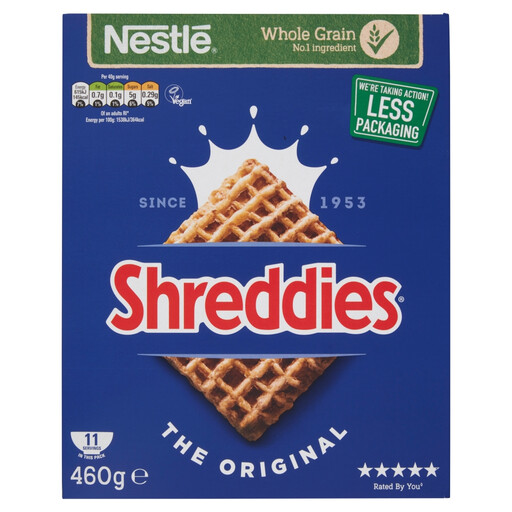
Nestle Shreddies 460g
A ready-to-eat wholegrain wheat cereal for shoppers who prefer a crunchy format.
The listing states 12g fibre per 100g and 5g per 40g serving. It also lists 13g sugars and 0.72g salt per 100g, and contains wheat with possible barley.
Joybuy
Frequently asked questions
How much fibre should an adult in the UK aim for?
Government guidance cited by the NHS says adults should increase dietary fibre intake to 30g a day as part of a healthy, balanced diet. This is a daily target, not a reason to rely on one cereal alone.
Should I choose the cereal with the most fibre for every Full English breakfast?
Not necessarily. A bran cereal has the greatest fibre density among the reviewed products, but the suitable choice also depends on sugars, salt, portion size, allergens and what else is on the plate. The NHS advises getting fibre from a variety of sources.
Can I increase high-fibre cereal intake quickly?
NHS patient dietary guidance advises increasing fibre gradually and drinking enough fluids within any personal fluid allowance. If you have a clinician-led diet or prescribed fluid restriction, seek advice from the professional managing that plan before making a substantial change.
Are wheat, oat and muesli cereals suitable for a gluten-free diet?
Do not assume so. The reviewed wheat cereals contain wheat/gluten, and the oat cereal example may contain wheat and rye. Under UK labelling rules, food described as gluten-free must contain no more than 20mg/kg gluten; oats remain an allergen in their own right.
What should I check on the pack if I have a nut allergy?
Check both the highlighted allergen declaration and any precautionary “may contain” statement on the exact pack. Shredded Wheat Original may contain peanuts and nuts, while Dorset Delicious Fruit & Nut Muesli contains cashews and hazelnuts.


