Weekend cereal eaters aiming to increase fibre
For people who want breakfast cereal to contribute towards the NHS guidance of 30 g of dietary fibre a day for adults, and who need to compare fibre per serving as well as per 100 g.


Start with the nutrition panel: in the UK, a product may only make a high-fibre claim when it contains at least 6 g of fibre per 100 g or 3 g per 100 kcal. Choose bran cereal for the greatest labelled fibre amount per serving, plain wholewheat biscuits for a simpler cereal base, oats for a warm bowl, or muesli for fruit-and-nut texture while checking sugars, preparation details and allergens.
For people who want breakfast cereal to contribute towards the NHS guidance of 30 g of dietary fibre a day for adults, and who need to compare fibre per serving as well as per 100 g.
For readers balancing a larger labelled fibre serving with a short ingredient list, declared sugars, or added vitamins and minerals.
For people who prefer warm oats or fruit-and-nut muesli and need to consider preparation, dried-fruit sugars, and declarations for gluten-containing cereals, milk or nuts.
Compare the stated serving and the per-100 g panel side by side, then make sure the format and ingredient list work for the breakfast you want to make.
| Priority | What to check | Your needs |
|---|---|---|
| Fibre in your bowl | Compare fibre per 100 g for a common basis and fibre per stated serving for the bowl amount. A UK high-fibre claim requires at least 6 g per 100 g or 3 g per 100 kcal. | I want the portion I actually eat to make a meaningful fibre contribution, rather than relying on a wholegrain-style pack claim. |
| Sugars and preparation basis | Read sugars per serving alongside fibre. For porridge, keep dry-oat figures separate from nutrition values prepared with milk. | I want to compare like with like, especially when choosing between dry cereal, muesli and a milk-prepared oat bowl. |
| Allergens and gluten | Check the exact pack for wheat, barley, oats, milk, nuts and precautionary statements. Choose a specifically gluten-free labelled product where that is required. | I need a cereal whose ingredients and allergen information fit my dietary requirements. |
| Breakfast format | Decide whether you want ready-to-eat cereal, a hot porridge bowl or a textured muesli. Check cooking instructions and serving size where relevant. | At the weekend, I may prefer a quick cold bowl, a warm breakfast or a fruit-and-nut mix with more texture. |
Wholegrain ingredients and a regulated high-fibre claim are not the same thing. The UK high-fibre claim has a defined threshold, so a wholegrain statement alone does not show fibre density.
Use both fibre per 100 g and fibre per stated serving. Treat the high-fibre threshold as a screening check, then compare the amount in your usual bowl.
A 40 g bran serving, 45 g wheat-biscuit serving and 27 g dry oat sachet are different quantities. Porridge pages can also show values for oats prepared with milk.
Compare per-100 g figures for density and stated-serving figures for your bowl. Keep dry-oat nutrition separate from milk-inclusive prepared values.
Dried fruit contributes naturally occurring sugars, so a no-added-sugar muesli can still show a notable sugars value on its nutrition panel.
For fruit mueslis, read the sugars line and ingredient list alongside any no-added-sugar wording.
Kellogg's UK advises increasing fibre gradually because some people can experience bloating or wind while adapting.
If you are increasing fibre intake, make the change progressively and keep fluid intake in mind.
Relevant for shoppers considering wheat-bran cereal. Kellogg's UK lists All-Bran Fibre Plus at 26 g fibre per 100 g and 10 g per 40 g serving.
Relevant for wholegrain wheat biscuit cereal. Weetabix Original declares 3.8 g fibre per two-biscuit, 37.5 g serving.
Relevant through Shredded Wheat Original, a cereal made from 100% wholegrain wheat that declares 6.3 g fibre per 45 g serving.
Relevant for warm oat porridge. Quaker Oat So Simple Original declares 2.4 g fibre per 27 g dry sachet.
Relevant for wholegrain muesli. Alpen No Added Sugar declares 3.6 g fibre and 8.1 g sugars per 45 g serving.
Relevant for fruit-and-nut muesli. Delicious Fruit & Nut declares 3.2 g fibre and 8.6 g sugars per portion.
Joybuy product options for a high-fibre weekend breakfast, including ready-to-eat cereal, warm porridge oats and fruit-and-nut muesli.
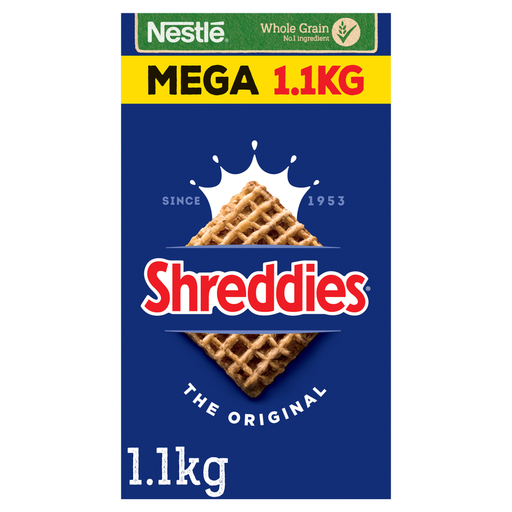 No image available
A ready-to-eat wholegrain wheat option for a cold breakfast bowl.
The listing declares 12 g fibre per 100 g and 4.8 g per 40 g serving, with iron and B vitamins.
Contains wheat and barley malt extract; the listing states that it may contain peanuts and nuts. Check the exact pack if gluten-free status is required.
 No image available
A warm porridge route that can be prepared with water or milk.
The listing states 100% oatmeal, with 9.0 g fibre per 100 g and 3.6 g fibre per 40 g portion.
May contain wheat and barley. Compare dry-oat figures rather than milk-prepared figures when comparing cereals, and check the exact pack if gluten-free status is required.
 No image available
An individual-sachet option for a quick warm weekend bowl.
The listing declares 3.5 g fibre per 38.5 g dry sachet and 9.0 g fibre per 100 g; it describes microwave preparation in 2½ minutes.
The milk-prepared figures use 245 ml semi-skimmed milk, so do not compare them directly with dry cereal values. Check the exact pack if gluten-free status is required.
 No image available
A simple warm porridge option based on wholegrain oat flakes.
The listing states 100% organic wholegrain oat flakes, with 8.3 g fibre per 100 g and 3.3 g fibre per 40 g serving.
Contains oats identified as gluten and is not presented as gluten-free. Check the pack instructions for the intended cooking method.
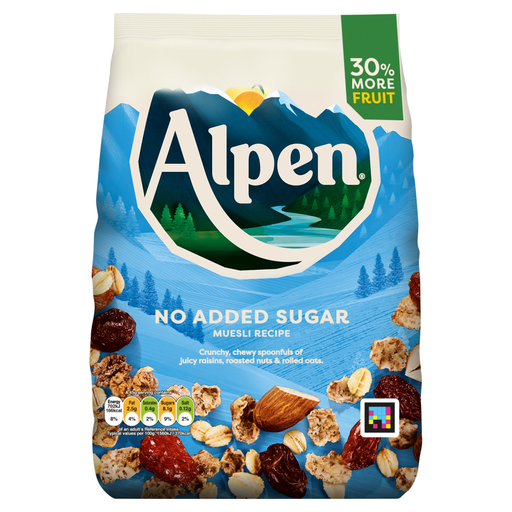 No image available
A textured muesli option for a fruit-and-nut weekend breakfast.
The listing declares 8.0 g fibre per 100 g; matching product information gives 3.6 g fibre per 45 g serving.
Contains wheat, oats, milk, almonds and hazelnuts, and may contain other nuts. No-added-sugar wording does not mean sugar-free: the matching product information declares 8.1 g sugars per 45 g serving.
For a UK high-fibre claim, a food must contain at least 6 g of fibre per 100 g or 3 g per 100 kcal. Check the nutrition panel as well, because two qualifying cereals can still provide different amounts in their stated serving sizes.
NHS guidance says adults should aim for 30 g of dietary fibre a day as part of a healthy, balanced diet. A cereal serving is one contribution to that daily total, alongside fibre from other foods.
No. A fibre figure alone does not establish how a breakfast will affect energy over time. Consider the full meal, including the cereal portion and any milk, yoghurt, fruit, nuts or other toppings.
No. The Food Standards Agency states that food labelled gluten-free must contain no more than 20 mg/kg gluten. Choose a specifically gluten-free labelled product where this is required rather than assuming ordinary oats qualify.
Read the exact pack's ingredient list and allergen statement every time, including any may-contain wording. Fruit-and-nut mueslis can contain nuts and milk, while wheat- and barley-based cereals contain gluten-containing cereals.