Buying priorities
Compare the nutrition panel and ingredient declaration first, then choose the cereal format that fits how you want to serve breakfast.
| Priority |
What to check |
Your needs |
| Fibre contribution |
Compare fibre per 100 g for like-for-like products. Check fibre per stated serving and the portion you expect to eat. A regulated “high fibre” claim requires at least 6 g per 100 g or 3 g per 100 kcal under the retained UK/EU rules published on legislation.gov.uk. |
I want the cereal element to make a noticeable fibre contribution, rather than relying on a wholegrain description alone. |
| Recipe and sugars |
Read the ingredients in addition to sugars per 100 g. Check whether dried fruit, nuts, milk ingredients or added ingredients fit the type of cereal you want. |
A plain wheat biscuit or oat porridge may fit when I want a short ingredient list; a fruit-and-nut muesli offers a different texture and recipe. |
| Allergen suitability |
Check the current declaration for wheat, barley, oats, milk, soya, peanuts and tree nuts. Review precautionary allergen wording as well as listed ingredients. |
I need a cereal whose current pack information works with my allergy, intolerance or coeliac requirements. |
Joybuy product options
Joybuy options for an oat-based cereal or porridge element alongside a Scottish-style breakfast.
 No image available
Scotts Porage Oats Original Porridge Oats 1kg
A warm, plain porridge option for a cooked-breakfast routine.
Lists 100% oatmeal, 9.0 g fibre per 100 g and 3.6 g per 40 g portion. Listed sugars are 1.0 g per 100 g; preparation with milk changes the finished bowl's nutrition. May contain wheat and barley.
Joybuy
 No image available
Quaker Oat So Simple Big Bowl Original 6 Pack 231g
Individually portioned oats for a hot cereal element when preparation time matters.
Lists wholegrain rolled oats as the sole ingredient, with 9.0 g fibre and 1.0 g sugars per 100 g. A 38.5 g sachet lists 3.5 g fibre; nutrition prepared with milk differs from the dry oats.
Joybuy
 No image available
Flahavan's Organic Porridge Oats 1kg
A plain wholegrain oat option for a warm breakfast bowl.
Lists 100% organic wholegrain oat flakes, 8.3 g fibre per 100 g and 3.3 g per 40 g serving. Listed sugars are 0.9 g per 100 g. Check the current pack where gluten or oat suitability is required.
Joybuy
 No image available
Mornflake Mighty Oats Original Oatbran 800g
An oatbran option for shoppers prioritising fibre density in a plain oat-based ingredient.
Lists 100% oatbran, 19.4 g fibre and 1.5 g sugars per 100 g. The listing states that it is unsuitable for people with wheat or barley allergies because of manufacturing methods; check pack serving and preparation instructions.
Joybuy
 No image available
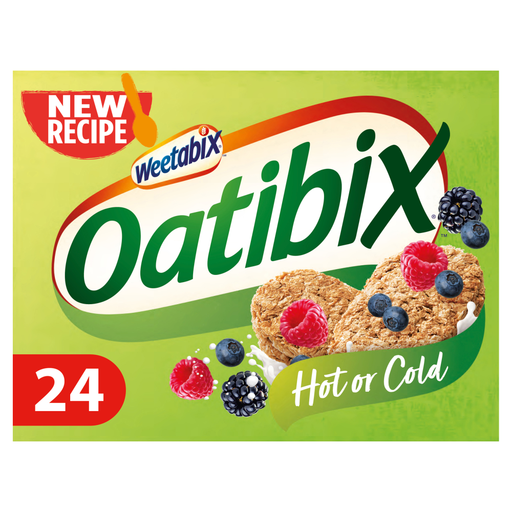
Weetabix Oatibix 24 Biscuits 600g
A ready-to-serve oat biscuit alternative when hot porridge is not wanted.
Lists 7.3 g fibre and 3.2 g sugars per 100 g, with wholegrain oats making up 96% of ingredients. It contains barley and oats and is stated as unsuitable for people with barley or oat allergies.
Joybuy
Frequently asked questions
What does “high fibre” mean on a UK breakfast cereal label?
For the regulated “high fibre” nutrition claim, a food must contain at least 6 g of fibre per 100 g or at least 3 g per 100 kcal, according to the retained UK/EU rules published on legislation.gov.uk. Check the current nutrition panel for the specific recipe.
Which assessed cereal has the most fibre per 100 g?
Kellogg's All-Bran Fibre Plus lists 26 g fibre per 100 g. Among the other compared products, Nestlé Shredded Wheat Original lists 14 g, Weetabix Original 10 g, Quaker Oat So Simple Original 9.0 g, Alpen No Added Sugar Muesli 8.0 g and Dorset Delicious Fruit & Nut Muesli 7.2 g per 100 g.
Can cereal add fibre to a full Scottish-style breakfast?
Yes, cereal or porridge can add fibre to the meal. NHS guidance recommends getting fibre from a variety of foods, so consider the cereal alongside other fibre-containing foods that suit your meal and dietary requirements.
Are high-fibre cereals suitable for coeliac disease or cereal allergies?
Not automatically. The bran, wheat-biscuit and muesli products compared contain wheat and/or other gluten-containing cereals, while Quaker Oat So Simple Original may contain wheat and barley. Check the exact pack's ingredients and allergen statement every time.
Does “no added sugar” mean that muesli contains no sugars?
No. Alpen No Added Sugar Muesli lists 18 g sugars per 100 g and includes raisins. Read the wording alongside the ingredients and nutrition table rather than treating it as a statement that the product contains no sugars.


