Holiday-cottage hosts stocking shared breakfasts
For hosts choosing a cupboard breakfast that serves several guests with little preparation, while checking allergens and dietary exclusions before food is put out.


For a holiday cottage, choose granola with a verified high-fibre claim or a nutrition panel showing at least 6 g of fibre per 100 g under UK nutrition-claim rules. Jordans Low Sugar Granola Almond and Hazelnut has 7.9 g fibre per 100 g among the directly comparable products reviewed, but sugar, ingredients, allergens and dietary requirements still need checking on the exact pack before serving guests.
For hosts choosing a cupboard breakfast that serves several guests with little preparation, while checking allergens and dietary exclusions before food is put out.
For guests looking for a breakfast cereal that can contribute towards the NHS guidance of 30 g of fibre a day for adults as part of a balanced diet, rather than relying on one bowl alone.
For guests who value a more substantial breakfast and may prefer granola with a stated protein amount as well as fibre, provided soya and nut allergens are suitable.
Start with fibre per 100 g, then compare sugars, ingredients and the serving information that matters for a shared self-catering breakfast.
| Priority | What to check | Your needs |
|---|---|---|
| Verified fibre level | Compare fibre per 100 g. Under UK nutrition-claim rules, a high-fibre claim requires at least 6 g per 100 g or 3 g per 100 kcal; check the nutrition panel or a valid claim. | I want a cereal with a clear fibre figure, not simply an oat, seed or wholegrain recipe. Jordans lists 7.9 g per 100 g, while Lizi’s stated 3.4 g per 50 g serving is equivalent to 6.8 g per 100 g. |
| Sugars alongside fibre | Read sugars and fibre on the same per-100-g basis, then check the stated serving size. Do not use a flavour name or lower-sugar positioning as a substitute for the panel. | For repeat breakfasts, I want to compare sugars without losing sight of fibre. Jordans Low Sugar Granola Almond and Hazelnut lists 2.9 g sugars and 7.9 g fibre per 100 g. |
| Allergens and dietary suitability | Read the full ingredients list, highlighted allergens and any may-contain statement on the exact pack. Check gluten-containing cereals, nuts, milk and soya separately. | Guests may have different dietary requirements, so an oat-based or gluten-free label alone is not enough to establish suitability for everyone. |
| Portion and breakfast use | Check the stated serving size and whether the cereal works with the milk, yoghurt, fruit or alternatives you plan to provide. Keep fibre varied across the stay. | I need an easy breakfast that can be portioned for different appetites and supplemented with other suitable foods, rather than treated as the day’s only fibre source. |
A granola can look fibre-rich while giving no comparable fibre figure. UK nutrition-claim rules define when a product may be described as high fibre.
Compare fibre per 100 g and look for at least 6 g per 100 g, or verify the alternative 3 g per 100 kcal threshold.
Reviewed products can contain tree nuts, gluten-containing cereals, milk or soya, and some carry precautionary allergen wording. This matters when guests are unfamiliar to the host.
Read the exact pack before buying and serving, and keep a separately suitable alternative where required.
Lower sugar and high fibre answer different buying questions. A product should be compared on fibre first when high fibre is the main requirement.
Check both values per 100 g and use the stated serving size when planning breakfasts.
The NHS says adults should aim for 30 g of fibre a day as part of a balanced diet and advises getting fibre from a variety of sources.
Offer suitable fruit and plan other wholegrains, pulses, vegetables and fruit across the self-catering stay.
A UK granola range with low-sugar, no-added-sugar, protein, fruit-and-nut and other variants.
A granola and muesli range with high-fibre, high-protein and lower-sugar recipes.
A range including wholegrain, high-fibre, low-sugar and organic granola options.
An organic granola range with UK-listed gluten-free, grain-free and protein options.
A UK granola range based on wholegrain oats, with varieties featuring nuts, fruits and seeds.
These Joybuy options are for a holiday-cottage breakfast where stated fibre information and ingredient checks matter; the selection includes granola and a fruit-and-nut oat cereal.
 No image available
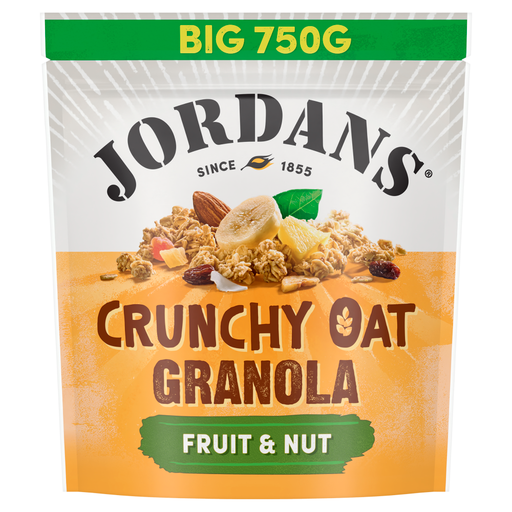
For a ready-to-serve cottage breakfast, the stated 6.1 g fibre per 100 g meets the UK high-fibre threshold and the pack gives a 45 g portion.
Stated sugars: 24 g per 100 g. Serving suggestions include milk or yoghurt, and the pack has resealable storage instructions.
Contains oats and almonds and may contain peanuts, other tree nuts and cereals containing gluten; compare sugars with other options if this is a priority.
 No image available
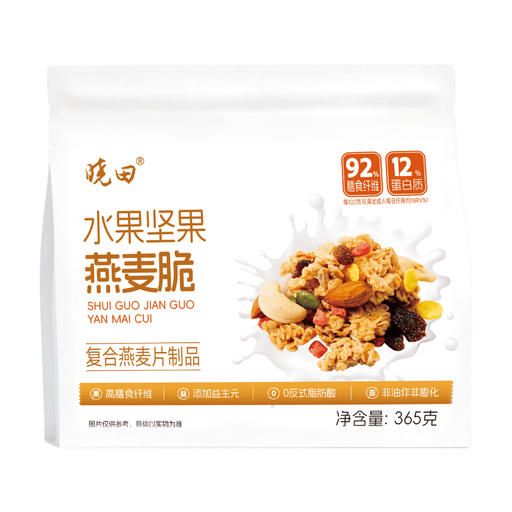
This ready-to-eat fruit-and-nut oat cereal is stated to provide 22.9 g dietary fibre per 100 g and can be served with milk or yoghurt or eaten as a snack.
No serving size is stated, and the sugars entry is not given as a numeric value, so check the physical pack if portion planning or lower sugar matters.
Contains gluten-containing oats, almonds and cashews; confirm that an oat-cereal format suits the breakfast offering you want to provide.
A product may use a high-fibre claim only when it contains at least 6 g of fibre per 100 g or at least 3 g per 100 kcal under UK nutrition-claim rules. For a like-for-like comparison, use the fibre figure per 100 g on the nutrition panel.
There is no single required bowl amount. The NHS says adults should aim for 30 g of fibre per day as part of a balanced diet and advises getting fibre from a variety of foods, so use the pack serving size to work out the breakfast contribution.
No. The reviewed Jordans, Lizi’s and Rude Health products contain nuts, and some also carry precautionary cross-contact statements. Check the exact pack’s ingredients and allergen declaration before serving, and provide a separately suitable alternative where needed.
No. The reviewed Nature’s Path gluten-free granola contains milk and soya and may contain peanuts and tree nuts. Gluten-free suitability addresses gluten only, so check the full ingredient list and precautionary statement for each guest requirement.