Who these oats suit

Home bakers making oat-based loaves

Choose oats that can be weighed into a bread recipe rather than used only as a breakfast bowl. Plain wholegrain rolled-oat sachets are a practical starting point where the ingredient list is limited to oats or a plain rolled-oat base.

Fibre-focused label comparers

Look for a declared dry per-100g fibre value so products can be compared on the same basis. Quaker UK, Sainsbury’s and Marks & Spencer list 9.0g, 9.6g and 9.4g fibre per 100g respectively for their cited plain products.

Bakers managing gluten or food allergies

Select by the exact current pack label, not by the word “oats” alone. Standard oat products may carry cereal or allergen warnings, while a gluten-free claim does not mean that oat is no longer an allergen.

What to check before buying

Plain original sachets

Choose these when: You want a neutral oat ingredient and a dry fibre figure for comparing products.

Keep in mind: Portion packs may not suit every baking routine, and allergen statements differ between products.

Gluten-free oat products

Choose these when: The finished loaf requires explicitly gluten-free oats and the rest of the recipe is suitable too.

Keep in mind: A gluten-free pot can still contain milk powder, and oat remains an allergen.

Flavoured or enriched porridge

Choose these when: A recipe is designed around added flavour or enrichment, such as a sweet oat loaf.

Keep in mind: Sugar, salt, flavourings, milk or added protein can alter the intended recipe.

Priority What to check Your needs
Dry fibre value Use the dry nutrition panel; compare fibre per 100g; avoid comparing bowls made with different liquids. I want to compare oats before milk, water or baking changes the prepared values.
Plain composition Read the ingredient list; identify milk powder, sugar, flavourings or wheat protein; match additions to the recipe. For everyday savoury or sweet loaves, I want oats that do not introduce unexpected flavour or ingredients.
Allergen suitability Check the current allergen statement and gluten-free wording; review every ingredient in the complete bread recipe. If the loaf is for someone with a dietary requirement, I need an explicitly suitable product rather than assuming standard oats will work.

Common buying mistakes

  • Comparing prepared porridge instead of dry oats

    Milk or water changes prepared per-100g values, so bowls are not a like-for-like basis for selecting a baking ingredient.

    Use the dry per-100g nutrition panel where it is available and compare products on that basis.

  • Assuming oats are automatically gluten-free or allergy-safe

    Suitability varies by product: standard oats can carry cereal or may-contain warnings, and oat itself can trigger an allergic reaction.

    Where gluten-free or allergen suitability matters, choose an explicitly suitable product and check the current label alongside every other bread ingredient.

  • Using flavoured or enriched porridge as plain oats

    Added ingredients can change sweetness, salt, allergens and the recipe’s intended composition.

    Prioritise plain or original oats for flexible baking, and use flavoured, dairy-containing or protein-enriched products only in recipes that account for them.

  • Assuming a product page guarantees current availability

    Stock status and pack details can change, so a listing may not reflect what is available when you are ready to buy.

    Confirm availability and review the on-pack or product-page ingredient and allergen information at the point of purchase.

Relevant brand references

Quaker

A UK oat brand with Oat So Simple sachets, including Original wholegrain rolled oats and flavoured variants.

  • Quaker UK lists 9.0g fibre per 100g for Oat So Simple Original and names wholegrain rolled oats as its ingredient.
  • The product may contain wheat, barley and soya, so check suitability for restricted-diet baking.

Sainsbury’s

A UK supermarket range with original instant porridge sachets and a separate Free From instant porridge pot.

  • Sainsbury’s lists 9.6g fibre per 100g for its Original 10-sachet porridge product.
  • The Free From pot contains skimmed cow’s milk powder, while the standard product carries allergen warnings.

M&S

A UK retailer offering Traditional Porridge sachets and other oat products.

  • Marks & Spencer lists 9.4g fibre per 100g for Traditional Porridge.
  • Its product page says the product is not suitable for coeliacs or for people with milk, nut, peanut or wheat allergies.

Flahavan’s

An oat specialist with Quick Oats Natural Sachets and other quick-oat formats.

  • Flahavan’s lists 100% wholegrain rolled oats for its Natural Quick Oats.
  • The product may contain traces of milk; compare its current nutrition panel if a dry fibre figure is important to your choice.

Tesco

A UK supermarket range with natural, flavoured and high-protein instant oat products.

  • Tesco Natural Oats Porridge is described as instant porridge made from oat flakes.
  • Tesco High Protein Golden Syrup includes wheat protein and flavouring, making it a recipe-specific rather than neutral baking option.

Joybuy oat options

Joybuy oat options for bread baking, including plain oat products with stated fibre information and a gluten-free oat option.

Quaker Oat So Simple Big Bowl Original 6 Pack 231g

Quaker Oat So Simple Big Bowl Original 6 Pack 231g

A plain oat-only option for savoury or sweet bread recipes, with 9.0g fibre per 100g as sold.

Individual 38.5g sachets; ingredient list states wholegrain rolled oats only. Check the current pack if coeliac or wheat-allergy suitability is required.

Joybuy
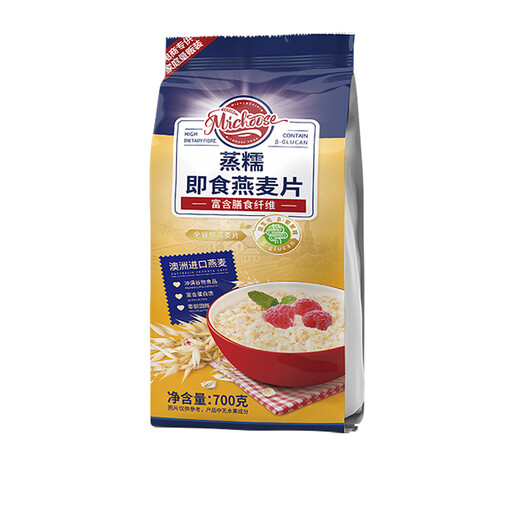
Steamed Instant Oatmeal 700g

Steamed Instant Oatmeal 700g

A larger plain oatmeal option with a stated 9.9g dietary fibre per 100g for measured bread recipes.

Described as 100% pure oatmeal with no artificial colours, flavours or additives. Check the label for allergen details and follow the recipe’s oat and liquid guidance.

Joybuy
Scotts Porage Oats Original Porridge Oats 1kg

Scotts Porage Oats Original Porridge Oats 1kg

A 1kg plain-oat pack for repeated bread baking, with 9.0g dietary fibre per 100g.

Ingredient list states 100% oatmeal. The supplied description does not identify it as an instant format, and it may contain wheat and barley.

Joybuy
Morrisons Free From Gluten Free Oats 1kg

Morrisons Free From Gluten Free Oats 1kg

A plain gluten-free and wheat-free oat option for bread planning where those product characteristics are required.

Listed as 100% gluten-free oat flakes with 8.6g fibre per 100g. Oat remains an allergen, and the supplied information does not confirm an instant-oat format.

Joybuy

Frequently asked questions

Can instant oats be used in bread baking?

They can be used where a recipe calls for oats, provided you follow its stated oat quantity and liquid balance. Quaker UK and Co-op oat-bread recipes combine oats with other ingredients such as wheat flour, yoghurt or milk, so oats are not a universal one-for-one replacement for flour.

What should “high fibre” mean when comparing instant oats for baking?

Compare the dry nutrition panel per 100g rather than prepared bowls made with different amounts of milk or water. Sainsbury’s lists 9.6g fibre per 100g for Porridge Original, Marks & Spencer lists 9.4g for Traditional Porridge, and Quaker UK lists 9.0g for Oat So Simple Original.

Are ordinary instant oats suitable for a gluten-free loaf?

Do not assume so. The Food Standards Agency states that food labelled gluten-free must contain no more than 20mg/kg gluten, while oat remains an allergen; choose a specifically labelled product where required and check every flour, raising agent, seed and add-in in the recipe.

Why avoid flavoured instant oats for an everyday bread recipe?

Flavoured or enriched porridge can introduce ingredients the recipe did not account for, including sugar, salt, milk powder, flavourings or added protein. Tesco describes its High Protein Golden Syrup product as containing wheat protein and golden-syrup flavour, so use products like this only where those additions suit the recipe.