Full English breakfast eaters adding more fibre
For shoppers who want oats to add a fibre-focused element to a breakfast that may otherwise centre on eggs, meat and refined toast. NHS guidance recommends 30g of dietary fibre a day for adults.


Choose plain or lightly flavoured instant oats with a high-fibre claim or at least 6g fibre per 100g on the nutrition panel. M&S Traditional Porridge and Quaker Oat So Simple Original each declare around 9g fibre per 100g, but preparation time, allergen information and whether figures refer to dry oats or a prepared bowl can change which pack suits your breakfast.
For shoppers who want oats to add a fibre-focused element to a breakfast that may otherwise centre on eggs, meat and refined toast. NHS guidance recommends 30g of dietary fibre a day for adults.
For people who need a portioned oat breakfast before work and want to compare fibre as well as flavour or protein wording. Quaker Original states a two-minute microwave method, while M&S Traditional Porridge states three minutes.
For people who cannot assume ordinary oats are suitable. The standard M&S and Quaker instant products have coeliac or cross-contact cautions, while the Freee product has gluten-free certification but is not an instant sachet.
Start with the dry-product fibre figure, then check preparation, flavouring and allergen information against the breakfast you plan to make.
| Priority | What to check | Your needs |
|---|---|---|
| Fibre contribution | Compare fibre per 100g on dry-product panels. For a UK high-fibre claim, Regulation (EC) No 1924/2006 sets a condition of at least 6g fibre per 100g or 3g per 100 kcal. Check serving information separately. | I want oats to contribute fibre alongside the other parts of a full English breakfast, rather than assuming every oat product has the same fibre content. |
| Morning preparation | Check the stated microwave time, whether a bowl is needed and whether water or milk is specified. Portion sachets can remove the need to measure dry oats. | I need breakfast that fits the time and equipment available before work, without losing track of what the nutrition figures describe. |
| Plain or flavoured format | Read the fibre and sugars rows rather than relying on protein wording or flavour. Tesco High Protein Instant Oats Golden Syrup declares 0.9g fibre per 100g and 13.1g sugars per 55g pot. | I want convenience or flavour only if it still matches my fibre goal; a protein-positioned pot is not automatically a high-fibre choice. |
| Allergen suitability | Read the exact allergen statement and any certification on the current pack. Standard oat sachets may have wheat, barley, soya or coeliac-suitability cautions. | Where gluten-free or allergen avoidance matters, I need an explicitly suitable product rather than relying on oats as the main ingredient. |
Tesco High Protein Instant Oats Golden Syrup declares 0.9g fibre per 100g, despite its protein positioning. That is below the 6g-per-100g condition for a high-fibre claim.
Read the fibre row on the nutrition panel and compare it with the high-fibre claim condition instead of using protein wording as a shortcut.
Quaker’s panel includes dry-product values and values for a sachet prepared with 180ml semi-skimmed milk. Energy, sugars, fat and protein change with the milk choice.
Compare dry oats per 100g first, then assess the finished bowl using the milk or water you would actually use.
M&S Traditional Porridge is listed as unsuitable for coeliacs, and Quaker Original may contain wheat, barley and soya. An oat-based product is not a substitute for an exact allergen and certification check.
If coeliac-safe or allergen-safe food is required, choose a product with the necessary explicit certification and check the current pack label before eating.
NHS guidance recommends obtaining fibre from a variety of foods. A high-fibre porridge can be one part of the meal, but it does not describe the fibre content of the rest of the breakfast.
Use oats alongside fibre-containing choices that suit the meal, such as beans, vegetables, fruit or wholegrain bread.
A mainstream UK sachet option for shoppers who want plain porridge with a stated two-minute microwave format.
A retailer own-label option for portioned porridge sachets with an explicit high-fibre statement.
A supermarket route with single-pot oats, including flavoured and protein-positioned products.
An oat specialist offering quick oats and organic oat sachets for shoppers who prefer a simple wholegrain ingredient list.
A supermarket route for certified gluten-free, high-fibre porridge oats when an instant sachet is not essential.
Joybuy options for a fibre-focused oat breakfast alongside a full English, including plain quick-cook oats, flavoured sachets and a gluten-free oat alternative.
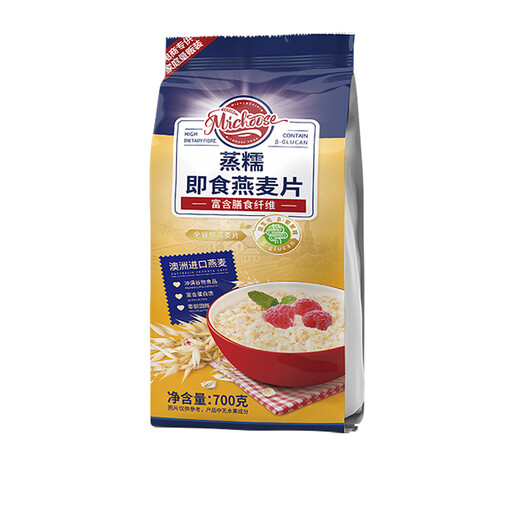 No image available
A plain oat option for a rushed breakfast, with one-minute preparation using hot water.
The listing states 100% pure oatmeal and 9.9g dietary fibre per 100g. This 700g bag is not stated to be portioned, so you will need to measure servings; check the current pack for allergen and gluten-free suitability.
 No image available
Portioned plain sachets for a fibre-focused breakfast when microwave preparation is available.
Six larger 38.5g sachets are stated, with wholegrain oats, 9.0g fibre per 100g and a 2½-minute microwave method. The listing does not provide gluten-free certification; check suitability where coeliac-safe food is required.
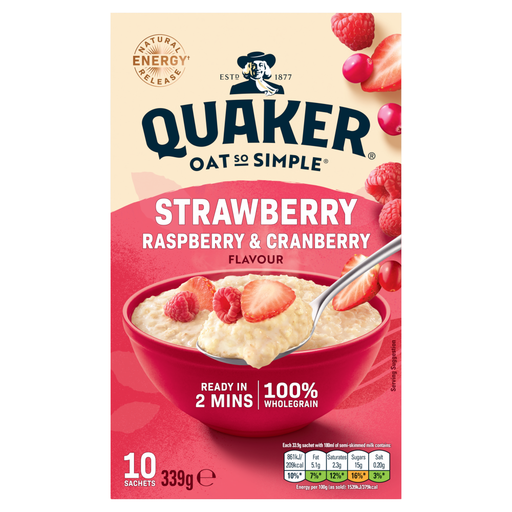 No image available
A flavoured, portioned option for mornings when a two-minute microwave breakfast with milk suits the meal.
The dry nutrition panel states 7.2g fibre and 19g sugars per 100g; the pack contains 10 sachets and 79% wholegrain oats. It contains cereals containing gluten and oats, and may contain barley, soya and wheat.
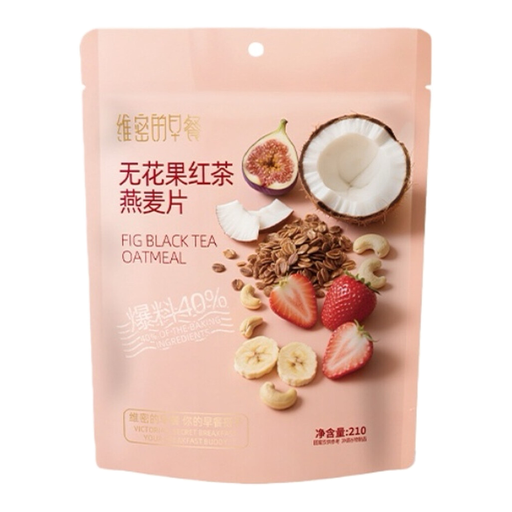 No image available
An oat-based breakfast or snack choice for shoppers who want fruit, nuts and texture rather than a plain porridge base.
The listing states 12.2g dietary fibre per 100g and preparation with hot water or milk, with an overnight-oat option using yoghurt. It contains fruit, nuts and black tea powder; check the current pack for ingredients, allergens and serving information.
 No image available
A plain oat alternative for shoppers seeking a stated gluten-free route alongside a fibre-focused breakfast.
The listing states 100% gluten-free oat flakes, 25 portions and 8.6g fibre per 100g. It is not described as an instant or microwave-sachet product, so check preparation time and current pack certification if this is essential.
For a food to make a high-fibre claim, it must contain at least 6g of fibre per 100g or at least 3g per 100 kcal, under Regulation (EC) No 1924/2006. This gives you a defined pack-label check rather than assuming all oat products are equally high in fibre.
No. NHS guidance recommends getting fibre from a variety of foods, so oats are one part of the breakfast rather than a description of the whole meal. Consider other fibre-containing items that suit the meal, such as beans, vegetables, fruit or wholegrain toast.
Quaker Oat So Simple Original declares 9.0g fibre per 100g, above the 6g-per-100g condition used for a UK high-fibre claim. It is a plain instant-oat option, but check the allergen statement because the standard product may contain wheat, barley and soya.
Do not assume so. M&S Traditional Porridge is listed as unsuitable for coeliacs, and Quaker Original may contain wheat, barley and soya. Choose an explicitly certified gluten-free product when that requirement applies; the Sainsbury’s Freee oat listing carries Crossed Grain Symbol certification, although it is not an instant sachet.
Start with fibre per 100g because it standardises products with different sachet and pot sizes. Then check fibre per serving to understand what your prepared breakfast provides. M&S Traditional Porridge declares 9.4g per 100g, while Quaker Original declares 9.0g per 100g and 2.4g per 27g dry sachet.