Busy weekday breakfast shoppers
For a quick breakfast planned into a weekly shop, choose by where you will prepare it. Microwaveable sachets and add-hot-water pots need different equipment, regardless of the fibre claim.


Choose microwave sachets for repeat breakfasts where you have a bowl, liquid and microwave; choose an add-hot-water pot when portability matters more. Compare fibre figures on the same dry per-100g basis where available, then check preparation, ingredients, allergen information and local availability for the exact pack.
For a quick breakfast planned into a weekly shop, choose by where you will prepare it. Microwaveable sachets and add-hot-water pots need different equipment, regardless of the fibre claim.
If fibre is an important comparison point, use labels that state fibre per 100g and compare like with like. The NHS says adults should aim for 30g of fibre a day as part of a healthy balanced diet.
Check the exact pack rather than assuming all oats or high-fibre porridge suit your needs. Products can contain milk or carry cereal and soya warnings, while oats remain an allergen in their own right.
Choose these when: You want pre-portioned breakfasts at home or in a workplace kitchen with a microwave.
Consider: You will need a bowl and liquid, and fibre figures should be compared dry per 100g rather than after preparation.
Choose these when: Boiling water is available but using a microwaveable bowl is not practical.
Consider: Check the ingredients carefully, as an instant pot can contain milk and may not suit every dietary requirement.
| Priority | What to check | Your needs |
|---|---|---|
| Fibre information | Compare dry fibre figures per 100g where they are stated. Keep products without a displayed per-100g value separate from numerical comparisons. | I want to compare fibre information clearly rather than relying only on a front-of-pack claim. |
| Preparation routine | Check whether the product needs a microwave, bowl and liquid, or only hot water. Confirm the number of sachets in a multipack. | Breakfast needs to fit the equipment available at home, work or while travelling. |
| Ingredients and allergens | Read the current ingredients and allergen panel. Look for an explicit gluten-free designation where required and check for milk, cereal, soya or cross-contact warnings. | I need a pack that matches my dietary requirements, not an assumption based on oats alone. |
| Format and availability | Decide between a repeat-use multipack, loose oats or a single pot, then confirm the retailer and regional availability of the exact item. | I want a format that covers the breakfasts I am planning for the week. |
Fibre is one part of the overall diet, not a guarantee of a particular energy or fullness outcome. The NHS frames its fibre guidance within a healthy balanced diet.
Compare fibre alongside ingredients, sugars, portion size and the rest of your breakfast.
Milk or other preparation ingredients can change the nutrition shown per serving. Dry per-100g figures provide the clearest common basis when manufacturers disclose them.
Use each product’s dry nutrition panel for a direct fibre comparison, and do not create a numerical ranking where that figure is not shown.
Oats are an allergen even in gluten-free foods, and instant products can contain milk or have cereal cross-contact warnings. The Food Standards Agency notes that oats must still be emphasised as an allergen.
If you require gluten-free or dairy-free food, choose only a product whose current label explicitly meets that need and review the full allergen panel.
Flahavan’s states that its High Fibre Pot is available only in Tesco Northern Ireland, so it may not suit a Great Britain weekly shop.
Check regional retailer availability after choosing the format and nutrition profile you want.
Quaker’s Oat So Simple range includes microwaveable sachets and pots for quick breakfast preparation.
Flahavan’s offers plain quick oats, portioned oat sachets and a High Fibre Pot for shoppers choosing between customisable oats and a ready-to-use format.
M&S has instant formats in both microwave sachets and an add-hot-water pot, providing a format choice for a weekly shop.
Sainsbury’s is a weekly-shop retailer route with own-label porridge sachets and pots alongside Quaker and other oat products.
Tesco is another relevant weekly-shop route with a broad porridge-and-oats category including Quaker, Flahavan’s and own-label options.
These Joybuy product options cover loose instant oatmeal and microwaveable sachets for repeated breakfasts, with disclosed fibre figures where stated in the product records.
 No image available
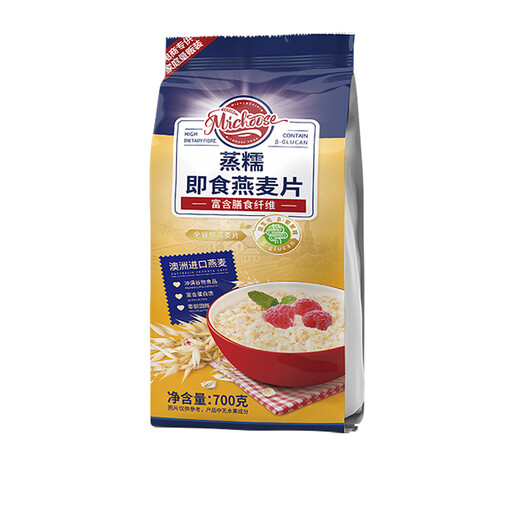
A loose-oat option for repeated breakfasts where hot water is available.
Stated as 100% oatmeal, with 9.9g fibre per 100g and one-minute hot-water preparation. Measure portions yourself; check the current label if gluten-free or coeliac suitability is required.
 No image available
Suitable for a microwave breakfast routine with individually portioned original oat sachets.
Six 38.5g wholegrain rolled-oat sachets; the product record states 9.0g fibre per 100g. Preparation requires a bowl, liquid and microwave, and the supplied record does not confirm gluten-free or coeliac suitability.
 No image available
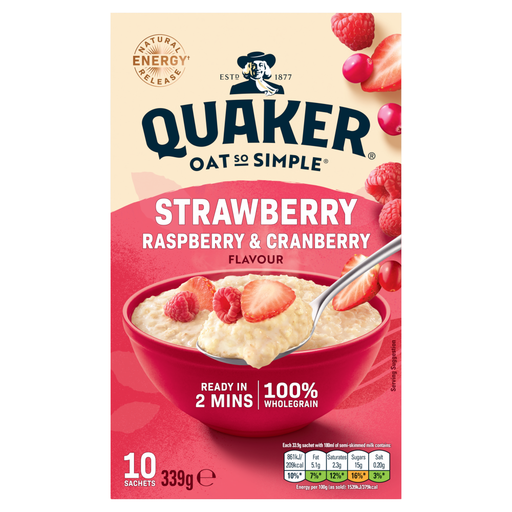
A flavoured option for weekday microwave breakfasts with ten individual portions.
Ten 33.9g sachets with a stated two-minute microwave method and 7.2g fibre per 100g. It contains oats and cereals containing gluten and may contain barley, soya and wheat.
 No image available
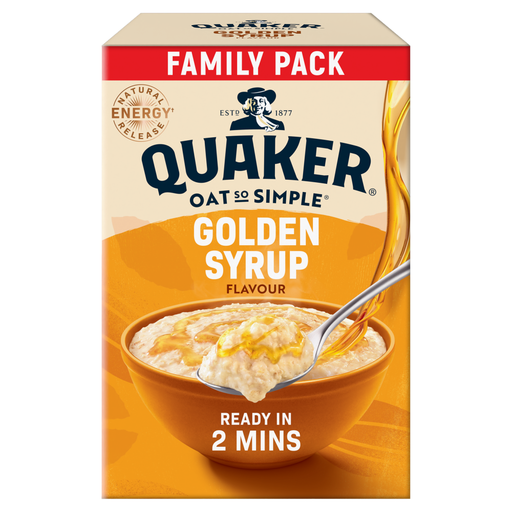
A larger sachet pack for households planning repeat microwave breakfasts during the week.
Contains 20 x 36g sachets, with a stated two-minute microwave method and 7.3g fibre per 100g dry product. It contains oats and may contain barley, wheat and soya; the golden-syrup flavour includes sugar.
Compare dry nutrition figures per 100g where possible, then choose the format that suits your routine. M&S lists 9.4g fibre per 100g for Traditional Porridge sachets, Quaker UK lists 9.0g per 100g for Oat So Simple Original, and M&S lists 8.2g per 100g for its Traditional Porridge Pot. The NHS says adults should aim for 30g of fibre daily as part of a healthy balanced diet.
No. Choose a product explicitly labelled gluten-free if that is required, and still check the allergen information. The Food Standards Agency states that gluten-free food must contain no more than 20mg/kg gluten and that oats must still be emphasised as an allergen. The verified M&S instant sachets and pot are marked unsuitable for coeliacs.
No. Check the ingredients on the exact pot before buying. M&S lists dried whole milk in its Traditional Porridge Pot, while Quaker Oat So Simple Original sachets may contain wheat, barley and soya.
Microwave sachets generally need a microwaveable bowl and liquid. Quaker UK instructs shoppers to add 180ml milk to Oat So Simple Original sachets and microwave for two minutes, while the M&S Traditional Porridge Pot is prepared with hot water and is ready in minutes. Check the pack because methods vary by product.
Yes. Use online details to shortlist formats, but read the pack before purchase. M&S states that ingredients, nutrition and allergen information can change, so the current label is the relevant information for the product in your basket.