Who this is for

Brunch hosts serving a shared muesli bar

Suitable for hosts who want to serve muesli with yoghurt, milk or fruit added separately. Product labels from Alpen, Dorset Cereals, Jordans and Rude Health show meaningful differences in cereals containing gluten, nuts and milk ingredients.

Adults prioritising fibre without added sugar

Useful for shoppers comparing a high-fibre claim with the nutrition table rather than relying on recipe wording alone. NHS guidance says adults should aim for 30 g of fibre a day, with muesli forming one part of a varied diet.

Organic or plant-based brunch planners

For shoppers considering Dorset Cereals Wonderfully Organic or Rude Health The Ultimate Muesli for their organic or plant-based positioning. These preferences still require a check of nuts, cereals containing gluten and any precautionary allergen statement.

What to check before buying

Start with the fibre declaration, then compare sugars and the ingredient list for the exact pack you plan to put on the table.

Priority What to check Your needs
Fibre declaration Look for a verified high-fibre claim or at least 6 g fibre per 100 g. Compare both per-100-g and stated serving figures where available. UK nutrition-claim rules set the 6 g per 100 g threshold for a high-fibre claim. I want to know what a realistic bowl contributes, not just see a wholegrain description. A 45 g portion is listed as 4.1 g for Jordans Natural Muesli, 3.6 g for Alpen No Added Sugar and 3.4 g for Dorset Wonderfully Organic.
Sugars and dried fruit Read sugars per 100 g and per serving alongside the ingredients. Treat no-added-sugar wording as a recipe statement, not as a statement that the product contains no sugars. Fruit sweetness may suit the brunch table, but I want to compare it clearly. Alpen No Added Sugar and Dorset Wonderfully Organic each list 18 g sugars per 100 g.
Allergens for a shared bowl Check the current ingredient list and precautionary statements for cereals containing gluten, milk, nuts, soya and other relevant allergens. Review toppings, milk and yoghurt separately. I need a serving plan that does not assume one mixed bowl suits everyone. Keeping toppings and utensils separate can help only after checking the affected guest's own allergy-management needs.

Common buying mistakes

  • Mistaking no added sugar for low total sugar

    Dried fruit can contribute substantial listed sugars even when no sugar was added during manufacture. Alpen No Added Sugar and Dorset Wonderfully Organic each list 18 g sugars per 100 g.

    Compare sugars per 100 g and per serving on the exact pack, then decide whether that level of fruit sweetness works for the brunch group.

  • Making a nut-and-cereal mix the automatic shared bowl

    The compared recipes contain or may contain allergens including cereals containing gluten, milk and several types of nut. A communal bowl can be unsuitable for a guest with a relevant allergy.

    Read the current product label and provide clearly separated alternatives where needed. Do not assume that another product in the same brand range has the same allergen profile.

  • Assuming wholegrain or organic means verified high fibre

    Wholegrain, organic and plant-based descriptions do not replace a product-specific high-fibre claim or nutrition panel.

    Check for a verified high-fibre claim or at least 6 g fibre per 100 g. If the current pack does not show a numerical fibre value, confirm it before buying for this purpose.

  • Increasing fibre abruptly for guests unaccustomed to it

    NHS inform notes that a sudden increase in fibre can cause bloating and stomach cramps.

    Offer familiar portions and drinks alongside the brunch. Anyone following an individual medical diet should follow their clinician's advice.

Relevant brand references

Jordans

Natural Muesli is a wholegrain oat, wheat and barley recipe with dried fruit and nuts for shoppers comparing disclosed fibre values.

  • Jordans lists 9.2 g fibre per 100 g and 4.1 g per stated portion for Natural Muesli.
  • Natural Muesli contains nuts and cereals containing gluten; the manufacturer advises people with a nut allergy not to eat it.

Alpen

Alpen No Added Sugar is a conventional fruit-and-nut muesli for shoppers seeking a high-fibre recipe without added sugar.

  • The product lists 8.0 g fibre per 100 g and 3.6 g per stated 45 g serving.
  • It lists 18 g sugars per 100 g and contains milk, hazelnuts and almonds.

Dorset Cereals

Wonderfully Organic is a certified organic fruit, seed and Brazil-nut muesli with a stated high-fibre claim.

  • Dorset Cereals lists 7.6 g fibre per 100 g and 3.4 g per stated 45 g portion.
  • The recipe contains oats, barley, wheat and Brazil nuts, and it may contain other cereals containing gluten and other nuts.

Rude Health

The Ultimate Muesli is positioned by Rude Health as an organic, plant-based, wholegrain muesli with grains, fruit, nuts and seeds.

  • The manufacturer labels The Ultimate Muesli high fibre.
  • It contains oats, barley, rye, almonds and hazelnuts, and may contain traces of milk, soya and other nuts.

Lizi's

Lizi's Super Muesli is a range positioned by the brand for shoppers seeking low-sugar, high-fibre muesli with added vitamins and minerals.

  • The range includes several blends for different recipe preferences.
  • Check the exact Glow, Focus, Boost or Cleanse variant for current fibre, sugars, ingredients and allergens.

Tesco

Tesco's UK muesli aisle includes own-label options such as Swiss Style No Added Sugar Muesli and fruit, nut and seed recipes.

  • Own-label muesli offers an additional route for shoppers comparing recipes in the UK cereal aisle.
  • Check the current pack or product nutrition table before treating a particular Tesco muesli as high fibre.

Joybuy product options

These Joybuy options cover a no-added-sugar muesli and a fruit-and-nut oat cereal for a shared brunch, with fibre declarations and ingredient considerations shown in the supplied product information.
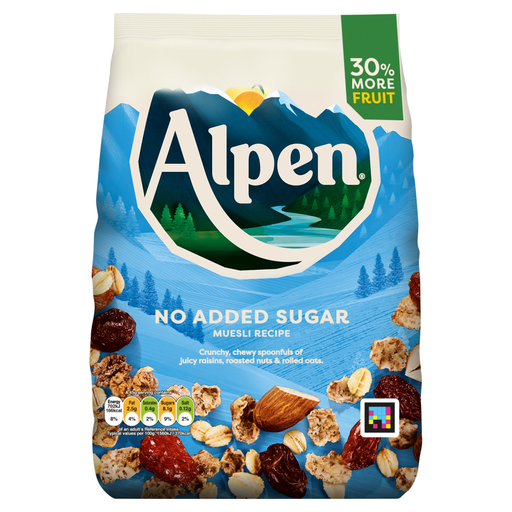
Alpen No Added Sugar Muesli 950 g

Alpen No Added Sugar Muesli 950 g

A conventional fruit-and-nut muesli option for a shared brunch where a no-added-sugar recipe is a priority.

The nutrition panel states 8.0 g fibre per 100 g and 3.6 g per 45 g serving.

It lists 18 g sugars per 100 g and contains milk, wheat, oats, almonds and hazelnuts; check the current pack before serving guests.

Joybuy
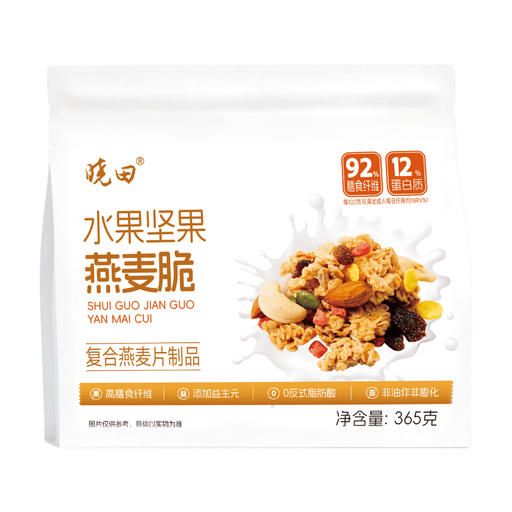
Xiao Tian Fruit and Nut Oat Crunch multi-grain oat cereal 365 g

Xiao Tian Fruit & Nut Oat Crunch 365 g

A ready-to-eat fruit, seed and nut oat cereal for brunches where a crunchier cereal style is acceptable instead of traditional muesli.

The supplied nutrition information lists 22.9 g dietary fibre per 100 g and at least 47% oat flakes.

It contains cereals containing gluten, almonds and cashews. Check the current pack for sugars per 100 g and for suitability with your guests' allergen needs.

Joybuy

Frequently asked questions

What does “high fibre” mean on a UK muesli label?

For the applicable nutrition claim, a food described as high in fibre must contain at least 6 g fibre per 100 g or at least 3 g per 100 kcal. Use this threshold alongside the nutrition table, rather than as proof that every recipe will suit every guest.

How much fibre can a high-fibre muesli bowl add?

The compared 45 g portions provide 4.1 g for Jordans Natural Muesli, 3.6 g for Alpen No Added Sugar and 3.4 g for Dorset Wonderfully Organic. NHS guidance recommends 30 g of fibre a day for adults, so muesli is one contribution within a varied diet.

Does no added sugar mean a muesli has little or no sugar?

No. Alpen No Added Sugar and Dorset Wonderfully Organic both state no added sugar but list 18 g sugars per 100 g. Dried fruit can contribute naturally occurring sugars, so compare the sugars line on the nutrition panel when this matters to your group.

How should I serve muesli when friends have allergies?

Check the current pack for every muesli and topping before serving. The compared recipes include cereals containing gluten and nuts; Alpen also contains milk ingredients, while Rude Health lists possible traces of milk, soya and other nuts.

Should someone suddenly switch to a very high-fibre brunch?

NHS inform advises introducing extra fibre gradually and drinking plenty of fluid, because a sudden increase can cause bloating and stomach cramps. People following an individual medical diet should follow their clinician's advice.