Holiday-cottage hosts stocking a shared breakfast cupboard
Choose a shelf-stable muesli with a meaningful fibre figure per serving, clear allergen information, manageable portions and a way to reseal it after opening.


For a shared cottage breakfast cupboard, choose a muesli with a clear fibre figure per 100g, then check the exact pack’s allergens, ingredients, pack size and storage instructions. Jordans Natural Muesli has the highest published fibre figure among the compared products at 9.2g per 100g, while Alpen Original and Tesco Fruit & Nut also meet the UK threshold for a high-fibre claim; none should be assumed suitable for every guest.
Choose a shelf-stable muesli with a meaningful fibre figure per serving, clear allergen information, manageable portions and a way to reseal it after opening.
Compare fibre per 100g and per serving, then build breakfast around the muesli rather than treating a high-fibre label as a promise of sustained energy.
Check the exact pack for cereals containing gluten, milk, nuts, sulphites and precautionary statements before serving. Standard fruit-and-nut mueslis are not suitable for all guests.
Start with the fibre figure on a like-for-like per-100g basis, then screen the exact pack for allergens and choose a size that suits the number of guests.
| Priority | What to check | Your needs |
|---|---|---|
| Comparable fibre | Compare fibre in grams per 100g first. Then check the stated serving size and the fibre amount per serving. In UK rules, a high-fibre claim requires at least 6g fibre per 100g or 3g per 100 kcal. | I want to compare bowls on the same basis, rather than relying only on front-of-pack wording. Muesli can contribute to daily fibre intake, but it is only one part of what I eat. |
| Allergen suitability | Read the full ingredient list, allergen statement and any precautionary wording. Check for cereals containing gluten, milk, tree nuts, peanuts and sulphites where relevant. | I need a breakfast option that does not create unsafe assumptions for guests with allergies, coeliac disease or dietary restrictions. |
| Pack and storage | Match the pack weight to the group and length of stay. Follow the pack’s storage instructions; some products specify cool, dry storage and an airtight container after opening. | I want enough cereal for a shared breakfast cupboard without leaving an opened pack poorly stored for the next guests. |
A high-fibre claim has a defined nutrient threshold, but it does not establish the same appetite, energy or dietary outcome for every guest.
Compare fibre per 100g and a realistic bowl size, then provide other suitable breakfast choices rather than relying on one cereal.
The compared mueslis commonly contain gluten-containing cereals, nuts and sometimes milk or sulphites. A vegan recipe can still carry a milk cross-contact warning.
Keep the original pack or a clear image of its ingredients and allergen panel available, and provide a separately suitable option where a guest has an allergy, coeliac disease or another required diet.
Published fibre values differ between products that are labelled, or qualify, as high fibre: Jordans Natural lists 9.2g per 100g, Alpen Original 7.7g and Tesco Fruit & Nut 7.3g. Serving sizes can also change the apparent bowl-level figure.
Use fibre per 100g as the first comparison, then check the serving size, ingredients and sugars figure on the exact current pack.
NHS guidance notes that a sudden increase in fibre can cause wind, bloating and stomach cramps.
Offer modest portions for guests unaccustomed to higher-fibre foods, and make water and other suitable drinks readily available.
Relevant for a conventional fruit-and-nut muesli with a comparatively high published fibre figure.
Relevant for a familiar wholegrain muesli explicitly labelled high in fibre.
Relevant for a larger own-brand pack with stated vegan suitability.
Relevant when organic ingredients, whole grains and plant-based positioning are the main selection criteria.
Relevant for a varied muesli range built around toasted wholegrain flakes, fruit, nuts and seeds.
Relevant where an exact currently available muesli product fits the breakfast cupboard.
These Joybuy options cover larger fruit-and-nut muesli packs and a closely related oat cereal for holiday-cottage breakfast provision.
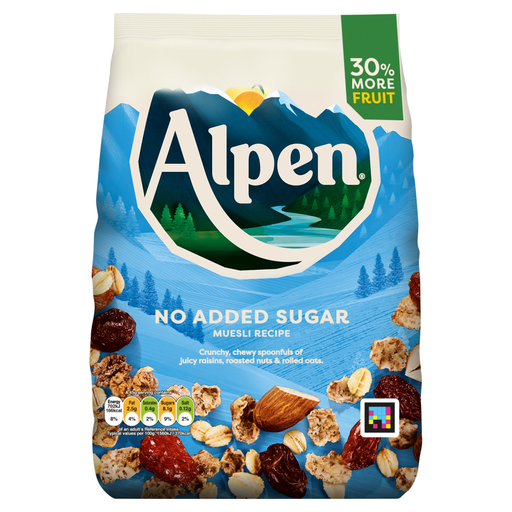 No image available
For a shared cottage cupboard where guests can eat gluten-containing cereals, milk and nuts.
950g pack; 8.0g fibre per 100g. Store in a cool, dry, odour-free place.
Contains wheat, oats, milk, almonds and hazelnuts, and may contain other nuts. Check the current pack if fibre per serving matters for portion planning.
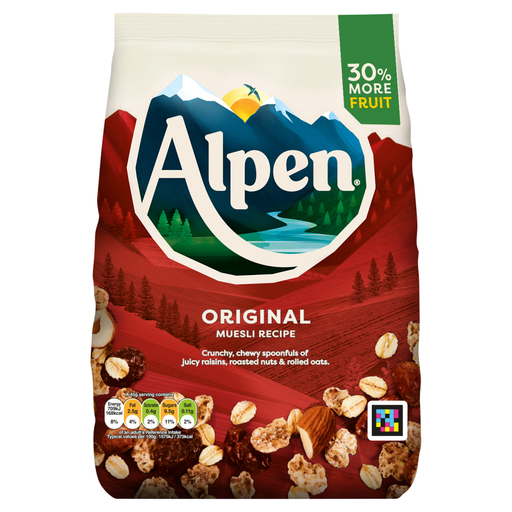 No image available
For group breakfasts where dairy, gluten-containing cereals and nuts are acceptable.
950g pack with wholegrain wheat, oats, raisins, milk ingredients, almonds and hazelnuts. Alpen Original lists 7.7g fibre per 100g.
Contains wheat, oats, milk, almonds and hazelnuts, and may contain nuts. Check the exact pack before comparing portion sizes.
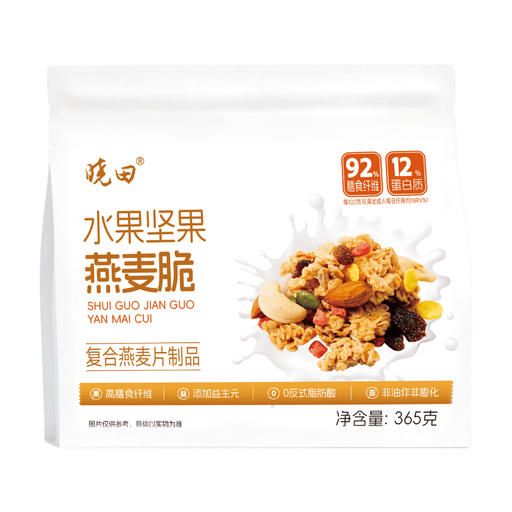 No image available
A smaller ready-to-eat oat cereal option for shorter stays or smaller groups.
365g pack with at least 47% oat flakes, fruit, seeds and nuts; it states 22.9g dietary fibre per 100g.
This is described as an oat cereal rather than muesli. It contains oats or cereals containing gluten, almonds and cashews; check pack instructions before decanting after opening.
Under the retained UK rule on legislation.gov.uk, a food may claim to be high in fibre only when it contains at least 6g fibre per 100g or at least 3g per 100 kcal. Use that as a claim check, then compare the actual grams per 100g and per serving on the packs you are considering.
No muesli claim establishes sustained energy for every guest. NHS guidance places fibre within a varied, balanced diet, so serve muesli alongside suitable foods and drinks that guests can safely eat.
Not without checking the exact pack and asking about dietary requirements in advance. The Food Standards Agency lists cereals containing gluten, milk, nuts and sulphur dioxide or sulphites among the regulated allergens, and the compared mueslis contain or may contain several of them.
Follow the specific pack instructions. Tesco Fruit & Nut Muesli advises cool, dry storage and an airtight container once opened; if you decant it, keep the original ingredient and allergen label available.
If a guest usually eats little fibre, NHS guidance advises increasing it gradually and drinking plenty of fluids, as a sudden increase may cause wind, bloating or cramps. Anyone managing a medical condition or prescribed diet should follow their clinician’s or dietitian’s advice.