Brunch buyers prioritising fibre
For people comparing muesli bowls on a consistent per-100g basis. NHS guidance says adults should aim for 30g of dietary fibre a day as part of a healthy balanced diet.


Compare fibre per 100g before choosing a muesli, then check the stated serving size, sugars and allergens for the bowl you plan to serve. If avoiding added sugar is important, Jordans Natural Muesli and Alpen No Added Sugar are clearly labelled routes; fruit-and-nut, organic and Bircher-style blends bring different textures and ingredients but still need a current-pack check.
For people comparing muesli bowls on a consistent per-100g basis. NHS guidance says adults should aim for 30g of dietary fibre a day as part of a healthy balanced diet.
For people who want a wholegrain cereal with dried fruit but prefer to check whether sugar has been added, while recognising that dried fruit still contributes sugars.
For households checking milk, gluten-containing cereals, nuts and precautionary allergen statements before putting muesli on a shared brunch table.
Start with comparable nutrition figures, then use the ingredient list and allergen declaration to choose a texture and recipe that works for your brunch.
| Priority | What to check | Your needs |
|---|---|---|
| Fibre content | Compare fibre per 100g across packs; check the stated bowl serving as well. Under nutrition-claim rules published on legislation.gov.uk, a high-fibre claim requires at least 6g per 100g or 3g per 100kcal. | I want a clear way to compare a high-fibre claim rather than relying on a wholegrain appearance alone. |
| Sugars and ingredients | Read the ingredient list for added sugar or sweetened fruit, then compare sugars per 100g. Alpen No Added Sugar lists 18g sugars per 100g, while Alpen Original lists 21g per 100g. | A cereal with no added sugar can still contain sugars from ingredients such as raisins, so I want the sweetness to match my preference. |
| Texture and style | Look for nuts, seeds and toasted flakes if crunch matters. For a softer bowl with milk, Rude Health Soft & Fruity Bircher Muesli is formulated to soften straight away and lists oats at 84.5%. | My brunch bowl may be crisp and chewy, nut-forward, or soft and Bircher-style rather than one standard muesli texture. |
| Allergens | Check the current full ingredients and allergen wording on every pack. Relevant products may contain milk, gluten-containing cereals and nuts, alongside precautionary statements such as “may contain”. | When serving several people, I need to know whether the chosen pack is suitable for everyone at the table. |
Wholegrain ingredients are useful context, but declared fibre differs between products. Among the named examples, official product pages list from 7.7g to 9.2g fibre per 100g.
Compare fibre per 100g first, then look at the serving amount you expect to pour. Assess yoghurt, fruit and other toppings separately if they are part of the bowl.
Muesli often contains dried fruit. Alpen No Added Sugar has no sugar listed as an ingredient but lists 18g sugars per 100g, while some fruit-and-nut blends include sweetened dried fruit.
Read both the ingredients and the sugars line, then choose the balance of dried fruit and sweetness you prefer.
Several named mueslis contain gluten-containing cereals and nuts, and Alpen products listed here also contain milk ingredients. Precautionary allergen wording can also affect the choice.
Check the current physical pack or retailer-provided manufacturer label, including “may contain” statements, before serving a new muesli to guests.
Mainstream wholegrain muesli with Original and No Added Sugar variants.
Wholegrain-led muesli including Natural, Fruit and Nut, and Berry Burst options.
Ingredient-led muesli choices including The Ultimate Muesli and Soft & Fruity Bircher Muesli.
Muesli built around lightly toasted wholegrain flakes with fruit, nuts and seeds.
A cereal brand with granola and muesli, including a Super Muesli range.
These Joybuy options are muesli choices for a Sunday brunch bowl, covering a no-added-sugar wholegrain recipe and a classic fruit-and-nut style.
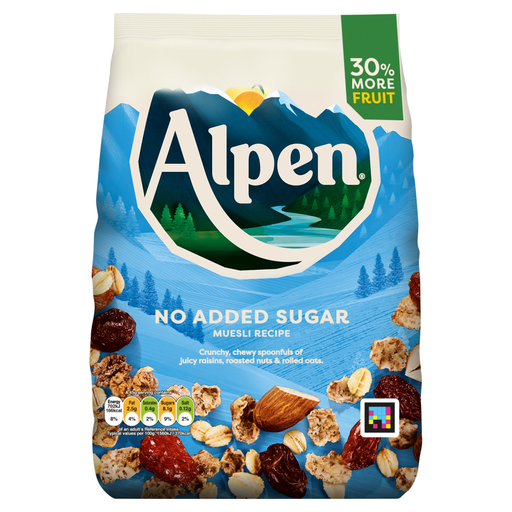 No image available
A conventional wholegrain muesli for a Sunday brunch bowl when avoiding added sugar is a priority.
It lists 8.0g fibre and 18g sugars per 100g, with a stated serving size of 45g. Wholegrain wheat, wholegrain oats and raisins are listed ingredients.
Contains wheat, oats, milk, almonds and hazelnuts, and may contain other tree nuts.
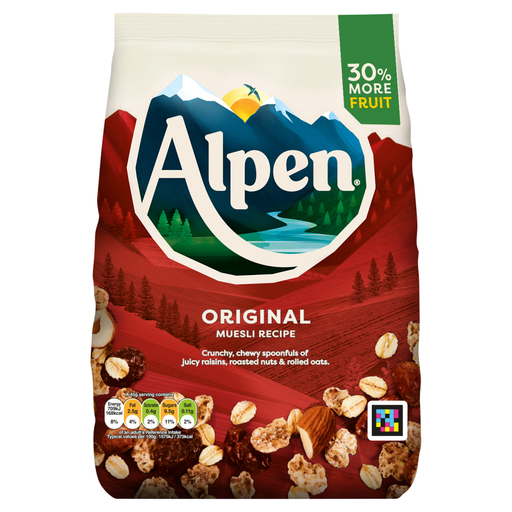 No image available
A classic wholegrain wheat-and-oat muesli with raisins and roasted nuts for a fruit-and-nut brunch bowl.
Manufacturer information for Alpen Original lists 7.7g fibre and 21g sugars per 100g; sugar is included in the ingredient list.
Contains wheat, oats, milk, almonds and hazelnuts and may contain other nuts. Check the current pack where allergens or fibre values are relevant.
Under nutrition-claim rules published on legislation.gov.uk, a food can make a high-fibre claim only when it contains at least 6g fibre per 100g or at least 3g per 100kcal. Use the per-100g figure for a consistent product comparison, then check the stated serving size.
NHS guidance says government guidelines recommend 30g of dietary fibre a day for adults as part of a healthy balanced diet. Check the fibre figure for the serving you expect to eat to see how it fits into your meals.
No. Alpen No Added Sugar contains raisins and lists 18g sugars per 100g, although sugar is not listed as an added ingredient. Compare both the ingredient list and the sugars line on the nutrition panel.
Do not assume that it is suitable. Jordans Natural Muesli contains almonds and hazelnuts, and the manufacturer advises people with any nut allergy not to eat it; Dorset Cereals gives similar advice for its cereals. Check the current pack before every purchase because ingredients and warnings can change.
No. Alpen Original and Alpen No Added Sugar contain skimmed milk powder and milk whey powder. Rude Health describes The Ultimate Muesli as plant based, but its product page also notes possible traces of milk, soya and other nuts, so check the current label against the dietary standard you need.