Choose muesli by comparing the declared serving size, total carbohydrate, sugars and fibre together, rather than relying on “diabetic friendly” or “no added sugar” wording. Jordans Natural Muesli has declared 4.1g fibre and 4.7g sugars per 45g serving, while Alpen No Added Sugar declares 3.6g fibre and 8.1g sugars per 45g; a weighed portion should fit your individual carbohydrate plan, particularly if you carb count or use mealtime insulin.
Who this muesli guide is for
People who carb count or use mealtime insulin
Use the carbohydrate figure for the portion you actually weigh, rather than only a front-of-pack claim. Diabetes UK says carb counting is particularly important for people with type 1 diabetes when matching meal carbohydrate with insulin.
Shoppers with type 2 diabetes seeking a higher-fibre cereal
Compare wholegrain ingredients, fibre, sugars and portion size together. Diabetes UK identifies wholegrain cereals and fibre as relevant considerations, while noting that there is no one-size-fits-all diabetes diet.
Buyers avoiding added sugar but not necessarily dried fruit
A no-added-sugar recipe can still contain sugars from dried fruit. Check the “of which sugars” line, carbohydrate and ingredients list before choosing.
What to check on a muesli label
Start with the stated serving size, then compare carbohydrate, sugars and fibre on the same basis. Check the exact pack for ingredients and allergens before making it part of your breakfast routine.
| Priority |
What to check |
Your needs |
| Carbohydrate and portion size |
Check carbohydrate per stated serving; weigh the portion you eat; recalculate if your bowl differs from the label serving. |
I need to know the carbohydrate in my actual bowl, especially when matching food with insulin or following an individual carbohydrate plan. |
| Fibre alongside carbohydrate |
Compare fibre grams on like-for-like servings; look for wholegrain cereals where they are listed; read the nutrition table as well as any fibre claim. |
I want a muesli with fibre and wholegrains, without assuming fibre removes the need to account for carbohydrate. |
| No added sugar and total sugars |
Read “of which sugars” per serving; check for raisins, dates, sultanas and syrups; compare recipes using the same serving basis. |
I want less added sweetness, but I also need to see how dried fruit affects the total sugars and carbohydrate in the portion. |
| Allergens and dietary compatibility |
Read the current allergen declaration; check for milk and gluten-containing cereals; review nut ingredients and may-contain notices. |
I need a recipe that fits my dietary exclusions, not simply one that appears wholegrain or plant-based. |
Common muesli buying mistakes
-
Choosing solely by a “no added sugar” statement
Dried fruit can still contribute to the declared sugars and carbohydrate in a bowl. Alpen No Added Sugar declares 8.1g sugars per 45g serving, while Dorset Delicious Fruit & Nut declares 8.6g per 45g serving.
Compare carbohydrate, “of which sugars”, fibre and serving size together, then check whether your usual bowl is larger than the stated portion.
-
Assuming high fibre removes the need for carbohydrate planning
Muesli remains a carbohydrate-containing food. Diabetes UK identifies estimating carbohydrate and matching it with insulin as important for people with type 1 diabetes.
Use fibre as one selection factor, calculate carbohydrate for the portion you eat and follow your established diabetes plan.
-
Ignoring allergens because a cereal appears plant-forward or wholegrain
Muesli recipes may contain wheat, oats, barley, milk, almonds, hazelnuts, cashews or may-contain warnings. A recipe that does not meet an allergy or dietary requirement is unsuitable regardless of its sugar or fibre profile.
Read the exact current pack’s ingredients and allergen declaration whenever the recipe or pack format changes.
-
Treating “diabetic friendly” as a product certification
Individual dietary needs vary with diabetes type, medication, goals and other health conditions. Diabetes UK says there is no one-size-fits-all diabetes diet and advises against treating “diabetic” or “suitable for diabetics” wording as a shortcut.
Use neutral label comparisons and seek individual clinical advice where needed, particularly if you use insulin, have recurrent hypos or have been given a carbohydrate target.
Relevant muesli brand references
Jordans
A conventional UK muesli route for shoppers looking for wholegrain cereal flakes and a no-added-sugar option.
- Jordans Natural Muesli declares 4.1g fibre, 30.6g carbohydrate and 4.7g sugars per 45g serving.
- It contains dried fruit, wheat, oats, barley and nuts, so no-added-sugar wording does not mean sugar-free or allergen-free.
Alpen
A wholegrain muesli option with a No Added Sugar variant.
- Alpen No Added Sugar is marketed by its manufacturer as wholegrain and high in fibre, with 3.6g fibre and 5.0g protein per 45g serving.
- The same serving declares 29g carbohydrate and 8.1g sugars and contains raisins, milk and nuts.
Dorset Cereals
A fruit-and-nut-led muesli range for shoppers who value recipe variety and wholegrain flakes.
- Dorset Delicious Fruit & Nut is labelled no added sugar and high fibre.
- Its stated 45g portion contains 30g carbohydrate, 8.6g sugars and 3.2g fibre, so compare the label and portion rather than assuming it has lower total sugars.
Rude Health
An organic, plant-based and wholegrain route with a mix of grains, seeds, fruit and nuts.
- Rude Health labels The Ultimate Muesli as high fibre, organic, plant based and whole grain.
- Check the current pack panel for serving size, carbohydrate, sugars, fibre and allergens before comparing it with products that provide full serving figures.
Lizi's
A specialist cereal brand with muesli and lower-sugar, high-fibre positioning.
- Lizi’s says its range includes high-fibre and lower-sugar products and that its products are GL tested.
- These are manufacturer claims and should not be assumed to apply to every Lizi’s muesli product; compare the nutrition panel of the exact pack.
Tesco
A value-oriented own-label route with a Tesco Swiss Style No Added Sugar Muesli 1kg listing in the UK grocery range.
- The larger 1kg format may suit shoppers who prefer an own-label pack size.
- Check the current pack label for ingredients, fibre, sugars and carbohydrate before comparing it with branded alternatives.
Joybuy muesli options
Joybuy product options for shoppers comparing wholegrain muesli labels, portion-based carbohydrate and sugars, fibre, and allergen information.
 No image available
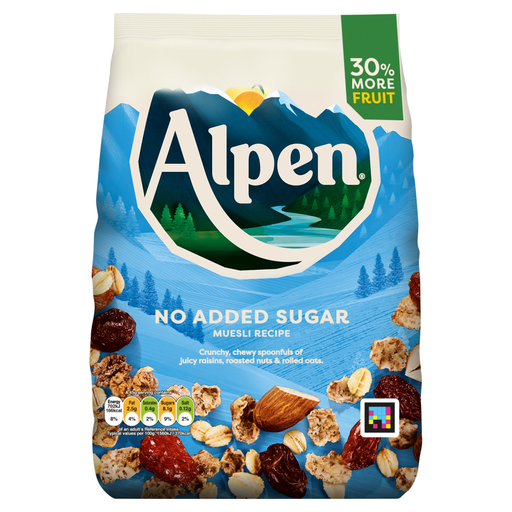
Alpen No Added Sugar Muesli 950g
A wholegrain muesli option with a stated 45g serving reference for portion-based comparison.
Declared per 100g: 65g carbohydrate, 18g sugars and 8.0g fibre. Contains raisins, milk, wheat, oats, almonds and hazelnuts; it may contain other nuts. Check the current pack label before comparing serving figures.
Joybuy
 No image available
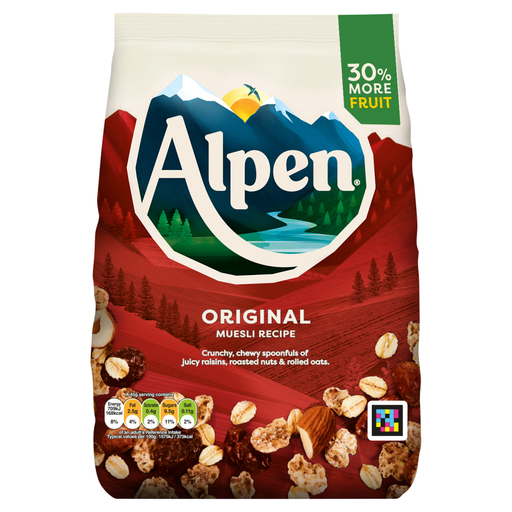
Alpen Original Muesli 950g
A wholegrain wheat-and-oat muesli for shoppers who want to compare added sugar and dried-fruit ingredients directly on the label.
Declared per 100g: 66g carbohydrate and 21g sugars. The recipe contains added sugar, gluten-containing cereals, milk, almonds and hazelnuts, and may contain other nuts; check the current pack for fibre and serving information.
Joybuy
Frequently asked questions
Is muesli automatically suitable for people with diabetes?
No. Diabetes UK says there is no one-size-fits-all diabetes diet and advises against treating foods labelled “diabetic” or “suitable for diabetics” as a reliable shortcut. Compare the exact serving’s carbohydrate, sugars, fibre and ingredients with your individual eating or medication plan.
Does “no added sugar” mean a muesli is low in sugar?
No. The claim does not mean sugar-free: dried fruit can contribute naturally occurring sugars. Alpen No Added Sugar and Dorset Delicious Fruit & Nut both use no-added-sugar wording but declare 8.1g and 8.6g sugars respectively per stated 45g serving.
How much muesli should I serve if I carb count?
Use the manufacturer’s stated serving as a calculation reference, weigh the amount you actually eat and calculate carbohydrate from the label. Diabetes UK says carb counting is important for people with type 1 diabetes when matching food carbohydrate with insulin; follow advice from your diabetes team for individual dosing.
Should I choose muesli or granola?
Compare the exact labels rather than assuming either category is the better choice. Diabetes UK notes that granola and cereal clusters can be high in added or free sugars and suggests checking front-of-pack labels and ingredients; no-added-sugar muesli can be an alternative, but its total sugars and carbohydrate still need checking.


