Pancake makers increasing fibre
For cooks choosing an oat ingredient by its declared fibre figure rather than relying on broad wholegrain wording. UK nutrition-claim rules set conditions for using “high fibre” on food labels.


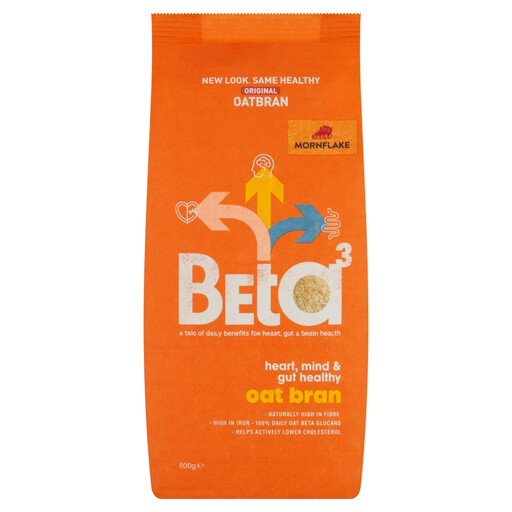
Choose oat bran or oats with added bran when fibre per 100g is the priority: Mornflake Beta³ Oat Bran declares 19.4g per 100g, while Waitrose Porridge Oats with Wheatbran declares 13.8g. Plain rolled oats such as Quaker are a simpler base for blended batter, but check the current pack for wheat, barley, gluten-free status and recipe-specific ingredients before cooking.
For cooks choosing an oat ingredient by its declared fibre figure rather than relying on broad wholegrain wording. UK nutrition-claim rules set conditions for using “high fibre” on food labels.
For anyone deciding between fibre-dense oat bran and a familiar rolled-oat base that can be blended into batter. Mornflake’s published oatmeal pancake method uses blended oatmeal with flour.
For cooks who need to check the exact pack instead of assuming that organic, pure or 100% oats are gluten-free. Coeliac UK notes that standard oats can be contaminated with wheat, barley or rye.
Choose it when: You want the highest declared fibre figure and are happy to use a bran-suitable pancake recipe.
Consider: Oat bran is not a direct substitute for rolled oats in every recipe, and Mornflake says its oat bran is unsuitable for wheat or barley allergy sufferers.
Choose it when: You want an oat-flake base for batter with a higher declared fibre content than plain rolled oats.
Consider: This route contains wheat bran and is not suitable for a gluten-free or wheat-free recipe.
Choose it when: You want a straightforward 100% rolled-oat ingredient for blended pancake batter.
Consider: The declared fibre level is lower than the bran-focused routes, and standard oats should not be treated as gluten-free.
| Priority | What to check | Your needs |
|---|---|---|
| Declared fibre | Compare fibre per 100g. For a UK “high fibre” claim, check for at least 6g per 100g or 3g per 100 kcal. | I want a comparable fibre figure before treating oats as a high-fibre pancake choice. UK nutrition-claim rules set the threshold for this wording. |
| Oat format | Check whether the recipe calls for rolled oats, oatmeal or oat bran. Use blending and liquid quantities from a recipe designed for that format. | I need an ingredient that can be blended or incorporated into batter, not simply prepared as instant porridge. |
| Gluten and allergens | Look for an explicit gluten-free label where required, then review the current ingredient and allergen panel for wheat, barley and other relevant ingredients. | For a gluten-free recipe, I need oats labelled gluten-free rather than relying on “organic”, “pure” or “100% oats”. |
| Recipe balance | Use the nutrition panel to compare fibre, and build the recipe around suitable liquid and binding ingredients rather than relying on one ingredient alone. | I want to include higher-fibre oats as part of a balanced diet and make changes to fibre intake manageable. The NHS notes that porridge oats are a source of fibre. |
Declared fibre varies between the supplied products: Quaker Rolled Porridge Oats declares 9.0g per 100g, Waitrose Porridge Oats with Wheatbran 13.8g, and Mornflake Beta³ Oat Bran 19.4g.
Compare fibre per 100g and use the UK high-fibre threshold rather than relying on general front-of-pack wording.
Oat bran is a different oat format. Mornflake’s pancake recipe uses oatmeal with flour and other ingredients, while its oat bran is presented for adding to meals and baking.
Use a bran-specific recipe or test a small batch, keeping enough liquid and binding ingredients for the batter you want.
Coeliac UK says these descriptions do not establish gluten-free status, as standard oats may be contaminated with wheat, barley or rye.
For coeliac disease or a strict gluten-free diet, choose a product explicitly labelled gluten-free and review the current allergen panel.
Flahavan’s High Fibre Pot includes seeds, sugar, oat bran and skimmed milk powder, so it is not the same as a plain dry oat ingredient.
For homemade batter, start with plain oats or oat bran unless the recipe specifically calls for a flavoured or ready-porridge product.
A fibre-first route through Beta³ Oat Bran, a 100% oat-bran product declaring 19.4g fibre per 100g. The brand also publishes oat-based pancake recipes.
An own-label route for rolled oats with added wheat bran rather than a separate oat-bran ingredient.
A straightforward 100% wholegrain rolled-oat route, including a distinct gluten-free range on the brand’s UK porridge page.
A source of wholegrain rolled and organic oats, with published oat pancake recipe ideas.
A reference point for organic and traditional wholegrain rolled-oat porridge products.
A brand focused on oat-based breakfast cereals rather than a primary plain-porridge-oat option for pancake batter.
Joybuy options for high-fibre Pancake Day baking, including gluten-free oat flakes, oat bran and plain oatmeal or rolled-oat formats.
 No image available
A plain oat-flake option for gluten-free pancake baking where the recipe supplies the liquid and binding ingredients.
100% gluten-free oat flakes; 8.6g fibre per 100g. Check the current pack if oats themselves are a concern.
 No image available
A fibre-focused oat-bran route for cooks using a recipe adapted to bran rather than standard rolled oats.
100% oat bran; 19.4g fibre per 100g. The listing says it is not suitable for wheat or barley allergy sufferers.
 No image available
A pre-portioned wholegrain-oat option for recipes that suit sachet quantities and blended oats.
Wholegrain rolled oats; 9.0g fibre per 100g. Check the allergen panel if a gluten-free recipe is required.
 No image available
A plain oatmeal base for recipes that call for oatmeal or blended oats.
100% oatmeal; 9.0g dietary fibre per 100g. The listing says it may contain wheat and barley.
 No image available
A loose wholegrain oat-flake ingredient for recipe-led pancake batter.
100% organic wholegrain oat flakes; 8.3g fibre per 100g. The listing identifies oats as containing gluten.
A UK high-fibre claim may be made only where a food contains at least 6g fibre per 100g or 3g fibre per 100 kcal, according to legislation.gov.uk. Compare the nutrition panel per 100g rather than assuming every wholegrain oat product has the same fibre level.
Yes, if you use a recipe designed for oats or blend them to the required texture. Mornflake’s oatmeal pancake recipe combines oatmeal with gluten-free flour, plant-based milk and other ingredients to make a smooth batter, rather than using oats alone.
Choose oat bran when the declared fibre figure is your priority: Mornflake Beta³ Oat Bran declares 19.4g per 100g. Choose rolled oats with wheat bran for a more conventional flake base with elevated fibre, while plain Quaker rolled oats declare 9.0g per 100g.
Not automatically. Coeliac UK says many standard oats can be contaminated because they are produced alongside wheat, barley and rye. Choose oats labelled gluten-free where required and check the current allergen information.
Yes. Waitrose notes that recipes and allergen information can change, so the physical pack is the final check. This matters particularly for wheat, barley, milk, nuts and gluten-free requirements.